
Tahar Djaout: Life and Legacy of Algeria's Free Voice
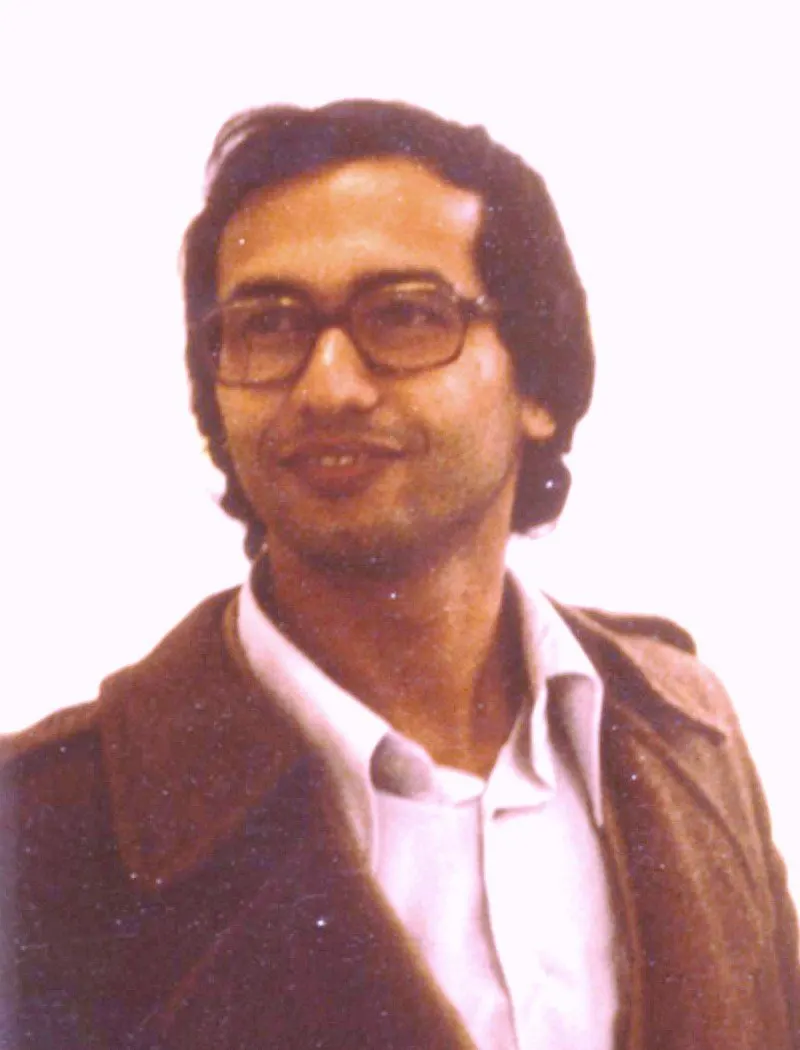
Quick Facts
| Full Name | Tahar Djaout |
|---|---|
| Date of Birth | January 11, 1954 |
| Place of Birth | Oulkhou, Azeffoun, Algeria |
| Date of Death | June 2, 1993 |
| Place of Death | Algiers, Algeria |
| Cause of Death | Assassination (gunshot wounds) |
| Nationality | Algerian |
| Education | University of Algiers (Licence in Mathematics); University of Paris II (DEA in Information Sciences) |
| Occupation | Journalist, novelist, poet |
| Known For | Championing press freedom, secular democracy, and cultural pluralism; author of Les Vigiles and The Last Summer of Reason; co-founder of Ruptures |
| Notable Awards | Prix Méditerranée (1991), Prix de la Fondation Del Duca (1984) |
| Spouse | Ferroudja Djaout |
| Children | 3 daughters (including Kenza) |
Introduction
Tahar Djaout was one of Algeria's most brilliant literary figures and courageous journalists. Writing primarily in French while drawing deeply from his Kabyle Berber heritage, he chronicled the triumphs, contradictions, and disillusionments of post-independence Algeria with extraordinary clarity and lyrical grace. Through his prolific work as a poet, novelist, and cultural commentator, Djaout gave voice to a generation yearning for genuine democracy, individual freedom, and intellectual honesty.
When Algeria descended into the devastating sectarian violence of the early 1990s—known as the "Black Decade"—Djaout refused to capitulate to silence or fear. He used his pen to confront religious fanaticism and state authoritarianism alike, championing a modern, secular, and pluralistic society. His targeted assassination in 1993 marked the grim start of an orchestrated campaign against Algerian intellectuals and journalists, immortalizing him as a martyr for truth and an enduring international symbol of press freedom.
Early Life and Family of Tahar Djaout
Tahar Djaout was born on January 11, 1954, in the coastal mountain village of Oulkhou, situated near the port town of Azeffoun in the Kabylia region of northern Algeria. He was born into an Amazigh (Berber) family during a historic turning point: later that same year, the Algerian National Liberation Front (FLN) launched the armed revolution against French colonial rule. Djaout spent his earliest childhood immersed in the rich oral traditions and rugged terrain of Kabylia, attending the primary school in his home village until 1964.
Following the declaration of Algerian independence in 1962, his family relocated to the capital, Algiers, in search of broader educational and economic opportunities. Growing up in a multilingual environment, Djaout spoke Kabyle at home, navigated Algerian Arabic on the streets, and learned French in the classroom. This complex linguistic tapestry profoundly shaped his worldview, instilling in him an appreciation for diverse modes of expression and an acute sensitivity to how language, culture, and power interact in modern North Africa.
Education and Academic Foundations
In Algiers, Djaout completed his secondary education at the Lycée Okba, graduating with his baccalaureate in 1971. Fascinated by both the analytical precision of the sciences and the emotional depth of literature, he chose to study mathematics at the University of Algiers. While pursuing higher mathematics, he immersed himself in literary circles, forming lasting creative bonds with fellow young poets such as Hamid Tibouchi. Djaout graduated with his bachelor’s degree (licence) in mathematics in 1974.
Despite his aptitude for mathematics, Djaout’s vocation lay in writing. After several years in journalism, he sought to refine his theoretical and professional expertise in the media. In 1985, he secured an academic scholarship that took him to France, where he pursued graduate studies at the University of Paris II (Panthéon-Assas). He earned a Diplôme d'Études Approfondies (DEA) in Information and Communication Sciences in 1987 before returning immediately to Algiers, dedicated to placing his international education at the service of his homeland’s evolving media landscape.
Career and Major Achievements of Tahar Djaout
Poetic Beginnings and Early Literary Recognition
Djaout emerged onto the Algerian literary scene as a prodigy. In 1970, at just 16 years old, his short story Les Insoumis earned an honorable mention in the literary competition "Zone des tempêtes". By 1972, his poetry began appearing in international journals, including the prestigious Belgian publication Le Journal des poètes. Djaout believed that poetry was an act of personal liberation that could deconstruct political dogma and rebuild the human spirit on foundations of empathy and truth.
In 1975, while finishing his university studies, he published his debut poetry collection, Solstice barbelé, in Quebec. Over the following decade, he released several more celebrated volumes of verse, including L'Arche à vau-l'eau (1978), Insulaire et Cie (1980), and L'Oiseau minéral (1982). In 1984, he also edited Les Mots migrateurs, an influential anthology of emerging Algerian Francophone poets that introduced a new generation of literary talent to the French-speaking world.
Acclaimed Fiction and Social Critique
Beginning in the early 1980s, Djaout turned his formidable expressive gifts toward prose fiction, crafting novels that captured the socio-political challenges of contemporary Algeria. His first novel, L'Exproprié, appeared in 1981, meditating on identity, cultural rupture, and the psychological alienation produced by colonialism and its aftermath.
His breakthrough novel, Les Chercheurs d'os (The Bone Gatherers), was published in Paris in 1984. Set shortly after the liberation war, the story follows a young boy sent by his village to locate and bring back the skeletal remains of his martyred brother. The novel delivers a searing critique of a regime obsessed with the ritualistic veneration of the dead while systematically suffocating the aspirations, freedoms, and well-being of the living.
In 1987, Djaout published L'Invention du désert, an inventive historical novel revisiting the 12th-century Almoravid dynasty to examine how charismatic dogmatists manipulate spiritual faith into political tyranny. His 1991 novel, Les Vigiles (later published in English as The Watchers), cemented his standing as an elite novelist. A sharp, satirical portrait of an inventor battling the absurdities of post-colonial state bureaucracy and civic surveillance, the book won major literary awards and was later adapted into the feature film Les Suspects.
Cultural Journalism at Algérie-Actualité
Djaout began his professional journalistic career in the mid-1970s, writing cultural criticism for the daily newspaper El Moudjahid and its cultural supplement. In 1980, he joined the team of the French-language weekly newspaper Algérie-Actualité, serving as head of its cultural section until 1984, and again from 1987 to 1992.
At Algérie-Actualité, Djaout transformed cultural journalism into a venue for critical civic inquiry. He wrote extensive, deeply researched profiles of contemporary visual artists—such as Baya, Mohammed Khadda, and Denis Martinez—and spotlighted pioneering Algerian Francophone writers who had been marginalized by official state cultural policies, including Mouloud Feraoun, Jean Amrouche, Mouloud Mammeri, and Mohammed Dib. Through his essays, Djaout defended artistic autonomy against state-sanctioned conformity.
Founding Ruptures and Defending Independent Media
By late 1992, Algeria was descending into open crisis following the cancellation of the 1991 parliamentary elections and the explosion of militant insurgencies. Recognizing that official state media could no longer provide the frank analysis the country desperately needed, Djaout resigned from Algérie-Actualité. Joining hands with colleagues including Arezki Metref and Abdelkrim Djaad, he co-founded Ruptures, an independent political and cultural weekly that debuted on January 16, 1993.
As editorial director of Ruptures, Djaout crafted sharp, uncompromising articles that dissected the existential threats facing Algeria. He took a principled stand against violent Islamist fundamentalism while refusing to excuse state repression, corruption, and political inertia. His editorials warned against the catastrophic cost of apathy, urging democratic forces, trade unionists, artists, and citizens to unite in defense of human dignity, secularism, and civic rights.
Awards and Recognition
Throughout his career, Tahar Djaout earned widespread literary acclaim both in Algeria and across Europe. In 1984, his second novel, Les Chercheurs d'os, received the prestigious Prix de la Fondation Del Duca in France, drawing broad praise from international literary critics.
In 1991, Djaout was awarded the Prix Méditerranée for his masterwork Les Vigiles, confirming his stature as one of the preeminent Francophone novelists of the Mediterranean world. Posthumously, his courage inspired widespread recognition from international human rights and press advocacy groups, including PEN America and the Committee to Protect Journalists (CPJ). In 2000, when celebrated Algerian author Assia Djebar received the Peace Prize of the German Book Trade, she formally dedicated her honor to Tahar Djaout, Youssef Sebti, and Abdelkader Alloula.
Challenges and Struggles Under Rising Extremism
Djaout spent the final years of his life navigating immense personal peril. As the political rift deepened in the early 1990s, armed militant groups such as the Armed Islamic Group (GIA) systematically targeted intellectuals, journalists, educators, and artists whom they accused of promoting Western secularism and opposing their vision of a theocracy. Djaout’s high-profile editorial role at Ruptures made him an obvious target.
Despite receiving recurring death threats, Djaout refused offers of exile or asylum in Europe, believing that departing Algeria would betray his readers and abandon his fellow citizens to violent obscurantism. He was painfully aware of the danger he faced every day. In an iconic phrase that became his defining epitaph, Djaout wrote:
"Si tu parles, tu meurs. Si tu te tais, tu meurs. Alors, parle et meurs."
("If you speak, you die. If you are silent, you die. So, speak and die!")
Tahar Djaout’s Personal Life
In 1979, having completed his compulsory military service, Djaout married Ferroudja, with whom he built a close and loving family. The couple had three daughters, including Kenza, who were the center of his private world. Djaout was known by his peers as a quiet, thoughtful, and modest man who preferred long walks, reading, and deep conversations with close friends over public pageantry.
During his academic stay in France between 1985 and 1987, Djaout lived with his wife and young daughters in a modest two-room apartment in Les Lilas, on the eastern outskirts of Paris. Upon returning to Algiers, the family made their home in a public housing apartment block in Baïnem, near Bouzaréah, overlooking the Mediterranean Sea. Even as tensions in the capital surged and violence surrounded everyday life, he maintained a strict morning routine of writing and having breakfast with his family before setting off to his newsroom.
Death and Enduring Legacy
On the morning of May 26, 1993, as Djaout stepped into his car outside his apartment building in Baïnem to commute to work, he was ambushed by armed militants associated with the Armed Islamic Group (GIA). The attackers shot him in the head at close range. Rushed to the hospital in critical condition, Djaout lay in a coma for a week. He succumbed to his wounds on June 2, 1993, at the age of 39. He was laid to rest in his ancestral village of Oulkhou.
Djaout was the first journalist murdered during Algeria’s Black Decade, a conflict that would eventually claim the lives of roughly 60 journalists and hundreds of intellectuals and artists. When one of the suspects was apprehended, he reportedly declared to authorities that Djaout had been marked for execution because he "wielded a fearsome pen that could have an effect on Islamic sectors".
The murder caused widespread national grief and international outrage. In the United Kingdom, the BBC produced a documentary tribute entitled Shooting the Writer, introduced by Salman Rushdie. In 1994, renowned Amazigh musician and activist Lounès Matoub wrote the moving tribute song "Kenza," addressing Djaout's young daughter with words of solidarity and solace.
Among Djaout’s papers after his death, friends discovered an untitled, nearly complete manuscript. Published in Paris in 1999 as Le Dernier Été de la raison (translated into English in 2001 as The Last Summer of Reason), the prophetic novel follows Boualem Yekker, a solitary bookseller who preserves his passion for literature, music, and art while an intolerant fundamentalist regime systematically strips society of beauty and imagination. Today, Djaout's writings and defiant life remain a touchstone of moral courage across the Arab world, Africa, and the international press freedom movement.
Interesting Facts About Tahar Djaout
- Trained in mathematics: Before dedicating his life to literature and journalism, Djaout completed a formal university degree in mathematics at the University of Algiers in 1974.
- Prophetic posthumous novel: His final novel, The Last Summer of Reason, was discovered without a title among his belongings after his murder; its storyline about a society falling under totalitarian fundamentalism eerily reflected the events surrounding his death.
- Assassination rationale: One of the captured perpetrators openly admitted during police interrogation that Djaout was targeted specifically because his pen was "fearsome" and had the potential to influence public thought.
- BBC documentary tribute: Following his assassination, the BBC broadcast a special documentary about his life and tragic murder titled Shooting the Writer, introduced by Salman Rushdie.
- Musical tribute by Lounès Matoub: The celebrated Kabyle singer Lounès Matoub composed the emotional song "Kenza" in 1994, dedicated to Djaout's daughter and grieving the sacrifice of Algeria's progressive intellectuals.
- Trilingual upbringing: Raised speaking Kabyle at home, Djaout achieved complete fluency in Arabic and French, choosing French as his primary literary and journalistic medium while maintaining proud Amazigh cultural roots.
Frequently Asked Questions About Tahar Djaout
Who was Tahar Djaout?
Tahar Djaout was an Algerian journalist, novelist, and poet known for his vivid literary works and bold defense of democracy, secularism, and free expression during the rise of violent extremism in Algeria in the 1990s.
What is Tahar Djaout's most famous quote?
His most celebrated quote is: "Si tu parles, tu meurs. Si tu te tais, tu meurs. Alors, parle et meurs" ("If you speak, you die. If you are silent, you die. So, speak and die!"). The phrase became an international rallying cry for journalists confronting mortal threats.
Why was Tahar Djaout assassinated?
Djaout was assassinated by members of the Armed Islamic Group (GIA) on May 26, 1993, because of his outspoken opposition to religious fanaticism and his editorial role in championing secular democracy at the independent newspaper Ruptures. He died from his injuries on June 2, 1993.
What are Tahar Djaout's most notable books?
Djaout's best-known literary works include the novels Les Chercheurs d'os (1984), Les Vigiles (1991, winner of the Prix Méditerranée), and the posthumously published anti-totalitarian novel The Last Summer of Reason (1999).
What was the significance of the weekly newspaper Ruptures?
Founded by Djaout and fellow independent journalists in early 1993, Ruptures was an uncompromising platform that challenged both authoritarian government inertia and militant fundamentalism, standing at the forefront of the battle for an open, democratic Algeria.
Conclusion
Tahar Djaout lived and wrote with profound conviction. In a historical moment fraught with terror and intimidation, he chose clarity over equivocation and courageous expression over cautious silence. His diverse body of work—spanning verse, social satire, historical allegory, and hard-hitting journalism—continues to instruct and inspire readers around the world. By refusing to put down his pen, Djaout demonstrated that words rooted in truth and human dignity endure long after the forces of intolerance have faded.
Image: Wikimedia Commons, via Wikipedia (see the file page for author and license).
More biographies in Journalism → · All biographies
Related biographies
Razia Bhatti Biography: Fearless Pioneer of Pakistani Journalism
Razia Bhatti was a trailblazing Pakistani editor who transformed The Herald and founded Newsline, courageously defying state…
Shireen Abu Akleh Biography: Voice of Palestine and Media Icon
Shireen Abu Akleh was a trailblazing Palestinian-American journalist whose twenty-five years of courageous field reporting for Al…
Zhang Heng Biography: Ancient China's Greatest Polymath
Discover the extraordinary life of Zhang Heng, the Eastern Han dynasty polymath who invented the world's first earthquake…
David Gulpilil Biography: Life of Australia’s Trailblazing Actor
Explore the extraordinary life of David Gulpilil, the Yolngu actor and dancer who reshaped Australian cinema and brought…
Ishwar Chandra Vidyasagar: Life of Bengal's Pioneering Reformer
Ishwar Chandra Vidyasagar was a central figure of the Bengal Renaissance who overhauled modern education, reconstructed the…
Irineu Evangelista de Sousa Biography: Viscount of Mauá
Irineu Evangelista de Sousa, Viscount of Mauá, was a 19th-century industrialist, banker, and abolitionist who built Brazil's…