
Bachendri Pal Biography: The First Indian Woman on Mount Everest
In brief: Bachendri Pal made history in 1984 as the first Indian woman to conquer Mount Everest. Discover her life story, pathbreaking expeditions, and lasting legacy.
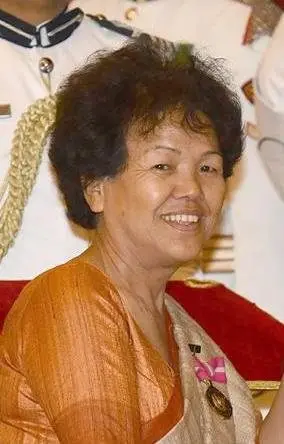
Quick Facts
| Full Name | Bachendri Pal |
|---|---|
| Date of Birth | May 24, 1954 |
| Place of Birth | Nakuri, Uttarkashi, Uttarakhand, India |
| Age | 72 |
| Nationality | Indian |
| Education | M.A. in Sanskrit, B.Ed. (D.A.V. Post Graduate College, Dehradun) |
| Occupation | Mountaineer, Adventure Educator |
| Known For | First Indian woman to reach the summit of Mount Everest (1984) |
| Notable Awards | Padma Bhushan (2019), Padma Shri (1984), Arjuna Award (1986), Tenzing Norgay National Adventure Award (1994) |
Introduction
Bachendri Pal is an iconic Indian mountaineer who secured an enduring place in global exploration when she became the first Indian woman to stand atop Mount Everest. Scaling the world's highest peak on May 23, 1984, she not only accomplished an extraordinary physical feat but also dismantled entrenched social and cultural barriers that had long restricted women in adventure sports. Her historic ascent transformed her into a national symbol of resilience, proving that courage and iron determination could overcome both formidable terrain and systemic prejudice.
Beyond her personal mountaineering accomplishments, Pal devoted decades of her life to mentoring upcoming climbers, championing youth leadership, and organizing pioneering all-women wilderness expeditions. As the longtime director of the Tata Steel Adventure Foundation, she fostered generations of world-class climbers and environmental advocates. Her trailblazing journey continues to inspire millions of people across South Asia and around the world to dream beyond traditional limitations and conquer their own symbolic summits.
Early Life and Family
Bachendri Pal was born on May 24, 1954, in the remote Himalayan village of Nakuri, located in the Uttarkashi district of what is today Uttarakhand, India (formerly part of Uttar Pradesh). She was born into a working-class Bhotiya family, just five days before the first anniversary of the historic 1953 summit of Mount Everest by Sir Edmund Hillary and Tenzing Norgay. She was one of seven children born to Hansa Devi and Shri Kishan Singh Pal. Her father was a hardworking border tradesman who transported grain, salt, and groceries on mules and goats between India and Tibet, navigating hazardous mountain passes until geopolitical developments closed the border trade.
Growing up in a mountainous rural region, Pal's family lived under considerable economic constraints. Traditional rural norms of the era favored educating sons over daughters, expecting young women to handle domestic chores and prepare for early marriage. However, Pal was naturally energetic, fiercely independent, and profoundly drawn to the rugged wilderness surrounding her village. Her fascination with heights began in childhood; at just twelve years old, during a school picnic, she and several companions climbed a peak of 13,123 feet (around 4,000 meters). The group was stranded on the ridge after nightfall and spent the night without food, shelter, or warm blankets—an ordeal that, rather than deterring her, ignited a lifelong passion for high-altitude adventure.
Education
Pal's path toward higher education was marked by relentless grit. When financial difficulties made schooling hard to sustain, she supported her studies by taking up tailoring and embroidery work during evenings and holidays. Recognizing her exceptional intellect and resolve, her school principal intervened and persuaded her parents to let her complete high school and pursue college education.
She enrolled at D.A.V. Post Graduate College in Dehradun, where she excelled academically and demonstrated formidable athletic prowess. While studying, she participated widely in sports, even winning a gold medal in rifle shooting. Pal went on to earn a Bachelor of Arts degree, becoming the first woman from her village to graduate from college. She subsequently earned a Master of Arts (M.A.) in Sanskrit and completed a Bachelor of Education (B.Ed.) degree. Despite holding advanced academic qualifications, the available employment opportunities were limited to poorly paid, temporary teaching roles—an outcome that she resisted in pursuit of a more purpose-driven, challenging life.
Career and Major Achievements
Formal Mountaineering Training at NIM
Pal's entry into formal mountaineering began when she was advised to enroll at the prestigious Nehru Institute of Mountaineering (NIM) in Uttarkashi. At the institute, her stamina, mental composure, and innate technical aptitude caught the attention of instructors, most notably Brigadier Gyan Singh, former director of the National Adventure Foundation. During her Basic and Advanced Mountaineering Courses, she achieved the highest performance ratings and was explicitly earmarked as potential "Everest material". In 1982, while undergoing advanced training, she completed successful ascents of Mount Gangotri I (reaching 21,900 feet / 6,675 m) and Mount Rudragaria (19,091 feet / 5,819 m), confirming her status as one of India's most capable high-altitude climbers.
The Historic 1984 Everest Ascent
In 1984, the Indian Mountaineering Foundation (IMF) selected Pal to join "Everest '84," the fourth major Indian expedition to Mount Everest. The expedition consisted of six women and eleven men, under the leadership of Colonel D. K. Khullar. The team journeyed to Kathmandu in March 1984 and established base camp before advancing through the perilous Khumbu Icefall.
Disaster struck on the night of May 15–16, 1984. While Pal was asleep in a tent at Camp III (located at an altitude of approximately 24,000 feet on the Lhotse face), a massive serac fractured and triggered a crushing avalanche. The ice and snow flattened the camp, burying Pal beneath a wall of frozen debris. She was cut free by teammate Lhatoo Dorjee using an ice axe. The avalanche left several climbers injured, prompting more than half of the expedition members to abandon the mountain. Pal, despite suffering head contusions and severe shock, refused to withdraw and affirmed her resolve to push toward the top.
On the morning of May 23, 1984, Pal commenced her final summit push from the South Col alongside Ang Dorjee Sherpa, an experienced climber making the ascent without supplementary oxygen. Negotiating steep blue ice and vertical rock faces in howling winds, the pair made steady progress. At 1:07 PM Indian Standard Time, Bachendri Pal stepped onto the summit of Mount Everest (8,848 meters), becoming the first Indian woman and the fifth woman worldwide to conquer the peak. At the summit, she prostrated in thanksgiving, buried a miniature icon of Goddess Durga and a copy of the Hanuman Chalisa in the snow, and embraced her climbing companions. She spent 43 minutes on the summit before safely descending.
Leadership at the Tata Steel Adventure Foundation (TSAF)
Following her monumental triumph, Pal was invited by industrialist Russi Mody to join Tata Steel in Jamshedpur. She assumed leadership of the company's adventure wing, which quickly evolved into the celebrated Tata Steel Adventure Foundation (TSAF). Pal served as Director and Chief of Adventure Programmes for over three decades, designing wilderness courses that utilized the rugged outdoors to build leadership, risk assessment, and self-confidence among corporate executives, tribal youth, and underprivileged women. She stepped down from full-time corporate duties in 2019 after 35 years of distinguished service.
Pioneering All-Women Expeditions
Rather than resting on her individual laurels, Pal initiated a series of historic expeditions designed to challenge stereotypes regarding female physical endurance:
- Indo-Nepalese Women's Mount Everest Expedition (1993): Pal served as leader of an all-women team that set historic global benchmarks, producing 18 summiters, including seven women, and saw climbers such as Santosh Yadav establish new records.
- The Great Indian Women's Rafting Voyage (1994): She led a team of 18 women on a 2,155-kilometer river-rafting expedition down the Ganges River from Haridwar to Kolkata, completing the journey in 39 days to promote environmental responsibility and adventure.
- First Indian Women Trans-Himalayan Expedition (1997): Pal commanded an eight-woman team that traversed the entire Himalayan range on foot, covering more than 4,500 kilometers across high-altitude passes from Arunachal Pradesh in the east to the Karakoram Pass and Siachen Glacier in the west over 225 days.
- Fit@50+ Women's Trans-Himalayan Expedition (2022): At age 67, Pal spearheaded an expedition composed of 14 women over the age of 50, traversing nearly 5,000 kilometers and crossing 37 mountain passes over five months to demonstrate that vitality and strength transcend chronological age.
Mentoring Future Legends
Pal's keen eye for talent played a decisive role in shaping some of India's most renowned mountaineers. She took under her wing Arunima Sinha, a former national volleyball player who lost her leg after being pushed from a moving train by thieves. Under Pal's rigorous physical conditioning and emotional encouragement at TSAF, Sinha overcame immense physical adversity to become the world's first female amputee to climb Mount Everest in 2013. Pal also mentored Premlata Agarwal, guiding her to become the oldest Indian woman at the time to summit Everest in 2011 (at age 48) and the first Indian woman to conquer the Seven Summits.
Awards and Recognition
Pal's revolutionary achievements have been honored with some of India's most distinguished national honors and sporting citations:
- Padma Shri (1984): India's fourth-highest civilian award, presented shortly after her landmark Everest ascent.
- IMF Gold Medal (1984): Conferred by the Indian Mountaineering Foundation in recognition of her historic accomplishment.
- Arjuna Award (1986): Bestowed by the Government of India for exceptional achievements in adventure sports.
- National Adventure Award (1994): Later designated the Tenzing Norgay National Adventure Award, recognizing lifetime contributions to outdoor exploration.
- Padma Bhushan (2019): India's third-highest civilian honor, awarded by President Ram Nath Kovind for distinguished service in adventure and women's empowerment.
- Honorary Doctorates: Conferred by several Indian universities in acknowledgment of her contributions to public life and athletics.
Challenges and Struggles
Pal's ascent to the top of the world was accomplished against staggering structural obstacles. Growing up in a conservative village environment, her ambition to pursue sports and higher education faced severe social disapproval from neighbors and extended relatives, who considered mountaineering unsuited for women. When she insisted on joining the Nehru Institute of Mountaineering rather than taking a low-level school job, she faced intense resistance from her family, who worried about both financial stability and matrimonial prospects.
Her climb up Everest was marked by extreme environmental hazards. Surviving the Camp III avalanche required extraordinary psychological fortitude; waking up buried in suffocating snow would have permanently ended the pursuit for most climbers. Beyond physical hazards such as sub-zero blizzards, deep crevasses, and hypoxia, Pal was frequently forced to prove her physical capability to male counterparts who questioned whether a woman possessed the requisite stamina for grueling high-altitude leadership. Her success settled that question conclusively.
Personal Life
Bachendri Pal has maintained a fiercely private personal life, choosing to keep her private matters away from the media spotlight. She remained unmarried, channeling her energy, emotional focus, and time into outdoor education, training young climbers, and community service. Known for her grounded disposition and humble lifestyle, she maintains deep spiritual roots and continues to hold deep reverence for the sacred character of the Himalayas. Her close-knit family, particularly her mother Hansa Devi, remained an enduring emotional anchor throughout her life.
Later Life and Legacy
In her later years, Pal expanded her focus toward environmental conservation and social rejuvenation. In 2018, she organized and led Mission Gange, a month-long river expedition with a 40-member team that traversed the Ganges River from Haridwar to Patna, actively clearing more than 55 metric tons of solid waste and educating riverbank communities about ecological preservation.
Pal's pioneering 1984 ascent altered the trajectory of women's sports across South Asia. Before her historic climb, mountaineering in the region was almost exclusively a male domain. Her success ignited a sea change, leading to a steady stream of Indian women achieving historic milestones in alpine mountaineering, polar expeditions, and technical climbing. Her autobiographical account, Everest: My Journey to the Top, is included in educational curricula across India, serving as a primary text on courage, perseverance, and social leadership.
Interesting Facts
- Bachendri Pal conquered the summit of Mount Everest on May 23, 1984, exactly one day before her 30th birthday.
- She was born only five days before the first anniversary of Sir Edmund Hillary and Tenzing Norgay's historic 1953 summit of Mount Everest.
- Upon reaching the summit of Everest, she buried a small idol of Goddess Durga and a copy of the devotional Hindu hymn Hanuman Chalisa in the snow as a gesture of thanksgiving.
- She was the first woman in her ancestral village of Nakuri to earn a university degree.
- In 1997, Pal led an eight-woman team across the entire span of the Indian Himalayas on foot, covering 4,500 kilometers across 225 days.
- She served as a mentor and direct coach to Arunima Sinha, guiding her to become the first female amputee in history to reach the top of Mount Everest.
- At the age of 67, she organized and led the Fit@50+ Trans-Himalayan Expedition, guiding a group of women over 50 through nearly 5,000 kilometers of high-altitude Himalayan terrain.
Frequently Asked Questions
When did Bachendri Pal climb Mount Everest?
Bachendri Pal reached the summit of Mount Everest on May 23, 1984, at 1:07 PM Indian Standard Time, becoming the first Indian woman to achieve the feat.
Where was Bachendri Pal born?
She was born in the village of Nakuri in the Uttarkashi district of the Garhwal Himalayas in Uttarakhand, India.
What awards has Bachendri Pal received?
Pal has received some of India's most prestigious honors, including the Padma Shri (1984), the Indian Mountaineering Foundation Gold Medal (1984), the Arjuna Award (1986), the Tenzing Norgay National Adventure Award (1994), and the Padma Bhushan (2019).
Which famous climbers did Bachendri Pal mentor?
Among her most prominent trainees are Arunima Sinha, the world's first female amputee to climb Everest, and Premlata Agarwal, the first Indian woman to complete the Seven Summits.
What role did Bachendri Pal hold at Tata Steel?
Pal served as the Chief of Adventure Programmes and Director of the Tata Steel Adventure Foundation (TSAF), where she led outdoor leadership development courses for more than three decades before retiring in 2019.
Conclusion
Bachendri Pal's life remains a quintessential testament to the power of self-belief against overwhelming odds. Rising from a modest village in Uttarakhand to the highest pinnacle on Earth, she redefined the horizons of possibility for women across India and established adventure sports as a vehicle for personal empowerment and social progress. Through her enduring mentorship, environmental stewardship, and legendary climbs, Pal's legacy continues to serve as an enduring beacon of strength, discipline, and inspiration.
Image: Wikimedia Commons, via Wikipedia (see the file page for author and license).
More biographies in Mountaineer → · All biographies
Related biographies

Reinhold Messner Biography: Life of the Mountaineering Legend
Discover the life of Reinhold Messner, the mountaineering icon who summited all 14 eight-thousanders and conquered Everest solo…
Tenzing Norgay Biography: Life, Everest Ascent & Legacy
Discover the life of Tenzing Norgay, the legendary Sherpa mountaineer who made history alongside Sir Edmund Hillary as the first…
Ashraf Aman First Pakistani Mountaineer To Climb K2
Introduction: Ashraf Aman was born on 15th January 1938 is a Mountaineer, Adventurer, and an Engineer from Pakistan. In 1977, […]
Samina Khayal Baig Female Mountaineer of Pakistan.
Introduction: Samina Khayal Baig was the first to climb the pinnacle Chashkin Sar (over 6,000 meters) in Pakistan in 2010, […]
Anita Roddick Biography – Founder of The Body Shop & Pioneer
Anita Roddick transformed global retail by founding The Body Shop, championing fair trade, cruelty-free cosmetics, and ethical…
Chinua Achebe Biography: Life of an African Literary Titan
Chinua Achebe was a monumental Nigerian novelist, critic, and professor whose debut masterpiece, Things Fall Apart, transformed…