
Albert Wendt Biography: Pioneer of Modern Pacific Literature
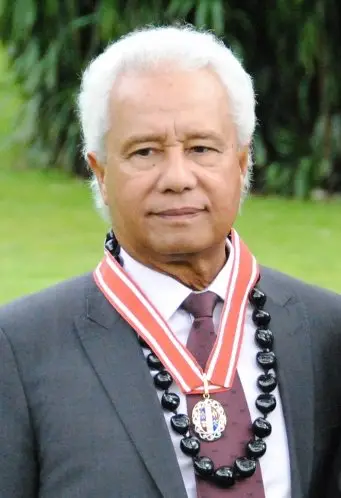
Quick Facts
| Full Name | Maualaivao Albert Tuaopepe Wendt |
|---|---|
| Date of Birth | October 27, 1939 |
| Place of Birth | Apia, Samoa |
| Age | 87 |
| Nationality | Samoan |
| Education | Victoria University of Wellington (MA), Ardmore Teachers' College, New Plymouth Boys' High School |
| Occupation | Novelist, poet, academic, playwright |
| Known For | Sons for the Return Home, Leaves of the Banyan Tree, pioneering modern Pacific literature in English |
| Notable Awards | Order of New Zealand (2013), Companion of the New Zealand Order of Merit (2001), Prime Minister's Award for Literary Achievement in Fiction (2012), Arts Foundation Icon Award (2018), Wattie Book of the Year (1980) |
| Spouse | Jenny Whyte (divorced) |
| Children | 3 |
Introduction to Albert Wendt
Maualaivao Albert Wendt stands as the foundational titan of modern Pacific literature. Over a career spanning more than six decades, the Samoan novelist, poet, playwright, and scholar shattered European romantic fantasies of the South Seas to reveal the vibrant, complex, and unvarnished realities of modern Polynesian life. By reclaiming storytelling in Oceania from the gaze of outside ethnographers and exoticizers, Wendt provided Indigenous communities with an authentic literary voice that combined ancestral oral tradition with groundbreaking contemporary prose.
Through pioneering novels like Sons for the Return Home and Leaves of the Banyan Tree, as well as influential theoretical essays such as "Towards a New Oceania," Wendt reimagined the Pacific not as isolated dots of land adrift in a remote sea, but as a vast, interconnected continent of voyages, dignity, and intellectual dynamism. In doing so, he fostered generations of Indigenous writers and academics, permanently redefining the literary landscape of Aotearoa New Zealand, the Pacific Islands, and world postcolonial writing.
Early Life and Family
Albert Wendt was born on October 27, 1939, in Apia, the capital of Western Samoa (now the Independent State of Samoa), at the time administered by New Zealand under a League of Nations mandate and later United Nations trusteeship. He was raised in the Vaipe area of Apia, an urban neighborhood beside the deadwater stream from which he drew deep impressions of communal life, trade, and economic vulnerability. His family descent encompasses deep Samoan lineages, including the Aiga Sā-Maualaivao of Malie, the Aiga Sā-Patu of Vaiala, the Aiga Sā-Su‘a of Lefaga, and the Aiga Sā-Asi of Moata‘a, alongside German ancestry through his patrilineal great-grandfather.
His father, Henry Tuaopepe Wendt, worked as a plumber and had formerly been a dance-band musician before embracing a strict religious life and serving as a deacon. Wendt suffered a painful loss during his youth when his mother passed away from cancer, an absence that reverberated across his introspective writings and poetry. In her absence, Wendt’s paternal grandmother, Mele, became the preeminent moral and cultural anchor of his upbringing. A revered elder versed in fa‘a Sāmoa (the Samoan way), Mele possessed an extraordinary capacity for oral storytelling, regaling young Albert with ancient genealogies, mythological journeys, and village histories that ignited his lifelong imaginative fire.
Education and Formative Years
In 1952, at the age of thirteen, Wendt won a government scholarship that altered the trajectory of his life: he boarded a banana boat bound for New Zealand to attend New Plymouth Boys’ High School. The transition from the warm, tight-knit, communal life of Apia to a rigid provincial New Zealand boarding school was marked by cultural isolation, cold climates, and overt prejudice. Wendt was one of only five Pacific Island students at the school, where he faced the challenges of assimilation while immersing himself in European literature, history, and rugby.
After graduating from high school in 1957, Wendt trained as a teacher at Ardmore Teachers' College south of Auckland, earning his teaching diploma in 1959. It was during this period that he began writing poetry and short stories seriously, inspired by contemporary New Zealand poets such as James K. Baxter. He proceeded to Victoria University of Wellington, where he pursued university studies in history, graduating with a Master of Arts with Honours in 1964. His master’s thesis, titled Guardians and Wards: A Study of the Origins, Causes and the First Two Years of the Mau in Western Samoa, examined the nonviolent Samoan anticolonial resistance against New Zealand rule in the 1920s. This rigorous historical scholarship provided Wendt with a deep critique of imperial authority that later underpinned his literary masterpieces.
Career and Major Achievements of Albert Wendt
Returning Home and Teaching at Samoa College
Armed with academic credentials and an abiding commitment to the development of his homeland, Wendt returned to newly independent Western Samoa in 1965. He joined the faculty of Samoa College in Apia, where he taught English and history, before being appointed the school's principal in 1969. Wendt used his position to reshape colonial-era curricula, instilling in students a sense of pride in Polynesian heritage, language, and cultural autonomy. During these demanding years in educational administration, he continued crafting verse and short fiction, publishing work in journals like Landfall and the Pacific Islands Monthly.
Breakthrough Novels: Sons for the Return Home and Leaves of the Banyan Tree
In 1973, Wendt made global literary history with the publication of his debut novel, Sons for the Return Home. It was the first novel published in English by a Samoan writer. Depicting the turbulent cross-cultural relationship between a Samoan university student and a white New Zealand woman in Wellington, the book broke new ground with its candid examinations of institutional racism, sexual intimacy, and migrant displacement. The novel resonated widely, cementing Wendt's reputation overnight, and in 1979 it was adapted into a celebrated feature film directed by Paul Maunder.
Wendt followed this triumph with Flying-Fox in a Freedom Tree (1974), a gritty short-story collection exploring the moral contradictions of urban Samoan youth caught between ancient custom and Western consumerism, and the philosophical novel Pouliuli (1977). His undisputed masterwork arrived in 1979 with Leaves of the Banyan Tree. Spanning three generations of a Samoan family in the fictional village of Sapepe, the epic chronicle traced the corrosive effects of greed, religious dogma, and European encroachment on Indigenous social fabric. The masterpiece won the prestigious 1980 New Zealand Wattie Book of the Year Award, proving that Pacific narratives could rival the finest epic fiction produced worldwide.
Academic Leadership at USP and the University of Auckland
Wendt's career transitioned increasingly into university teaching and cultural statecraft. In 1974, he joined the University of the South Pacific (USP) in Suva, Fiji, where he played an indispensable role in developing the regional institution's humanities department. In 1977, he established and directed the USP Extension Centre in Samoa, and from 1980 to 1987 he served as Professor of Pacific Literature and Deputy Vice-Chancellor. During this era, USP became the intellectual cradle of the Pacific Renaissance, with Wendt championing regional writers, playwrights, and artists.
In 1988, Wendt was appointed to the inaugural Chair of New Zealand Literature at the University of Auckland, a position he occupied with distinction for two decades until 2008. In Auckland, he spearheaded the establishment of Pacific Studies, helped bring to fruition the campus's landmark Fale Pasefika cultural complex, and mentored dozens of Pacific and Māori writers who went on to national and international prominence. Between 2004 and 2008, he concurrently held the Citizen’s Chair in English at the University of Hawaiʻi at Mānoa, widening his intellectual mentorship across Polynesian communities.
Expanding Creative Horizons: Poetry, Drama, and Anthologies
Alongside his sweeping novels, Wendt built a prodigious body of poetry, beginning with Inside Us the Dead: Poems 1961–1974 (1976), followed by Shaman of Visions (1984), Photographs (1995), The Book of the Black Star (2002), and From Mānoa to a Ponsonby Garden (2012). He also conquered dramatic theater with the play The Songmaker’s Chair (first produced in 2003 and published in 2004), an intimate family drama examining decades of the Samoan diaspora in Auckland.
Recognizing the urgent need to preserve and promote Indigenous writing, Wendt became the foremost anthologist of Pacific literature. He edited groundbreaking collections including Lali: A Pacific Anthology (1980), Nuanua (1995), and Whetu Moana (2003, co-edited with Reina Whaitiri and Robert Sullivan), the first substantial collection of contemporary Polynesian poetry in English edited exclusively by Indigenous scholars.
Awards and Recognition
Albert Wendt has accumulated the highest civilian and artistic accolades offered in the South Pacific and beyond:
- New Zealand Book Award / Wattie Book of the Year (1980): Conferred for his novel Leaves of the Banyan Tree.
- Commonwealth Writers’ Prize (Asia-Pacific Region): Won twice, first in 1992 for his novel Ola, and again in 2010 for his poetic verse epic The Adventures of Vela.
- Companion of the New Zealand Order of Merit (CNZM, 2001): Awarded for his enduring services to literature.
- Nikkei Asia Prize for Culture (2004): Conferred in Japan in recognition of his pioneering efforts to present Pacific oral culture to global audiences through written literature.
- Montana Book Award (2004): Shared for co-editing the landmark poetry anthology Whetu Moana.
- Prime Minister's Award for Literary Achievement in Fiction (2012): New Zealand’s premier national literary honour celebrating a lifetime of exceptional writing.
- Maualaivao Ali‘i Title (2012): Bestowed upon Wendt by the Aiga Sā-Maualaivao of Malie, bestowing upon him the prestigious high chief (ali‘i) status in Samoa.
- Order of New Zealand (ONZ, 2013): Appointed in the Queen’s Birthday Honours, granting him membership in the country’s highest civilian order, an elite fraternity limited to just 20 living members at any one time.
- Arts Foundation Icon Award (2018): Bestowed by the Arts Foundation of New Zealand, honoring him as one of the living treasures of national arts and culture.
Challenges and Struggles
Wendt’s groundbreaking trajectory was forged through intense cultural displacement, systemic marginalization, and institutional resistance. Arriving in mid-century New Zealand as an adolescent, he encountered an era when Pacific Islanders were treated primarily as temporary migrant labor rather than intellectual peers. He weathered painful racial slurs and institutional condescension, channeling his anger and alienation into his creative writing.
Furthermore, early in his publishing career, Wendt faced resistance not only from conservative Pākehā (European) critics uncomfortable with his unflinching depictions of colonial bigotry, but also from conservative segments of Samoan society. His fearless commitment to exposing hypocrisies within traditional village hierarchies, church corruption, and the commercial exploitation of family obligations occasionally drew criticism from traditionalists. Wendt firmly maintained that true cultural preservation required honest critique rather than romantic stagnation, weathering controversy to protect artistic freedom.
Personal Life
During his early teaching career in the 1960s, Albert Wendt married Jenny Whyte, a fellow educator from New Zealand. Together they raised three children: two daughters and a son. Their daughter Mele Wendt MNZM followed in her parents’ footsteps of public service, becoming an educator, community advocate, and company director who received the Member of the New Zealand Order of Merit in 2019. Wendt and Jenny Whyte separated and divorced in the early 1990s.
Since the 1990s, Wendt has shared his life with his long-term partner, Reina Whaitiri, a Māori scholar, anthologist, and educator with whom he has frequently collaborated on literary anthologies and indigenous research. Wendt is also a talented painter and visual artist, often illustrating the covers of his books and displaying his acrylic paintings in solo gallery exhibitions across Auckland and Honolulu. Several other notable creative figures belong to his extended family, including his cousin, celebrated stage and screen actor Nathaniel Lees, and his niece, Samoan novelist Lani Wendt Young.
Later Life and Legacy
In his later years, Albert Wendt retired from active university administration as Emeritus Professor of English at the University of Auckland, settling in the Ponsonby neighborhood of Auckland. Free from classroom demands, he remained a prolific creative force, publishing new works including the expansive multi-generational poetry collection From Mānoa to a Ponsonby Garden (2012), the short story collection Ancestry (2012), the novel Breaking Connections (2015), and his intimate childhood memoir Out of the Vaipe, the Deadwater (2015).
Wendt’s enduring legacy rests on his transformative role as the father of modern English-language Pacific literature. Before Wendt, Pacific storytelling was trapped largely in colonial memoirs and traveler stereotypes. He established that Oceanian peoples possessed a modern, evolving, and sovereign literature entirely their own. His theoretical writings gave birth to contemporary Pacific Studies, influencing universities worldwide, while his mentorship nurtured generations of Indigenous Pacific writers, including Selina Tusitala Marsh, Karlo Mila, and Sia Figiel. Today, his work is taught globally from Suva to Paris, standing as an unassailable monument to Indigenous self-determination, artistic integrity, and Oceanic brilliance.
Interesting Facts About Albert Wendt
- First Novel by a Samoan: His 1973 classic, Sons for the Return Home, was the very first novel written and published by a Samoan author in the English language.
- Elite Civilian Honor: Wendt is one of the extraordinarily few recipients of the Order of New Zealand, an honor restricted to only twenty living individuals at any given time.
- Double Cinematic Adaptation: Two of his major literary works have been adapted into celebrated feature films: Sons for the Return Home (1979) and Flying-Fox in a Freedom Tree (1989).
- Accomplished Painter: Wendt is an accomplished visual artist whose expressive paintings have been featured on the covers of his own poetry collections and displayed in solo museum exhibitions.
- Master's on the Mau: His 1964 master's thesis provided an authoritative early Indigenous historical analysis of Samoa's nonviolent anti-colonial Mau movement against New Zealand rule.
- Family Hat-Trick of Honours: Public honors run deep in the family: Wendt holds the ONZ and CNZM, while his daughter Mele Wendt received the MNZM in 2019 for governance and Pacific community advocacy.
- Subject of a Major Documentary: His extraordinary creative journey was immortalized in the 2005 documentary The New Oceania: Albert Wendt, Writer, directed by acclaimed filmmaker Shirley Horrocks.
Frequently Asked Questions About Albert Wendt
What was Albert Wendt's first published novel?
Albert Wendt's first novel was Sons for the Return Home, published in 1973. It holds the distinction of being the first novel published in English by a Samoan writer and became an instant critical success that was later adapted into a 1979 feature film.
Why is Albert Wendt widely recognized as the pioneer of Pacific literature?
Prior to Wendt's work in the late 1960s and 1970s, literature about the Pacific was dominated by Western writers who exoticized or infantilized island cultures. Wendt challenged these stereotypes by publishing authentic, nuanced Indigenous stories, founding literary journals, editing definitive anthologies, and establishing academic programs in Pacific Studies across the region.
What is Albert Wendt's ali‘i title?
In 2012, Wendt had the high chief title of Maualaivao conferred upon him by the Aiga Sā-Maualaivao of Malie in Samoa, in formal recognition of his stature, leadership, and cultural contributions to his ancestral homeland.
Where did Albert Wendt teach during his academic career?
Wendt served as headmaster of Samoa College, held senior posts including Professor of Pacific Literature and Deputy Vice-Chancellor at the University of the South Pacific in Fiji and Samoa, held the Chair of New Zealand Literature at the University of Auckland for two decades, and served as Citizen's Chair at the University of Hawaiʻi.
Which of Albert Wendt's works won the New Zealand Wattie Book Award?
His sweeping three-generation historical novel, Leaves of the Banyan Tree, published in 1979, won the premier New Zealand Book Award (then known as the Wattie Book of the Year Award) in 1980.
Conclusion
Maualaivao Albert Wendt’s literary and scholarly legacy is etched indelibly into the cultural history of Oceania and the wider postcolonial world. By rejecting the passive exoticism imposed by outsiders and speaking with raw honesty, poetic majesty, and deep ancestral respect, he reclaimed the narrative sovereignty of the Pacific. His courageous voice broke open doors for countless Indigenous storytellers, proving that the stories, struggles, and wisdom of the Pacific Islands belong at the very center of world literature.
Image: Wikimedia Commons, via Wikipedia (see the file page for author and license).
More biographies in Novelist → · All biographies
Related biographies
Chinua Achebe Biography: Life of an African Literary Titan
Chinua Achebe was a monumental Nigerian novelist, critic, and professor whose debut masterpiece, Things Fall Apart, transformed…

Intizar Hussain Biography: Master Chronicler of Urdu Literature
Explore the life and literary genius of Intizar Hussain, the acclaimed Pakistani novelist whose allegorical fiction captured the…
Tayeb Salih – The Genius of the Arabic Novel
Celebrated as the "genius of the Arabic novel," Sudanese author Tayeb Salih redefined postcolonial literature with masterpieces…
Naguib Mahfouz Biography – The Voice of Cairo and Nobel Laureate
Naguib Mahfouz transformed modern Arabic fiction through vivid social realism and philosophical allegory, becoming the first Arab…
Miles Franklin Biography: Trailblazing Australian Author & Feminist
Miles Franklin was a pioneering Australian novelist and feminist whose debut My Brilliant Career redefined bush literature and…
Bachendri Pal Biography: The First Indian Woman on Mount Everest
Bachendri Pal made history in 1984 as the first Indian woman to conquer Mount Everest. Discover her life story, pathbreaking…