
Naguib Mahfouz Biography – The Voice of Cairo and Nobel Laureate
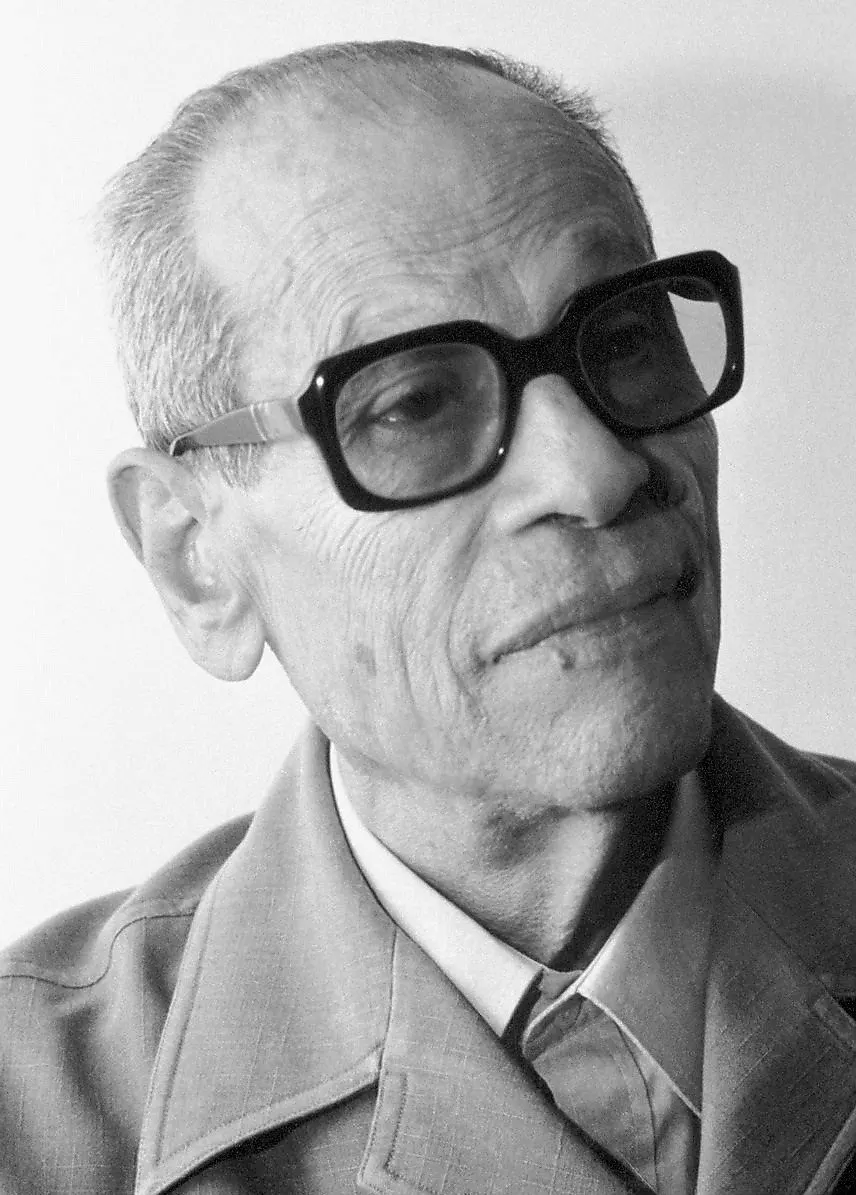
Quick Facts
| Full Name | Naguib Mahfouz Abdelaziz Ibrahim Ahmed Al-Basha |
|---|---|
| Date of Birth | December 11, 1911 |
| Place of Birth | Cairo, Egypt |
| Date of Death | August 30, 2006 |
| Place of Death | Agouza, Giza, Egypt |
| Cause of Death | Complications from a bleeding ulcer and head injury |
| Nationality | Egyptian |
| Education | Cairo University |
| Occupation | Novelist, Screenwriter, Civil Servant |
| Known For | The Cairo Trilogy, Children of Gebelawi, First Arab Nobel Laureate in Literature |
| Notable Awards | Nobel Prize in Literature (1988), Order of the Nile (1988), Egyptian State Merit Prize |
| Spouse | Atiyatallah Ibrahim |
| Children | Fatima, Umm Kalthum |
Introduction
Naguib Mahfouz stands as the towering architect of the modern Arabic novel and one of the twentieth century's most profound literary chroniclers. Over a career spanning more than seven decades, he elevated Arabic prose from regional storytelling into a world-class art form, depicting the alleys, cafes, and domestic quarters of Cairo with unprecedented social realism and philosophical depth. In 1988, he made history by becoming the first writer writing in Arabic to receive the Nobel Prize in Literature, an honor that brought international attention to the richness and modern complexity of Arab literature.
Far more than a local portraitist, Mahfouz explored universal dilemmas of faith, social justice, political disillusionment, and the relentless passage of time. His works served as a mirror to Egypt's turbulent journey from British colonial rule through monarchical decline, revolution, and modernity. Combining an unyielding dedication to human dignity with quiet personal courage, Mahfouz transformed the historic streets of Old Cairo into a timeless literary landscape that resonates with readers across the globe.
Early Life and Family of Naguib Mahfouz
Naguib Mahfouz Abdelaziz Ibrahim Ahmed Al-Basha was born on December 11, 1911, in the ancient Gamaleya district of Islamic Cairo. He was named in gratitude after Dr. Naguib Pasha Mahfouz, a renowned Coptic Christian physician and pioneer of Egyptian obstetrics who had successfully overseen his difficult birth. Mahfouz was the youngest of seven children in a lower-middle-class Muslim household, with four older brothers and two older sisters. Because his siblings were considerably older, he largely grew up experiencing the solitude and observant nature of an only child.
His father, Abdelaziz Ibrahim, was a traditional and strict civil servant who worked as an accountant, while his mother, Fatma Mostapha, was the daughter of an Al-Azhar scholar. Though his mother was uneducated in the modern secular sense, she possessed a lively curiosity and frequently took young Naguib to Cairo's museums and historic monuments, planting an enduring fascination with Egyptian antiquity and heritage. In 1924, when Mahfouz was around twelve, the family relocated to the newly developing suburb of Abbasiya. Both neighborhoods—the dense medieval lanes of Gamaleya and the modern, open avenues of Abbasiya—became foundational settings for his fiction.
A defining memory of his childhood arrived with the Egyptian Revolution of 1919 against British colonial rule. From his family home's shuttered windows, the seven-year-old Mahfouz watched Egyptian men and women stage demonstrations, confronting armed British soldiers. He later recalled that this political awakening was the single event that most severely shook the security of his early childhood, leaving him with an acute lifelong awareness of national struggle and civic identity.
Education
Mahfouz received his initial education at a neighborhood kuttab (traditional Qur'anic elementary school), where he learned the basics of literacy and memorized verses from the Qur'an. He subsequently attended secular primary and secondary schools in Cairo, excelling in humanities while reading voraciously. During his teenage years, his literary appetite expanded beyond classical Arabic poetry to embrace translated European classics, encompassing works by William Shakespeare, Honoré de Balzac, Leo Tolstoy, Fyodor Dostoevsky, and Marcel Proust.
In 1930, Mahfouz enrolled at King Fuad I University (now Cairo University) to study philosophy, defying his father's initial desire for him to pursue a career in medicine. Philosophy provided Mahfouz with the intellectual tools to examine human condition, ethics, and metaphysics—concerns that would undergird his creative prose. Under the mentorship of influential modernist intellectuals such as Salama Moussa, Mahfouz published essays on philosophical questions and contemporary thought in literary periodicals.
He graduated with a bachelor's degree in philosophy in 1934. Mahfouz initially registered for a master's degree program focusing on Islamic philosophy and aesthetics, but after roughly two years of graduate study, he made a resolute choice to abandon academic academia. Convinced that his true calling lay in creative fiction, he redirected his intellect toward crafting the modern Egyptian novel.
Career and Major Achievements of Naguib Mahfouz
Mahfouz's literary path unfolded over several distinctive phases, each marked by artistic reinvention and acute responsiveness to Egypt's changing social realities. Balancing writing with lifelong employment as a dedicated state administrator, he developed a legendary discipline that produced dozens of groundbreaking books.
Historical Romances and the Shift to Social Realism
Mahfouz originally intended to write an ambitious series of historical novels covering the entirety of ancient Egyptian history. Between 1939 and 1944, he published three Pharaonic novels: Khufu's Wisdom (originally titled Abath al-Aqdar), Rhadopis of Nubia, and Thebes at War. While ostensibly dramatizing ancient dynastic struggles, these works contained subtle commentaries on contemporary Egyptian politics, royal despotism, and foreign occupation.
Prompted by the rapid social transformation and economic hardships of Cairo during World War II, Mahfouz pivoted sharply away from antiquity toward immediate contemporary reality. This transition inaugurated his great realist period, producing masterworks such as Khan al-Khalili (1946), Midaq Alley (Zuqaq al-Midaqq, 1947), and The Beginning and the End (Bidaya wa-Nihaya, 1949). In Midaq Alley, Mahfouz turned a small, dead-end alley in Islamic Cairo into a microcosm of the Egyptian nation, portraying the frailties, ambitions, and tragedies of ordinary residents grappling with modern upheaval.
The Cairo Trilogy and Panoramic Realism
Mahfouz reached the apex of his realist craftsmanship with his monumental work, The Cairo Trilogy, written prior to the 1952 Free Officers Revolution and published between 1956 and 1957. Comprising Palace Walk (Bayn al-Qasrayn), Palace of Desire (Qasr al-Shawq), and Sugar Street (al-Sukkariyya), the trilogy follows three generations of the merchant family of Al-Sayyid Ahmad Abd al-Jawad.
Spanning from the 1919 Revolution through the end of the Second World War, the trilogy offers a sweeping panoramic study of Egyptian society. Through the changing lives of Abd al-Jawad's children and grandchildren, Mahfouz detailed the gradual unraveling of patriarchal authority, the emergence of the Egyptian feminist movement, and the ideological clashes among traditional Islam, Western liberalism, and Marxism. The Cairo Trilogy cemented Mahfouz's status as the preeminent novelist of the Arab world.
Symbolism, Existentialism, and Children of Gebelawi
Following the 1952 revolution led by Gamal Abdel Nasser, Mahfouz entered a period of creative silence, believing the societal grievances he had chronicled were being addressed by the new regime. However, as the authoritarian realities of the state took shape, he returned to writing with a transformed, highly symbolic style. In 1959, he serialized his controversial novel Children of Gebelawi (Awlad Haratina, also published in English as Children of the Alley) in the state-owned daily newspaper Al-Ahram.
Using allegory, the novel mirrors the spiritual history of humanity through a Cairo alley, featuring characters modeled on figures reminiscent of Adam, Moses, Jesus, and Muhammad, culminating in the rise of a modern figure representing science. The work ignited sharp condemnation from traditional religious authorities at Al-Azhar, leading to its suppression in book format in Egypt for decades.
Throughout the 1960s, Mahfouz explored existentialism, disillusionment, and alienation. In novels such as The Thief and the Dogs (1961), Autumn Quail (1962), Adrift on the Nile (Tharthara fawq al-Nil, 1966), and Miramar (1967), he adopted modernist techniques including stream of consciousness, multiple narrative perspectives, and sharp psychological dissection of Egyptian society under political stagnation.
Screenwriting, Journalism, and the Civil Service
Throughout his most prolific literary decades, Mahfouz maintained an uninterrupted career as an Egyptian civil servant. Beginning in the Ministry of Islamic Endowments (Awqaf), he later transferred to the Ministry of Culture, eventually serving as the Director of Censorship for the Bureau of Art, Director-General of the Cinema Support Foundation, and adviser to the Minister of Culture until his retirement from civil service in 1971.
Mahfouz was also an accomplished screenwriter who helped shape the golden age of Egyptian cinema. He wrote or co-wrote twenty-six feature film scripts, collaborating on classics such as The Tough (Al-Fatwa) and Youssef Chahine's historical epic Saladin (Al-Naser Salah Ad-Din, 1963). After retiring from government administration, he joined the editorial board of Al-Ahram, authoring a celebrated regular column that commented on social, political, and cultural affairs.
Awards and Recognition
In October 1988, Naguib Mahfouz attained global literary immortality when the Swedish Academy awarded him the Nobel Prize in Literature. The Academy praised his body of work, stating that he:
"through works rich in nuance – now clear-sightedly realistic, now evocatively ambiguous – has formed an Egyptian narrative art that applies to all mankind."
The award marked a historic milestone, opening international markets to Arabic literature in translation and validating the universal stature of the Arab novel. True to his humble nature and aversion to international travel, Mahfouz chose not to attend the award ceremony in Stockholm in person; instead, his daughters Fatima and Umm Kalthum accepted the prize, while his address was delivered by Egyptian author Mohamed Salmawy.
Beyond the Nobel Prize, Mahfouz received Egypt's highest state honors. In 1988, President Hosni Mubarak awarded him the Grand Cordon of the Order of the Nile, the nation's most prestigious decoration. He was previously granted the Egyptian State Merit Prize for Letters (1968) and the Egyptian State Incentive Award. International honors included election as an honorary member of the American Academy of Arts and Letters and the receipt of the Cavafy Prize.
Challenges and Struggles
Despite his reserved demeanor, Mahfouz frequently found himself at the epicenter of major political and ideological controversies. When President Anwar Sadat signed the 1978 Camp David Accords and the subsequent 1979 peace treaty with Israel, Mahfouz openly endorsed the peace initiative, arguing that decades of conflict had drained Egypt's resources and youth. In response, his books were temporarily boycotted across several Arab nations, though he refused to retract his stance.
A decade later, following the 1989 Iranian fatwa against British-Indian novelist Salman Rushdie, Mahfouz strongly defended freedom of expression and denounced religious intimidation, calling the fatwa an act of terrorism, even as he expressed personal distaste for insults against religious symbols. This principled defense provoked fierce anger among regional fundamentalist groups, who revived their old grievances over Children of Gebelawi. Extremist cleric Omar Abdel-Rahman publicly declared that had Mahfouz been punished for his 1959 novel, Rushdie would never have dared publish his work.
On October 14, 1994, the simmering hostility culminated in violence. Outside his home in the Agouza district of Cairo, an Islamic militant stabbed the 82-year-old author in the neck as he sat in a friend's car. Mahfouz miraculously survived after emergency surgery, but the blade severed vital nerves controlling his right arm. The injury severely impaired his writing hand, allowing him to write only with intense pain and effort for brief periods each day. With remarkable fortitude, he spent months doing physical therapy and adapted by dictating short sketches, dreams, and memoirs to devoted assistants, continuing his literary vocation until the final years of his life.
Personal Life
Throughout his life, Mahfouz maintained an exceptionally orderly, unassuming, and private existence. For much of his young adulthood, he remained a bachelor, prioritizing his writing regimen and expressing reservations about marriage distracting from his creative commitments. However, in 1954, at the age of forty-three, he married Atiyatallah Ibrahim, an Egyptian woman who shared his deep appreciation for personal privacy.
The couple had two daughters, Fatima and Umm Kalthum (often known informally as Faten and Hoda). Mahfouz fiercely guarded his family life from media scrutiny; for decades, many of his casual acquaintances and colleagues in the press remained unaware of his marital status or family details. He lived modestly in an apartment overlooking the Nile in Cairo's Agouza district, disdaining luxury and refusing invitations to live abroad.
Mahfouz's daily routine was legendary for its clockwork regularity. He woke before dawn to write, walked long distances along the Nile banks, arrived punctually at his civil service post, and spent his late afternoons and evenings meeting friends, younger writers, and intellectuals at historic Cairo coffeehouses, such as Café Riche and the Ali Baba Café in Tahrir Square.
Death and Legacy
In his nineties, Mahfouz's health became increasingly fragile, aggravated by severe visual and hearing impairments resulting from old age and long-term consequences of the 1994 attack. In July 2006, he was admitted to the Police Hospital in the Agouza district of Giza after suffering a fall that caused a severe head injury. His condition deteriorated due to internal bleeding from a gastric ulcer and kidney complications. Naguib Mahfouz passed away on the morning of August 30, 2006, at the age of 94.
Egypt honored its literary titan with a formal state funeral featuring military honors on August 31, 2006. The ceremony, held at the Al-Rashdan Mosque in Nasr City, was led by President Hosni Mubarak and attended by top government officials, international diplomats, and leading Arab cultural figures. A second, public funeral was conducted from the historic Al-Hussein Mosque near the Gamaleya alleys that Mahfouz had immortalized in his fiction.
Mahfouz's legacy endures across global literature. In 1996, the American University in Cairo Press established the Naguib Mahfouz Medal for Literature, awarded annually on his birthday to recognize the best contemporary Arabic novel. In July 2019, the Egyptian Ministry of Culture officially inaugurated the Naguib Mahfouz Museum and Cultural Center in the historic Al-Tekkeya Al-Sulaymaniyya complex in Old Cairo, preserving his personal library, manuscripts, writing desk, and Nobel diploma for future generations.
Interesting Facts About Naguib Mahfouz
- Named after a physician: His parents chose his compound first name "Naguib Mahfouz" to honor Dr. Naguib Pasha Mahfouz, the Christian obstetrician who safely delivered him during a complicated labor.
- A dedicated civil servant: Mahfouz worked in Egyptian government ministries for over thirty years until mandatory retirement at age sixty, viewing civil service as a discipline that anchored him to everyday life.
- Never left the Arab world: Despite international fame, Mahfouz was notorious for his reluctance to travel; he traveled abroad only a handful of times, to Yemen and the former Yugoslavia, and never visited Western Europe or the Americas.
- The unread attacker: When the young militant who attempted to assassinate Mahfouz in 1994 was interrogated, he confessed to authorities that he had never actually read a single book or line written by Mahfouz, having acted entirely on rumors and orders.
- Screenwriting powerhouse: Beyond his acclaimed novels, Mahfouz penned screenplays for twenty-six feature films, leaving an indelible imprint on the golden age of Egyptian cinema.
- Lifelong café philosopher: For decades, Mahfouz held structured weekly gatherings (nadwa) at various Cairo cafes, where anyone from aspiring authors to foreign correspondents could join in vibrant public discussions.
Frequently Asked Questions About Naguib Mahfouz
What is Naguib Mahfouz's most famous book?
His most celebrated masterpiece is The Cairo Trilogy (consisting of Palace Walk, Palace of Desire, and Sugar Street), which traces three generations of a Cairo family across three decades of Egypt's political and social transformation. Another globally renowned work is Midaq Alley.
Why was Naguib Mahfouz awarded the Nobel Prize in Literature?
Mahfouz received the 1988 Nobel Prize in Literature for creating an expansive body of Arabic narrative art characterized by nuanced realism and rich ambiguity that captures universal human conditions. He was the first Arab author to win the distinction.
Why was Children of Gebelawi banned in Egypt?
Children of Gebelawi used an allegorical Cairo alley to depict human spiritual history through characters closely resembling religious prophets, concluding with modern science taking their place. Conservative scholars at Al-Azhar condemned the book as blasphemous, preventing its formal publication as a book in Egypt until decades later.
How did the 1994 assassination attempt affect his later writing?
The stab wound to Mahfouz's neck severed major nerves in his right arm, severely impairing his motor skills. While he could no longer write fluidly for extended hours, he underwent rehabilitative therapy and adapted by producing brief, poetic dream-texts and short memoirs, published as Dreams of the Rehabilitation Period (Echoes of an Autobiography).
Conclusion
Naguib Mahfouz remains the undisputed founding patriarch of the modern Arab novel, an artist who brought the intimate spirit of Cairo's lanes into dialogue with world literature. His work demonstrated that the most intensely localized narrative—steeped in the aromas, dialects, and traditions of ancient city alleys—can speak directly and powerfully to the universal struggles of humanity. Through unbending dedication to his craft, profound intellectual independence, and a compassionate vision of human nature, Mahfouz forged a literary legacy that continues to inspire writers and enlighten readers across the world.
Image: Wikimedia Commons, via Wikipedia (see the file page for author and license).
More biographies in Novelist → · All biographies
Related biographies
Intizar Hussain Biography: Master Chronicler of Urdu Literature
Explore the life and literary genius of Intizar Hussain, the acclaimed Pakistani novelist whose allegorical fiction captured the…
Tayeb Salih – The Genius of the Arabic Novel
Celebrated as the "genius of the Arabic novel," Sudanese author Tayeb Salih redefined postcolonial literature with masterpieces…
Talaat Harb – Pioneer of Egypt's Modern Economy
Revered as the father of Egypt's modern economy, Talaat Harb broke foreign financial domination by founding Banque Misr and…
Chung Ju-yung Biography: Founder of Hyundai and Industrial Pioneer
Rising from rural poverty, Chung Ju-yung founded Hyundai, drove South Korea's post-war economic modernization, and orchestrated…
Oodgeroo Noonuccal Biography: Life of a Trailblazing Poet
Oodgeroo Noonuccal was a pioneering Aboriginal Australian poet, political activist, and educator who became the first published…
Kazi Nazrul Islam: Life and Legacy of the Rebel Poet
Kazi Nazrul Islam was a legendary Bengali poet, composer, and freedom fighter who challenged colonial rule and bigotry. Revered…