
Miles Franklin Biography: Trailblazing Australian Author & Feminist
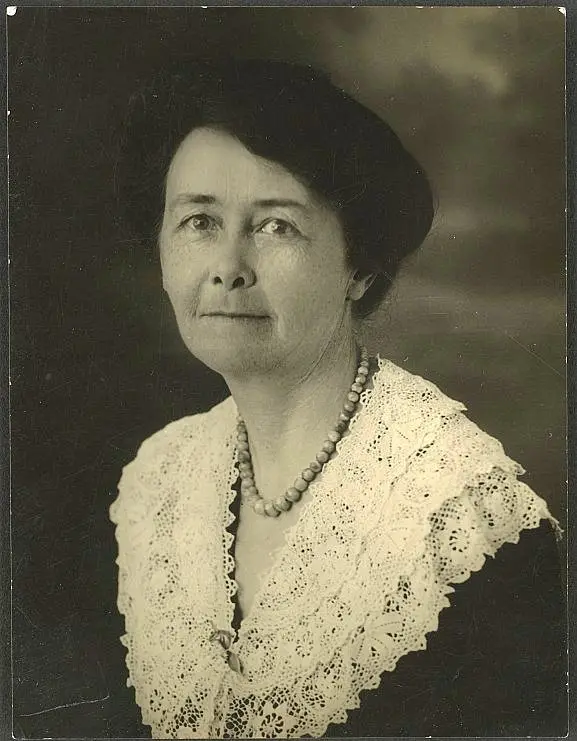
Quick Facts
| Full Name | Stella Maria Sarah Miles Franklin |
|---|---|
| Date of Birth | 14 October 1879 |
| Place of Birth | Talbingo, New South Wales, Australia |
| Date of Death | 19 September 1954 |
| Place of Death | Drummoyne, Sydney, New South Wales, Australia |
| Cause of Death | Coronary occlusion |
| Nationality | Australian |
| Education | Thornford Public School |
| Occupation | Novelist, feminist, journalist, wartime volunteer |
| Known For | My Brilliant Career, All That Swagger, endowing the Miles Franklin Literary Award |
| Notable Awards | S. H. Prior Memorial Prize (1936, 1939) |
Introduction to Miles Franklin
Stella Maria Sarah Miles Franklin, universally remembered as Miles Franklin, stands as one of the most distinctive and influential figures in Australian cultural history. Emerging at the dawn of Australian federation, she exploded onto the literary stage in 1901 with her groundbreaking debut novel, My Brilliant Career. In an era that demanded docility and domestic subservience from women, Franklin crafted a fiercely independent bush heroine who boldly rejected conventional marriage in favor of art, autonomy, and self-determination. Her voice was irreverent, raw, and unapologetically Australian, shattering colonial literary tropes and establishing a vibrant female perspective in frontier storytelling.
Beyond her iconic early fiction, Franklin led a deeply committed life of social activism, international labor advocacy, and patriotic service. She spent extensive periods in the United States and Great Britain organizing working women and served near the frontlines as a medical orderly during the First World War. Upon returning home, she revitalized her writing career, won prestigious national literary honors, and worked tirelessly to champion homegrown talent. Her enduring devotion to Australian culture culminated in the endowment of the nation's premier literary honor—the Miles Franklin Literary Award—cementing her status as an indispensable architect of Australian national literature.
Early Life and Family of Miles Franklin
Miles Franklin was born on October 14, 1879, at Talbingo Station, a pastoral property nestled in the mountainous Tumut district of southern New South Wales. She was the first child of Australian-born pastoralists John Maurice Franklin and Margaret Susannah Helena (née Lampe). Through her maternal lineage, she was the great-granddaughter of Edward Miles (or Moyle), a convict transported aboard the Scarborough in the First Fleet of 1788. Franklin took immense pride in this convict ancestry, choosing the name "Miles" partly as an enduring tribute to him and partly to navigate the male-dominated world of publishing.
Her earliest years were spent on the family property at Brindabella in the rugged Monaro highlands, a mountainous paradise that instilled in her an abiding passion for the Australian landscape and bush folklore. This idyllic childhood came to an abrupt halt around 1889 when severe agricultural downturns forced her parents to abandon Brindabella. The family relocated to Stillwater, a far less fertile smallholding near Goulburn. This descent from comfortable pastoral gentry to hard-scrabble rural existence brought profound domestic strain, particularly for her hardworking mother, and deeply sensitized the young Franklin to class inequalities, the crushing burdens borne by bush women, and the fragility of rural livelihoods.
Education and Intellectual Development
Franklin's early education reflected the isolated realities of nineteenth-century station life. At Brindabella, she was tutored at home by Charles Blyth, who encouraged her precocious interest in reading and creative expression. Following the move to the Goulburn area, she enrolled in Thornford Public School, attending from 1889 until completing her formal schooling in the mid-1890s. Although her formal schooling ended around age sixteen, her intellectual ambition remained insatiable.
Surmounting her educational disadvantages through voracious independent reading, Franklin drew deep inspiration from classical literature and the rebellious female voices of nineteenth-century writing, notably Charlotte Brontë. She received further encouragement and mentorship from Thomas Hebblewhite, an editor at the Goulburn Evening Penny Post. Briefly working as a governess near Yass in 1897 gave her direct insight into the constrained vocational avenues open to women of limited financial means, reinforcing her iron conviction that intellectual and economic independence could be won only through the power of the written word.
Career and Major Achievements of Miles Franklin
The Breakthrough of My Brilliant Career
By late 1899, at just twenty years of age, Franklin had completed the manuscript of My Brilliant Career. Driven by youthful defiance, the novel chronicled the struggles of Sybylla Melvyn, an ambitious, passionate young woman suffocated by the poverty and rigid social expectations of bush society, who chooses artistic self-expression over marriage to a wealthy pastoralist. After local Australian publishers rejected the manuscript, Franklin sent it to celebrated bush poet Henry Lawson. Lawson immediately recognized its raw genius, carried the manuscript with him to the United Kingdom, and helped persuade William Blackwood & Sons of Edinburgh to publish it in 1901.
The novel was an overnight sensation both in Australia and Britain. Readers and critics hailed its vivid local color and startling freshness, though many assumed the author was a seasoned male bushman. The revelation that "Miles" was a young, resourceless country girl turned Franklin into a national celebrity. However, local scandal erupted when friends and relatives believed they were uncharitably satirized in the novel's characters. Distressed by the controversy, Franklin eventually withdrew the book from publication, and it remained out of print in Australia until after her death. A contemporaneous sequel, My Career Goes Bung, which bitingly satirized the Sydney literary scene that feted her, proved so controversial that publishers refused it, leaving it unpublished until 1946.
Feminist Activism and Chicago Years
Feeling increasingly constrained by Sydney society and eager to participate in international progressive movements, Franklin sailed for the United States in 1906. Settling in Chicago, she allied herself with fellow Australian reformer Alice Henry and joined the National Women's Trade Union League of America (NWTUL). The organization sought to unionize female factory laborers, abolish sweatshops, and campaign for women's suffrage.
Franklin threw herself into organizing work, serving as secretary to league president Margaret Dreier Robins and co-editing the league's influential journal, Life and Labor, between 1911 and 1915. During these demanding years, she rubbed shoulders with prominent American social reformers, including Jane Addams at Hull House. Despite suffering episodes of physical exhaustion and severe stress, Franklin used her Chicago experience to broaden her understanding of class struggles, industrial exploitation, and modern feminist theory.
Wartime Service in the Balkans
In late 1915, amid the devastation of World War I, Franklin relocated to London. Deeply affected by the global conflict and seeking practical humanitarian service, she volunteered in 1917 with the Scottish Women's Hospitals for Foreign Service. She was deployed to the Ostrovo unit in the rugged mountains of Serbian Macedonia, operating as a hospital orderly supporting the battered Serbian army on the Salonika front.
Conditions in the field hospital were grueling: freezing winters, malaria, rudimentary medical supplies, and constant proximity to devastating casualties. Franklin worked tirelessly, tending wounded soldiers, managing kitchen supplies, and maintaining transport. Her wartime experiences hardened her pacifist convictions, exposed her to deep international suffering, and provided material for poignant memoirs and fiction that she drafted during and after the conflict.
Return to Australia and All That Swagger
Following the war, Franklin worked for the National Housing and Town Planning Council in London before returning permanently to Sydney in 1932 to settle in the suburban home her family had established in Carlton. Upon her return, she immersed herself in the revival of Australian cultural life. She joined the Fellowship of Australian Writers and the Sydney P.E.N. Club, mentoring emerging authors and passionately advocating for government patronage of local literature.
Her literary comeback was spectacular. In 1936, she published All That Swagger, an epic generational saga tracing the pioneering history of the Monaro bush and celebrating the resilience of the men and women who shaped frontier Australia. The book was greeted as a masterpiece of Australian historical fiction, reestablishing Franklin at the very forefront of the nation's literary pantheon. She also published a sequence of acclaimed historical bush chronicles under the mysterious pseudonym "Brent of Bin Bin," baffling the Australian public and literary critics who spent decades attempting to discover the author's true identity.
Awards and Recognition
During her lifetime, Franklin's literary achievements earned significant national acclaim. Her major pastoral novel, All That Swagger, was awarded the coveted S. H. Prior Memorial Prize in 1936, presented by The Bulletin for the best Australian work of literature. In 1939, she won the prize a second time, sharing the honor with Kate Baker for their groundbreaking biographical study, Joseph Furphy: The Legend of a Man and His Book (published in 1944), which restored the reputation of the pioneering Australian author of Such is Life.
Recognition continued to expand posthumously. In 2001, she was formally inducted onto the Victorian Honour Roll of Women. The Australian Capital Territory honored her memory by naming the Canberra suburb of Franklin and the Miles Franklin Primary School after her. In 2013, to address gender imbalances in cultural recognition, Australian writers and arts patrons founded the prestigious Stella Prize, named in honor of Franklin's first given name, celebrating outstanding fiction and non-fiction by Australian women and non-binary writers.
Challenges and Struggles
Franklin's life was defined by perpetual struggle against economic precariousness and gender discrimination. The financial collapse of her father's station in her youth deprived her of a comfortable inheritance, forcing her to support herself through precarious journalism, clerical positions, and modest literary advances. Because the commercial market for Australian fiction was underdeveloped, her earnings from royalties rarely provided long-term security, compelling her to live with extreme frugality throughout her adult life.
She also fought against the pervasive sexism of the publishing industry, where women writers were often relegated to producing lightweight domestic romance rather than serious nationalist literature. This prejudice contributed directly to her lifelong adoption of male and neutral pseudonyms—most notably "Miles" and "Brent of Bin Bin"—which shielded her works from patronizing dismissals. Furthermore, Franklin struggled with recurring episodes of physical ill-health, including nervous exhaustion and respiratory ailments, particularly after the intense stress of her overseas organizing and wartime hospital service.
Personal Life of Miles Franklin
Throughout her life, Franklin guarded her private affairs with fierce independence. She adamantly refused to marry, famously viewing traditional matrimony as "rabbit work"—an all-consuming domestic trap designed to extinguish a woman's intellectual identity and artistic productivity. Though pursued by several admirers during her youth and her overseas years, she remained dedicated to preserving her personal and creative sovereignty.
Her emotional life was anchored by deep, lifelong friendships with female intellectuals, authors, and reformers. In Melbourne and later in England, she shared profound creative and emotional bonds with writer Mary Fullerton and activist Mabel Singleton. After her return to Sydney, she lived simply in her parents' home on Grey Street in Carlton, surrounded by overflowing bookshelves, unpublished manuscripts, and stray animals. Her home became a vibrant meeting ground for writers, where she offered warm mentorship to younger contemporaries like Dymphna Cusack and Marjorie Barnard.
Death and Lasting Legacy
In her final years, Franklin's health deteriorated significantly from chronic cardiovascular disease. She passed away on September 19, 1954, at Seacombe Private Hospital in Drummoyne, Sydney, at the age of seventy-four, the cause of death being coronary occlusion. In accordance with her wishes, she was cremated, and her ashes were scattered over Jounama Creek near her birthplace in Talbingo, beneath the mountains she had cherished throughout her life.
Franklin's greatest cultural legacy was sealed in her last will and testament. Having lived prudently and saved the bulk of her estate—amounting to approximately £8,900—she directed that the money be invested to endow an annual award for "the Novel for the year which is of the highest literary merit and which must present Australian Life in any of its phases". First awarded in 1957 to Patrick White for his novel Voss, the Miles Franklin Literary Award became Australia's most prestigious and sought-after literary honor, elevating generations of prominent novelists including Thea Astley, Peter Carey, and Tim Winton.
Her literary reputation experienced another massive resurgence in 1979 when Australian director Gillian Armstrong adapted My Brilliant Career into an internationally acclaimed film starring Judy Davis and Sam Neill. The film introduced Franklin's defiant heroine Sybylla to global audiences, establishing the work as an unassailable classic of world feminist literature. Today, her extensive personal papers, held at the State Library of New South Wales, remain an indispensable archive of Australian cultural and feminist history.
Interesting Facts About Miles Franklin
- First Fleet Heritage: Franklin was a direct descendant of First Fleet convict Edward Miles, who arrived in Sydney Cove on the transport ship Scarborough in 1788 after being convicted of theft.
- The Masculine Pen Name: Born Stella Maria Sarah Miles Franklin, she dropped "Stella" and chose to publish under "Miles" partly to disguise her gender and avoid the dismissive bias aimed at female writers.
- Henry Lawson's Championing: When local Australian publishers turned down My Brilliant Career, celebrated writer Henry Lawson took her manuscript to the UK himself and wrote the preface for the first edition.
- Balkan War Veteran: During the First World War, Franklin served on the Salonika front as a volunteer hospital orderly with the Scottish Women's Hospitals, caring for Serbian soldiers under primitive field conditions.
- The Brent of Bin Bin Mystery: She spent years publishing successful pastoral novels under the pen name "Brent of Bin Bin," playfully dodging speculation and refusing to confirm publicly that she was the author until her will settled the matter.
- Two Named Literary Prizes: Franklin holds the unique distinction of inspiring two of Australia's premier literary prizes: the Miles Franklin Literary Award, founded by her bequest, and the Stella Prize, named after her birth name.
Frequently Asked Questions About Miles Franklin
What is Miles Franklin best known for?
Franklin is best known as the author of the 1901 feminist classic My Brilliant Career and for endowing the Miles Franklin Literary Award, Australia's most prestigious annual prize for fiction depicting Australian life. She is also remembered for her epic Monaro novel All That Swagger and her international feminist activism.
Why did Miles Franklin write under a pseudonym?
Franklin initially adopted the name "Miles" to circumvent nineteenth-century prejudices against female authors, ensuring that her work would be reviewed seriously rather than trivialized as light feminine romance. Later in her career, she adopted the moniker "Brent of Bin Bin" to test whether her books would succeed on their literary merits free from the preconceptions associated with her famous debut.
Did Miles Franklin ever marry?
No, Franklin never married. She viewed traditional marriage of her era as a domestic trap that stripped women of their financial independence and creative freedom, choosing instead to remain unmarried and retain complete control over her life and work.
What was Miles Franklin's role in the First World War?
In 1917 and 1918, Franklin served as a voluntary orderly with the Scottish Women's Hospitals for Foreign Service, based at the Ostrovo unit in Serbian Macedonia. She supported medical teams treating wounded Serbian soldiers, managing demanding hospital logistics near the frontlines.
How was the Miles Franklin Literary Award established?
Upon her death in 1954, Franklin bequeathed the major portion of her personal estate to establish an annual literary trust. The award was inaugurated in 1957, with Patrick White becoming its first recipient for his novel Voss, and it continues to honor the finest Australian novels published each year.
Conclusion
Miles Franklin was a visionary creative force who refused to let gender, geography, or economic adversity define the boundaries of her life. With sparkling wit, unflinching honesty, and deep patriotism, she transformed Australian storytelling by placing independent women squarely at the center of the frontier mythos. Her legacy lives on not only in the timeless pages of My Brilliant Career and All That Swagger, but also in the thriving literary culture sustained by her generous endowment, ensuring that generations of Australian authors continue to tell the stories of their nation.
Image: Wikimedia Commons, via Wikipedia (see the file page for author and license).
More biographies in Novelist → · All biographies
Related biographies
Oodgeroo Noonuccal Biography: Life of a Trailblazing Poet
Oodgeroo Noonuccal was a pioneering Aboriginal Australian poet, political activist, and educator who became the first published…
Intizar Hussain Biography: Master Chronicler of Urdu Literature
Explore the life and literary genius of Intizar Hussain, the acclaimed Pakistani novelist whose allegorical fiction captured the…
Tayeb Salih – The Genius of the Arabic Novel
Celebrated as the "genius of the Arabic novel," Sudanese author Tayeb Salih redefined postcolonial literature with masterpieces…
Naguib Mahfouz Biography – The Voice of Cairo and Nobel Laureate
Naguib Mahfouz transformed modern Arabic fiction through vivid social realism and philosophical allegory, becoming the first Arab…
Tenzing Norgay Biography: Life, Everest Ascent & Legacy
Discover the life of Tenzing Norgay, the legendary Sherpa mountaineer who made history alongside Sir Edmund Hillary as the first…
Crazy Horse Biography: Life and Legacy of the Lakota War Leader
Crazy Horse was a revered Oglala Lakota war leader whose tactical genius and unyielding defense of indigenous lands culminated in…