
Oodgeroo Noonuccal Biography: Life of a Trailblazing Poet
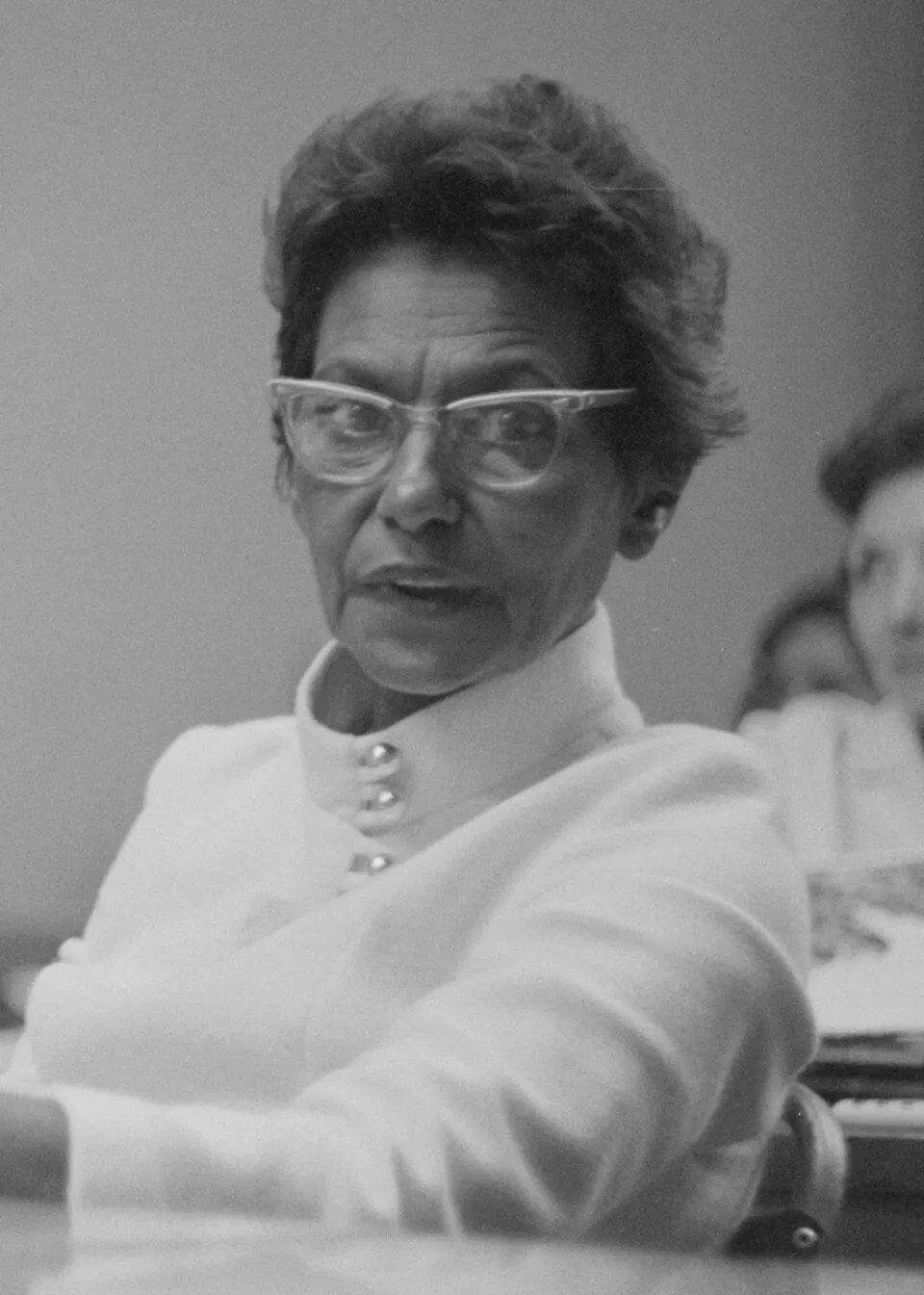
Quick Facts
| Full Name | Kathleen Jean Mary Ruska |
|---|---|
| Date of Birth | 3 November 1920 |
| Place of Birth | Bulimba, Brisbane, Queensland, Australia |
| Date of Death | 16 September 1993 |
| Place of Death | Greenslopes, Brisbane, Queensland, Australia |
| Cause of Death | Cancer |
| Nationality | Australian |
| Education | Dunwich State School, Brisbane Commercial College |
| Occupation | Poet, political activist, educator, artist |
| Known For | First published Aboriginal Australian poet, campaigner for the 1967 Referendum, founder of Moongalba |
| Notable Awards | Member of the Order of the British Empire (1970, returned 1987), Mary Gilmore Medal (1970), Jessie Litchfield Memorial Award (1975) |
| Spouse | Bruce Dennis Walker (m. 1943, div. 1958) |
| Children | Denis Walker, Vivian Walker |
Introduction: The Life and Impact of Oodgeroo Noonuccal
Oodgeroo Noonuccal, originally known to the world as Kath Walker, was an iconic Aboriginal Australian poet, political campaigner, educator, and visual artist. Rising from modest origins on North Stradbroke Island during the Great Depression, she shattered racial barriers to become the first Indigenous Australian to publish a book of verse. Her debut collection, We Are Going (1964), captivated the country and introduced tens of thousands of readers to the dispossession, dignity, and living culture of First Nations people.
Beyond her literary acclaim, Oodgeroo was a formidable engine of social and constitutional change. As a key leader of the Federal Council for the Advancement of Aborigines and Torres Strait Islanders (FCAATSI), she spearheaded the nationwide grass-roots campaign that produced the historic 1967 Australian Referendum. In later life, she transformed her ancestral land into an open-air classroom, educating generations about Indigenous heritage and self-determination. Her unwavering courage, eloquence, and principled defiance make her one of the most consequential cultural and political figures in modern Australian history.
Early Life and Family of Oodgeroo Noonuccal
Oodgeroo Noonuccal was born Kathleen Jean Mary Ruska on 3 November 1920 in Bulimba, Brisbane, Queensland. She spent her childhood primarily at One Mile, a settlement near Dunwich on Minjerribah (North Stradbroke Island), situated in Moreton Bay. She was the second youngest of seven children born to Edward (Ted) Ruska and Lucy McCullough. Her father was a Quandamooka man belonging to the Noonuccal clan, employed as an oysterman and head laborer by the Queensland Department of Harbours and Marine. Her mother, of the Peewee clan from inland Queensland, had been taken from her family as a child under colonial assimilation policies and denied basic literacy while being trained for domestic servitude.
Despite living under the oppressive restrictions of Queensland's protectionist regime, the Ruska household fostered deep cultural pride and resilience. Ted Ruska regularly challenged poor working conditions and instilled in his children a firm knowledge of Noonuccal traditions, including foraging, net-fishing, and honoring their totem, the carpet snake (Kabool). He famously reminded young Kathleen that because she was Aboriginal, she could not settle for being merely as good as white children in school—she was obligated to be better.
Education and Early Influences
Oodgeroo received her primary education at Dunwich State School on North Stradbroke Island. Even in a school environment constrained by racial prejudice and under-resourced classrooms, she revealed an instinctive mastery of the English language, excelling at reading, composition, and recitations. However, systemic obstacles abruptly curtailed her formal schooling. In 1934, at the age of thirteen, she was forced to leave school due to economic hardship during the Great Depression and the pervasive colonial expectation that Indigenous girls should only serve as domestic laborers.
Moving to Brisbane, she spent several years working long hours as a domestic servant for nominal wages. Nevertheless, she pursued self-education through voracious reading and independent study. During World War II, her enlistment in the armed forces opened unprecedented avenues for technical instruction. Following her discharge, she attended the Brisbane Commercial College, acquiring formal qualifications in bookkeeping, typing, and shorthand. These administrative skills later proved invaluable in her organizing work for civil rights organisations and literary guilds.
Career and Major Achievements of Oodgeroo Noonuccal
Oodgeroo Noonuccal's career was characterized by trailblazing milestones in public service, literature, and human rights advocacy. She navigated multiple professional worlds, seamlessly merging art with national political mobilization.
Military Service in the Australian Women's Army Service
When World War II expanded to the Pacific theater in 1942, Oodgeroo's two brothers, Eric and Eddie Ruska, enlisted in the Second Australian Imperial Force and were captured by Japanese forces following the fall of Singapore. Deeply motivated to fight fascism and advance her own training, Kathleen enlisted in the Australian Women's Army Service (AWAS) in July 1942. She trained as a signaller and communication worker, demonstrating notable efficiency and rising to the rank of Lance Corporal. She worked in switchboard operations and the district accounts office in Brisbane until she received a medical discharge in January 1944. Her service established her as one of a select group of Indigenous servicewomen who contributed directly to the Australian war effort.
Literary Breakthrough with "We Are Going"
During the late 1940s and 1950s, while raising her children and working as a domestic helper for prominent families, Oodgeroo began writing poetry to articulate the lived realities of her people. Mentored by Australian literary figures including James Devaney and poet Judith Wright, she joined the Brisbane Realist Writers Group. In 1964, Brisbane publisher Jacaranda Press released her first collection, We Are Going: Poems by Kath Walker.
The collection was a historic triumph. It marked the first time an Aboriginal Australian had published a volume of poetry. The book sold out its first edition in three days, eventually running through seven editions within six months and cementing her status as one of Australia’s best-selling poets. Her poems, composed in accessible verse with regular rhythms and unambiguous language, addressed themes of dispossession, cultural survival, and human equality. She followed this breakthrough with The Dawn Is at Hand (1966) and the retrospective volume My People: A Kath Walker Collection (1970).
Civil Rights Activism and the 1967 Referendum
Alongside her literary emergence, Oodgeroo became one of the central figures in the Australian civil rights struggle. She was active in the Queensland Aboriginal Advancement League and served as the Queensland State Secretary and national campaign director for FCAATSI. In the early 1960s, she travelled across the continent, addressing union gatherings, church groups, and university audiences to build public consensus around racial equality.
She helped lead the massive national petition drive that forced the federal government to address discriminatory clauses in the Constitution. On 27 May 1967, Australian voters overwhelmingly approved the referendum with a historic 90.77% "Yes" vote, empowering the Commonwealth parliament to enact legislation on behalf of Indigenous Australians and including them in the national census. Seeking direct legislative representation, she stood as the Australian Labor Party candidate for the Queensland state electorate of Greenslopes in 1969, becoming one of the earliest Indigenous women to contest a state parliamentary seat.
Moongalba: Educational and Cultural Center
Disillusioned by bureaucratic inertia in urban politics, Oodgeroo returned to Minjerribah in 1971 to re-establish her connection to Country. On ancestral land at One Mile, she created "Moongalba" (meaning "sitting-down place"), a bush sanctuary and cultural education center. Over two decades, Moongalba welcomed tens of thousands of visitors—including Australian school children, university academics, international delegates, and First Nations youth. She taught traditional Quandamooka lore, bush survival, ecological conservation, and shared Dreamtime stories, authoring celebrated children's books such as Stradbroke Dreamtime (1972) and Father Sky and Mother Earth (1981).
Renaming and the 1988 Bicentenary Protest
In 1970, Oodgeroo had been appointed a Member of the Order of the British Empire (MBE) for services to Aboriginal people. However, as the 1988 Australian Bicentenary approached—commemorating 200 years since the arrival of the First Fleet—she took a decisive, high-profile stand. In December 1987, she formally returned her MBE insignia to Queen Elizabeth II, declaring that she could not retain an imperial honor while two centuries of dispossession, marginalization, and injustice remained unaddressed.
In early 1988, she discarded her English name, Kath Walker, and officially assumed the traditional name Oodgeroo Noonuccal. "Oodgeroo" signifies the paperbark tree—the traditional bark on which stories and art were etched—and "Noonuccal" affirmed her ancestral clan. That same year, she collaborated with her younger son, Kabul (Vivian), writing the script for The Rainbow Serpent Theatre performed at World Expo 88 in Brisbane.
Awards and Recognition for Oodgeroo Noonuccal
Throughout her lifetime and posthumously, Oodgeroo received prestigious accolades celebrating her artistic, educational, and political contributions. Key honors include:
- Member of the Order of the British Empire (MBE): Awarded in 1970 for service to Aboriginal Australians (returned in 1987 in protest of bicentenary celebrations).
- Mary Gilmore Medal: Conferred in 1970 by the Mary Gilmore Centenary Committee for her contributions to national literature.
- Jessie Litchfield Memorial Award: Bestowed in 1975 in recognition of her literary achievements.
- NAIDOC Aboriginal of the Year: Awarded in 1985 by the National Aborigines Day Observance Committee.
- International Acting Recognition: Honored for her dramatic portrayal of Eva in the 1986 film adaptation of Nene Gare’s novel The Fringe Dwellers.
- Honorary Doctorates: Conferred Honorary Doctor of Letters by Macquarie University (1988), Griffith University (1989), and Queensland University of Technology (1992).
- Civic and Institutional Dedications: Posthumously commemorated through the naming of the Oodgeroo Unit at Queensland University of Technology and the creation of the Queensland state electoral district of Oodgeroo in 2017.
Challenges and Struggles
Oodgeroo's achievements occurred against the backdrop of systemic discrimination. For much of her adult life, Indigenous people in Queensland were subject to the draconian Aboriginals Preservation and Protection Acts, which strictly curtailed civil liberties, determined where Indigenous people could reside, and kept them under state supervision. Her early years were spent in poorly paid domestic service, the only vocation widely open to First Nations women in the interwar era.
During the Cold War era of the 1950s and 1960s, her activism drew intense scrutiny. Because the Communist Party of Australia was among the few political organizations openly repudiating the White Australia Policy and advocating Indigenous equality, she briefly joined the party before resigning due to ideological friction. Her political prominence led to continuous surveillance by the Australian Security Intelligence Organisation (ASIO). Furthermore, conservative literary critics frequently dismissed her poetry as crude political polemic rather than "pure" literature—criticism she firmly rejected by arguing that poetry was inherently social and political.
Her later years were marked by acute personal tragedy. Her younger son Vivian, a gifted actor, dancer, and writer, contracted HIV and passed away from AIDS-related complications in 1991 at the age of thirty-eight. Heartbroken by his death, Oodgeroo nevertheless persevered in her public obligations until her own health deteriorated.
Personal Life of Oodgeroo Noonuccal
On 8 May 1943, Kathleen married Bruce Dennis Walker, a childhood companion from Stradbroke Island who was a welder and former competitive boxer. In December 1946, she gave birth to their first son, Denis Walker. The marriage suffered from strain, alcohol dependence, and domestic abuse, leading to a permanent separation shortly after the war and a divorce finalized in 1958. Denis Walker grew up to become a prominent Indigenous rights campaigner and co-founded the Australian Chapter of the Black Panther Party in Brisbane in 1972.
In 1953, Oodgeroo gave birth to her second son, Vivian Walker. As a single mother in post-war Brisbane, she worked demanding jobs in domestic service and laundry to support her household. Her home at Moongalba remained a welcoming gathering point throughout her life, reflecting her warmth, communal ethos, and enduring dedication to her extended family and friends.
Death and Legacy
Oodgeroo Noonuccal died of cancer on 16 September 1993 at Greenslopes Repatriation Hospital in Brisbane, at the age of 72. In accordance with her wishes, she was taken home to Minjerribah and buried on her ancestral soil at Moongalba in a traditional ceremony attended by hundreds of mourners, including political leaders, fellow writers, and community elders.
Her legacy resonates across modern Australian culture and literature. By proving that Indigenous experiences could be articulated through print and reach vast audiences, she paved the way for generations of First Nations authors, poets, and playwrights. Her central role in the 1967 Referendum reshaped the Australian legal landscape, and her pedagogical work at Moongalba pioneered modern Indigenous community education. Oodgeroo remains revered as a visionary who used language as an instrument of liberation.
Interesting Facts About Oodgeroo Noonuccal
- Poetic Symbolism in Her Name: In 1988, she chose the name "Oodgeroo," meaning "paperbark tree" in the Noonuccal language, reflecting the traditional bark used for drawing and her role as a writer.
- Surviving an Airplane Hijacking: In November 1974, while returning from an arts conference in Nigeria, her British Airways flight was hijacked by Palestinian militants in Dubai; during three days in captivity, she used a blunt pencil to write two poems on airline sickbags.
- Shattering Publishing Records: Her 1964 debut poetry collection, We Are Going, sold out its initial print run within days and became one of the most commercially successful poetry volumes in Australian publishing history.
- Pivotal 1963 Political Deputation: During a meeting with Prime Minister Robert Menzies in Canberra in 1963, she forcefully argued for Indigenous equality, highlighting that Australian sheep and cattle were officially counted in national tallies while First Nations people were excluded.
- Silver Screen Performance: Beyond her literary and political work, she appeared as the matriarch Eva in director Bruce Beresford’s 1986 film The Fringe Dwellers, earning an International Acting Award.
- Returning Her Imperial Honor: She created national headlines in December 1987 when she formally returned her MBE insignia to Queen Elizabeth II in protest against the 1988 Bicentenary.
Frequently Asked Questions About Oodgeroo Noonuccal
What is Oodgeroo Noonuccal most famous for?
Oodgeroo Noonuccal is best known as the first Aboriginal Australian author to publish a book of poetry, with her landmark 1964 volume We Are Going. She was also a prominent civil rights leader who served as a national campaign coordinator for the historic 1967 Australian Referendum.
Why did Oodgeroo Noonuccal return her MBE?
In December 1987, she returned the Member of the Order of the British Empire medal she had received in 1970. She surrendered the award in protest against the 1988 Australian Bicentenary celebrations, stating that she could not honor an imperial institution while Indigenous people continued to face systemic dispossession and a lack of land rights.
What does the name "Oodgeroo Noonuccal" mean?
In the language of the Noonuccal people of Minjerribah (North Stradbroke Island), "Oodgeroo" translates to "paperbark tree". She selected this name in 1988 to honor the natural paperbark used by her ancestors for writing and painting, while "Noonuccal" reflects her clan heritage.
What role did she play in the 1967 Australian Referendum?
Serving as Queensland State Secretary and national campaign director for the Federal Council for the Advancement of Aborigines and Torres Strait Islanders (FCAATSI), she organized speaking tours, lobbied federal parliamentarians, and coordinated petition drives that ultimately secured a 90.77% "Yes" vote to recognize Indigenous Australians in the census and enable federal laws on their behalf.
Where is Oodgeroo Noonuccal buried?
Following her death in September 1993, she was laid to rest on her ancestral land at Moongalba on Minjerribah (North Stradbroke Island), Queensland, where she had lived and run her cultural education center.
Conclusion
Oodgeroo Noonuccal was a trailblazing pioneer whose life exemplified the transformative power of art aligned with social conscience. Facing institutional disenfranchisement from an early age, she transformed the English language into an instrument of Indigenous pride, resistance, and truth-telling. From serving her country in wartime uniform to mobilizing millions of voters in the 1967 Referendum and opening Moongalba to the world, she left an indelible mark on Australia's cultural and political identity. Her verse and legacy continue to inspire modern movements for reconciliation, justice, and First Nations sovereignty.
Image: Wikimedia Commons, via Wikipedia (see the file page for author and license).
More biographies in Author → · All biographies
Related biographies
Ishtiaq Hussain Qureshi | the Grand Old Man of Historiography
Introduction to Ishtiaq Hussain Qureshi: He was born on 3rd November 1903 in Uttar Pradesh, British India. Ishtiaq Hussain…
The Magic and Memories of Legend Riaz Shahid
Early Life of Riaz Shahid: Riaz Shahid had opened his eyes in 1930 in Sub-Continent. He was a director, writer […]
Mufti Taqi Usmani Named Most Influential Muslim Personality in the Globe
Introduction: Explore the extensive collection of Mufti Taqi Usmani influential books, encompassing Hadith, Islamic law, and…
Agha Shorish Kashmiri
Introduction: Agha Shorish Kashmiri was born on 14th August 1917 in Lahore, India (now in Pakistan). From his birth to […]
Dr. Abdus Salam
Introduction to Dr. Abdus Salam: Dr. Abdus salam was born on January9, 1926, in Santokdas, Punjab, British India (presently…
Pirzada Qasim Profile & Biography
Introduction: Pirzada Qasim was born on 8th February 1943 in Delhi, India. He was a scholar, poet, scientist, and educationist…