
Kazi Nazrul Islam: Life and Legacy of the Rebel Poet
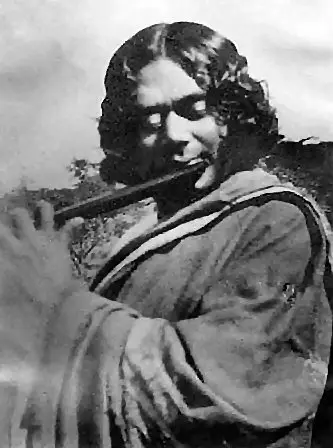
Quick Facts
| Full Name | Kazi Nazrul Islam |
|---|---|
| Date of Birth | May 24, 1899 |
| Place of Birth | Churulia, Burdwan District, Bengal Presidency, British India |
| Date of Death | August 29, 1976 |
| Place of Death | Dhaka, Bangladesh |
| Cause of Death | Complications of Pick's disease |
| Nationality | Bangladeshi, Indian |
| Education | Raniganj Searsole Raj School, Darirampur High School |
| Occupation | Poet, lyricist, composer, journalist, political activist |
| Known For | National Poet of Bangladesh, author of Bidrohi, pioneer of Nazrul Geeti |
| Notable Awards | Jagattarini Gold Medal (1945), Padma Bhushan (1960), Ekushey Padak (1976), Independence Day Award (1977) |
| Spouse | Pramila Devi (m. 1924; died 1962), Nargis Asar Khanum (m. 1921; divorced 1937) |
| Children | Krishna Mohammad, Arindam Bulbul, Kazi Sabyasachi, Kazi Aniruddha |
Introduction to Kazi Nazrul Islam
Kazi Nazrul Islam stands as one of the most transformative literary and cultural figures in the history of Bengal. Revered today as the national poet of Bangladesh and celebrated across the world as the Bidrohi Kobi, or the "Rebel Poet," he was a polymath whose work reshaped modern Bengali literature and music. Nazrul emerged during the height of the British colonial occupation of the Indian subcontinent, channeling the frustrations, hopes, and indomitable courage of ordinary citizens into immortal poetry and song. His explosive voice challenged tyranny in all forms, fiercely denouncing colonial subjugation, religious fanaticism, class exploitation, and patriarchal oppression.
Beyond his revolutionary anti-colonial activism, Nazrul was a pioneering lyricist and composer who crafted thousands of original musical compositions known collectively as Nazrul Geeti. His artistic vision was deeply syncretic; he celebrated human equality by seamlessly bridging Islamic spiritual traditions and Hindu mythology within a singular, universal framework of love and dignity. Even after an incurable neurological illness silenced his creative voice midway through his life, his works continued to spark liberation movements, inspiring the struggle for Bengali linguistic identity and the eventual birth of sovereign Bangladesh.
Early Life and Family of Kazi Nazrul Islam
Kazi Nazrul Islam was born on May 24, 1899 (corresponding to 11 Jaistha 1306 in the Bengali calendar) in the village of Churulia, located in the Asansol subdivision of the Burdwan district in present-day West Bengal, India. He was born into a respected Muslim family of modest circumstances. His father, Kazi Fakir Ahmed, served as an imam at the local village mosque and maintained the shrine of the Sufi saint Haji Pahlwan. His mother was Zaheda Khatun. Nazrul was the second of three sons in a family that had known generational hardship.
Tragedy struck early when his father died in 1908, leaving the nine-year-old Nazrul and his family destitute. The overwhelming financial misery earned him the enduring family nickname Dukhu Mia, meaning "the boy of sorrow" or "the hapless one". Despite his youth, Nazrul was forced to shoulder adult burdens. At the age of ten, he took over his late father's duties, serving as a muezzin calling worshippers to prayer and working as a caretaker at the village shrine and maktab.
While this early exposure ingrained in him a deep familiarity with the Quran, Islamic rituals, and Persian language traditions, Nazrul's artistic spirit yearned for secular creative expression. He soon broke away to join a wandering folk-theatre group known as a Leto troupe, influenced by his uncle Bazle Karim, who was a skilled lyricist in Arabic, Persian, and Urdu. Traveling across the rural countryside, the adolescent Dukhu Mia performed on makeshift stages, learned regional instruments, and began composing original verses, musical plays, and songs. This immersive grassroots training provided the rhythmic vitality and populist grounding that would later define his adult literature.
Education and Formative Years
Nazrul's formal education was fragmented and repeatedly interrupted by extreme poverty. He initially completed basic religious studies at the local village maktab in Churulia. In 1910, at the age of eleven, he managed to enroll in class six at a formal school, but destitute circumstances forced him to withdraw within months. To survive, he worked a succession of menial jobs, laboring as a domestic cook and working long shifts at a roadside bakery and tea stall in Asansol.
It was at this bakery that Nazrul's extraordinary intellect was discovered. Kazi Rafizullah, a visiting police sub-inspector, observed the young boy reading voraciously and improvising poetry while tending to manual labor. Impressed by his innate genius, Rafizullah brought Nazrul to his ancestral village in Trishal, situated in the Mymensingh district of eastern Bengal (now in Bangladesh). In 1914, Nazrul was enrolled in class seven at Darirampur High School, where he spent a formative academic year absorbing Bengali literature, Sanskrit fundamentals, and regional folklore.
Nazrul eventually returned to the Burdwan region, securing admission to the Raniganj Searsole Raj High School. There, his education was supported by free tuition and lodging. During these high school years, he came under the profound mentorship of teacher Nibaran Chandra Ghatak, who was covertly affiliated with revolutionary nationalist groups fighting British imperialism. Ghatak, alongside activist fellow students, broadened Nazrul's political consciousness, introducing him to clandestine anti-colonial literature and revolutionary philosophy.
Nazrul excelled academically, particularly in literature, history, and languages, reaching the tenth class. Yet, he never sat for his final matriculation examinations. In 1917, stirred by political turbulence and seeking adventure beyond domestic confines, the eighteen-year-old student abandoned the classroom to enlist in the British Indian Army.
Career and Major Achievements of Kazi Nazrul Islam
Military Service and Literary Beginnings (1917–1920)
Joining the 49th Bengal Regiment, Nazrul was dispatched to the cantonment at Karachi. While his battalion never saw frontline combat during World War I, the military barracks became a crucial incubator for his literary development. Rising to the rank of Havildar (quartermaster), Nazrul utilized his spare time to immerse himself in international literature, reading extensively in Persian, Urdu, and English. He studied the classical Persian masters, particularly Hafez and Omar Khayyam, while practicing classical Indian music on a harmonium he kept in the barracks.
It was from Karachi that Nazrul made his formal literary debut. In 1919, his first published short story, Baunduler Atmakahini ("Autobiography of a Vagabond"), appeared in the prestigious Calcutta journal Saogat. Months later, his first published poem, Mukti ("Freedom"), was printed in the Bangiya Mussalman Sahitya Patrika. When the 49th Bengal Regiment was formally disbanded in 1920 following the war's conclusion, Nazrul discarded his uniform and moved directly to Calcutta, determined to dedicate his entire existence to literature and anti-imperial activism.
The Emergence of the "Rebel Poet" and Agni-Bina (1921–1922)
Settling in Calcutta, Nazrul shared humble accommodations with Muzaffar Ahmad, one of the founders of the Communist movement in India. He rapidly embedded himself in the city's vibrant literary circles, contributing to various progressive periodicals. In December 1921, during a late-night burst of creative fury, Nazrul wrote the legendary poem Bidrohi ("The Rebel"). Published in the journal Bijli in January 1922, the poem sent shockwaves through Bengal's literary and political landscapes.
In Bidrohi, the speaker identifies directly with cosmic rebellion and the wrath of the oppressed, declaring fearless resistance against all cosmic and mortal tyrants. He wove together Hindu and Islamic symbols with unprecedented artistic audacity:
"I am the tempest, I am the cyclone,
I destroy all that I find in my path.
I am the dance of wild destruction, I am the great cataclysm...
I will be calm only when the cries of the oppressed no longer echo in the sky and air,
And the tyrant's battle sword ceases to clang upon the dreadful battlefield."
The poem earned him the lifelong honorific Bidrohi Kobi. In 1922, Nazrul consolidated his stature by publishing his first poetry collection, Agni-Bina ("The Fiery Lyre"). Containing "Bidrohi," "Pralayollas" ("Ecstasy of Destruction"), and other masterpieces, the book was an instant sensation, electrifying the youth of Bengal and establishing him as the primary voice of anti-colonial resistance alongside the older Nobel laureate Rabindranath Tagore.
Journalism, Political Activism, and Dhumketu
Nazrul understood that poetry alone could not dismantle empire; it required journalistic confrontation. In August 1922, he launched a bi-weekly political magazine titled Dhumketu ("The Comet"). Rabindranath Tagore publicly blessed the enterprise, urging the magazine to awaken the slumbering soul of the nation. In the pages of Dhumketu, Nazrul became one of the earliest Indian public intellectuals to openly demand complete, unconditional independence for India from British rule, well before mainstream political parties adopted the stance.
In September 1922, Nazrul published a fiery political poem in Dhumketu titled Anandamayir Agamane ("On the Arrival of Anandamayi"), which used the allegory of the goddess Durga to excoriate British tyranny and violence. The colonial government moved swiftly: the journal was raided, the issue was banned, and a warrant was issued for Nazrul's arrest. He was apprehended in Comilla in late 1922 and tried for sedition in Calcutta.
At his trial in January 1923, Nazrul delivered an eloquent self-defense titled Rajbandir Jabanbandi ("Deposition of a Political Prisoner"), which became an instant classic of revolutionary literature. Sentenced to a year of rigorous imprisonment, he was dispatched to Alipore and Hooghly jails. When the Hooghly jail authorities subjected political prisoners to degrading abuse, Nazrul led an historic 39-day hunger strike, refusing all food to defend prisoner rights. Fearing his martyrdom, prominent leaders, including Chittaranjan Das, appealed for his life, while Rabindranath Tagore sent a famous telegram reading: "Give up hunger strike, our literature claims you."
Following his release in December 1923, Nazrul joined the Bengal Provincial Congress and subsequently helped establish the Workers and Peasants Party of Bengal. In 1925, he served as the chief editor of Langol ("The Plough"), an influential mouthpiece that advocated the socio-economic rights of peasants, factory workers, and laborers.
Musical Genius and the Creation of Nazrul Geeti
During the late 1920s and throughout the 1930s, Nazrul directed his immense creative energies into music, transforming the landscape of South Asian melodies. He served as a principal lyricist, composer, and trainer for prominent commercial recording entities, including His Master's Voice (HMV) and the Megaphone Record Company, while also directing musical programs for All India Radio in Calcutta.
Over two decades, Nazrul composed between 2,500 and 4,000 original songs, a repertoire celebrated today as Nazrul Geeti. His versatility was extraordinary. He introduced the Urdu ghazal into the Bengali musical vocabulary, adapting its intricate Persian rhythms into lilting Bengali lyricism. He mastered classical ragas, revived fading regional folk forms such as Bhatiyali and Jhumur, and composed marching songs of martial vigor, such as Chal Chal Chal, which was later adopted as the national military song of Bangladesh.
Equally remarkable was his dual mastery of religious music. For Muslim audiences, he composed exquisite Hamd (hymns praising God) and Naat (praise of the Prophet Muhammad) that brought Islamic devotional expression into mainstream Bengali culture. Concurrently, he composed hundreds of Hindu devotional songs, including sublime Shyama Sangeet dedicated to the goddess Kali and Bhajans celebrating Krishna. His music was performed by the finest classical and semi-classical vocalists across India, demonstrating his peerless universality.
Advocacy for Equality, Secularism, and Women's Rights
Throughout his career, Nazrul was an uncompromising champion of humanism. In an era fraught with communal tensions manufactured by colonial divide-and-rule tactics, he steadfastly promoted Hindu-Muslim brotherhood. In one of his most beloved songs, he wrote: "Mora eki brinte duti kusum Hindu-Musalman" ("We are two flowers on the same stalk, Hindu and Muslim; the Muslim is its pearl of an eye, the Hindu its life").
Nazrul was also a visionary advocate for gender equality. In his groundbreaking poem Nari ("Woman"), published in his collection Samyabadi ("The Egalitarian"), he boldly dismantled patriarchal history:
"I sing the song of equality.
In my eyes, there is no difference between man and woman.
Whatever great creations, noble and enduring, have been wrought in this world,
Half were done by women, and half by men."
His poetry took relentless aim at religious dogma, caste stratification, and the exploitation of the working poor, celebrated in poems like Kuli-Majur ("Coolies and Laborers") and Daridro ("Poverty"). To Nazrul, human divinity resided solely in truth, compassion, and shared dignity, rather than in shrines, temples, or scriptures.
Awards and Recognition for Kazi Nazrul Islam
Although Kazi Nazrul Islam experienced state prosecution and material poverty throughout much of his active life, his immense cultural contributions were recognized through prestigious awards in both India and Bangladesh:
- Jagattarini Gold Medal (1945): Conferred by the University of Calcutta, this was the highest literary honor awarded by Bengal's oldest university to celebrate his revolutionary contributions to Bengali poetry and letters.
- Padma Bhushan (1960): Awarded by the Government of India, representing the nation's third-highest civilian honor, in recognition of his enduring cultural and literary legacy.
- Honorary Doctor of Literature (D.Litt.) (1974): Awarded honoris causa by the University of Dhaka at a special convocation held in the capital of newly independent Bangladesh.
- Ekushey Padak (1976): Conferred by the Government of Bangladesh, this is the nation's most prestigious cultural civilian award, recognizing his monumental role in shaping Bengali linguistic identity and national conscience.
- Citizenship and National Poet Designation (1976): Formally granted Bangladeshi citizenship by the state government and officially designated as the National Poet of Bangladesh (Jatiya Kabi).
- Independence Day Award / Swadhinata Puraskar (1977): Posthumously conferred as Bangladesh's highest state civilian honor, recognizing his profound inspiration during the 1971 Liberation War.
Challenges, Imprisonment, and Illness
Nazrul's path was marked by continuous tribulation, political retaliation, and heartbreaking personal grief. The British colonial state banned five of his prominent books—Yugabani, Bisher Banshi ("The Flute of Poison"), Bhangar Gan ("The Song of Destruction"), Pralaysikha, and Chandrabindu—charging them with sedition and confiscating copies from presses and shops across India. He faced repeated police raids, surveillance, and stints in prison.
His domestic life was also struck by terrible personal tragedy. His mother passed away in 1928, and within two years, his beloved second son, Bulbul, succumbed to smallpox at only four years of age. Bulbul was an unusually bright, musical child whose sudden demise shattered Nazrul emotionally. The grief plunged the poet into intense spiritual searching, visible in his transition toward deeper, more solemn devotional songs. In 1939, his wife Pramila was struck by severe paralysis, leaving her bedridden for the rest of her life. Nazrul mortgaged his book copyrights, sold gramophone royalties, and incurred staggering debts to fund her medical care.
The final blow came in July 1942, when Nazrul abruptly fell ill during a live radio broadcast. He began slurring words, suffered rapid cognitive deterioration, and soon lost both his speech and his memory. Despite extensive medical treatments in India, and later clinical examinations by specialist physicians in London and Vienna in 1953, his condition proved irreversible. He was diagnosed with Pick's disease, an aggressive and incurable neurodegenerative brain disorder. For the remaining thirty-four years of his life, the fiery voice that had awakened a subcontinent lived in enforced silence, unable to write, speak, or compose.
Personal Life of Kazi Nazrul Islam
Nazrul's personal relationships mirrored his nonconformist, secular convictions. In early 1921, while staying in Daulatpur in the Comilla district, he met Syeda Khatun, whom he affectionately named Nargis Asar Khanum. A betrothal took place in June 1921; however, during the formal marriage negotiations, Nargis's uncle insisted on strict legal preconditions, including demanding that Nazrul remain in their household as a resident son-in-law. Fiercely protective of his independence, Nazrul walked out on the wedding night before the marriage could be consummated. The legal ties remained in limbo until a formal divorce was finalized years later in 1937.
While in Comilla, Nazrul had also formed a profound bond with the family of Indrakumar Sengupta. He fell in love with Sengupta's niece, Ashalata Sengupta, whom Nazrul named Pramila. On April 25, 1924, Nazrul and Pramila were married in Calcutta. Because Nazrul was a practicing Muslim and Pramila was a Hindu, the interfaith union caused an immense scandal. Religious zealots from both communities condemned the marriage, subjecting the couple to public vitriol and social ostracism.
Unmoved by the outrage, the couple created a warm, syncretic household founded on profound mutual respect. They gave their sons names reflecting both Hindu and Muslim heritages. The couple had four sons: Krishna Mohammad (who died in infancy), Arindam (Bulbul, who died in 1930 at age four), Kazi Sabyasachi, and Kazi Aniruddha. Kazi Sabyasachi grew up to become a celebrated elocutionist renowned for reciting his father's verses, while Kazi Aniruddha became an accomplished guitarist and musician. Pramila remained Nazrul's steadfast companion and anchor through poverty, censorship, and political upheaval until her death in June 1962.
Death and Legacy of Kazi Nazrul Islam
Following the emergence of independent Bangladesh in December 1971, the nation's founding leader, Bangabandhu Sheikh Mujibur Rahman, prioritized honoring the poet whose verses had inspired the Mukti Bahini freedom fighters. On May 24, 1972, with the formal approval of the Government of India, Nazrul and his family were flown from Kolkata to Dhaka. The Bangladesh government accommodated the ailing poet at Kabi Bhaban in Dhanmondi and conferred upon him state care and official recognition as the National Poet.
As his physical condition declined in his final months, Nazrul was admitted to the Institute of Post Graduate Medicine and Research (PG Hospital, now Bangabandhu Sheikh Mujib Medical University) in Dhaka. He passed away peacefully on August 29, 1976, at the age of seventy-seven. Tens of thousands of weeping citizens, artists, and state officials attended his national funeral.
Years earlier, in a deeply moving musical composition, Nazrul had expressed his final wish: "Masjider-i pashe amar kobor diyo bhai, jeno gore thekeo muazziner azan shunte pai" ("Bury me beside a mosque, brother, so that even from my grave I can hear the muezzin's call to prayer"). Respecting this desire, the Bangladesh government laid the national poet to rest with full military and state honors right beside the central mosque of the University of Dhaka, where his white marble mausoleum remains a revered pilgrimage site.
Today, Kazi Nazrul Islam's legacy is preserved by national research bodies, including the Nazrul Institute and the Bangla Academy in Dhaka, as well as the Kazi Nazrul University in Trishal, Mymensingh, and Kazi Nazrul University in Asansol, India. His literature remains compulsory study across schools in the Bengali-speaking world, and his revolutionary philosophy continues to inspire social justice activists globally.
Interesting Facts About Kazi Nazrul Islam
- A prolific musical innovator: Nazrul composed an estimated 2,500 to 4,000 distinct songs, representing one of the largest single-composer repertoires in world musical history.
- Wrote his masterpiece overnight: He drafted his most celebrated 140-line revolutionary poem, Bidrohi, in a single night in late December 1921 using pencil on sheets of paper in a shared room in Calcutta.
- A film actor and director: In 1934, Nazrul served as co-director, lyricist, and music composer for the film Bhakta Dhruva, and even appeared onscreen in the role of the sage Narada.
- Dedicated works with Tagore: Despite their generational gap and different poetic styles, Rabindranath Tagore dedicated his musical drama Basanta to Nazrul while the younger poet was imprisoned by the British; Nazrul reciprocated by dedicating his book Sanchita to Tagore.
- Military-inspired national anthem: Nazrul's rousing patriotic song Chal Chal Chal ("March, March, March"), composed in 1928, was formally adopted as the national military song of Bangladesh in 1972.
- Interfaith naming tradition: In a deliberate defiance of communal division, Nazrul and his Hindu wife Pramila gave their children names drawn from both Hindu and Muslim roots, such as Krishna Mohammad.
Frequently Asked Questions About Kazi Nazrul Islam
Why is Kazi Nazrul Islam called the Rebel Poet?
Kazi Nazrul Islam earned the title Bidrohi Kobi ("Rebel Poet") following the publication of his iconic 1922 poem Bidrohi. The moniker reflects his unapologetic literary and physical rebellion against British colonial rule, socioeconomic injustice, religious bigotry, and all forms of human oppression.
When and why did Kazi Nazrul Islam stop writing?
Nazrul was abruptly silenced in July 1942 at the age of forty-three when he suffered from an incurable neurological disorder later identified by European medical teams as Pick's disease. The illness destroyed his ability to speak and obliterated his cognitive memory, forcing him to live the final thirty-four years of his life in creative silence.
What is Nazrul Geeti?
Nazrul Geeti (literally "Songs of Nazrul") refers to the vast body of music written and composed by Kazi Nazrul Islam. Encompassing thousands of songs, the genre includes Indian classical ragas, Bengali ghazals, patriotic marching anthems, folk tunes, and profound Hindu and Muslim devotional hymns.
Why is Kazi Nazrul Islam the national poet of Bangladesh?
Nazrul's relentless defiance of oppression and his lyrical celebrations of the Bengali language and identity provided vital spiritual and intellectual fuel for the 1971 Bangladesh Liberation War. In 1972, Bangladesh's founding leadership brought the poet to Dhaka and officially designated him the country's National Poet to honor his role in the nation's independence.
Where is Kazi Nazrul Islam buried?
Nazrul is buried in a prominent mausoleum beside the central mosque on the campus of the University of Dhaka in Bangladesh. His burial location directly fulfilled a wish he had expressed in his famous song asking to be laid to rest beside a mosque so he could hear the daily call to prayer.
Conclusion
Kazi Nazrul Islam was far more than an extraordinary poet; he was a revolutionary moral force who elevated literature into an instrument of universal human liberation. Rising from the painful deprivations of poverty as young Dukhu Mia, he broke the shackles of colonial oppression and religious prejudice with verse of unprecedented fire and musicality. His legacy stands as an eternal beacon of secular brotherhood, fearless resistance, and artistic brilliance. Decades after his passing, the songs and verses of the Rebel Poet continue to teach humanity that true freedom begins with the refusal to bow before injustice.
Image: Wikimedia Commons, via Wikipedia (see the file page for author and license).
More biographies in Writer → · All biographies
Related biographies
Émile Zola Biography: The Voice of Naturalism and Justice
French novelist and journalist Émile Zola pioneered literary naturalism, exposed social injustice through masterworks like…

Grace Hopper Biography: Pioneer of Modern Computer Programming
Grace Hopper was an American computer scientist and U.S. Navy rear admiral who pioneered high-level programming languages and…

Irmã Dulce – Life of the Good Angel of Bahia
Revered as the "Good Angel of Bahia," Irmã Dulce built Brazil's largest charitable healthcare network, transforming a convent…
Intizar Hussain Biography: Master Chronicler of Urdu Literature
Explore the life and literary genius of Intizar Hussain, the acclaimed Pakistani novelist whose allegorical fiction captured the…

Reinhold Messner Biography: Life of the Mountaineering Legend
Discover the life of Reinhold Messner, the mountaineering icon who summited all 14 eight-thousanders and conquered Everest solo…
Amílcar Cabral: Life of the Anti-Colonial Leader & Theorist
Amílcar Cabral led Guinea-Bissau and Cape Verde toward independence from Portuguese rule while crafting seminal theories of…