
Chinghiz Aitmatov: Life and Legacy of Central Asia's Literary Giant
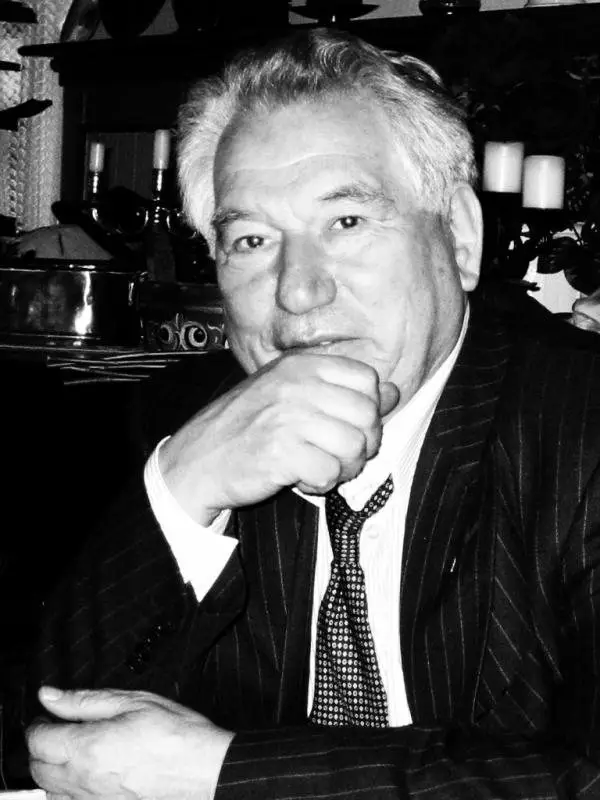
Quick Facts
| Full Name | Chinghiz Torekulovich Aitmatov |
|---|---|
| Date of Birth | December 12, 1928 |
| Place of Birth | Sheker, Talas Region, Kirghiz ASSR, Soviet Union |
| Date of Death | June 10, 2008 |
| Place of Death | Nuremberg, Bavaria, Germany |
| Cause of Death | Complications from pneumonia and kidney failure |
| Nationality | Kyrgyz |
| Education | Kyrgyz Agricultural Institute, Maxim Gorky Literature Institute |
| Occupation | Writer, diplomat, statesman |
| Known For | Novels and novellas including Jamila, The White Steamship, and The Day Lasts More Than a Hundred Years |
| Notable Awards | Hero of the Kyrgyz Republic, Hero of Socialist Labour, Lenin Prize, USSR State Prize |
| Spouse | Kerez Shamshibaeva (divorced), Maria Urmatovna Aitmatova (m. 1981) |
| Children | Sanjar Aitmatov, Askar Aitmatov, Eldar Aitmatov, Shirin Aitmatova |
Introduction to Chinghiz Aitmatov
Chinghiz Aitmatov stands as one of the most distinguished literary figures to emerge from Central Asia during the twentieth century. Writing in both Kyrgyz and Russian, he gained worldwide renown for masterfully weaving pastoral nomad traditions, epic folklore, and profound philosophical dilemmas into vivid modern prose. Formally awarded the title of Hero of the Kyrgyz Republic and celebrated across the former Soviet Union and internationally, Aitmatov served not only as a master storyteller, but also as an influential cultural statesman and diplomat who championed cross-cultural dialogue.
His stories transformed the sweeping steppes and majestic mountain valleys of Kyrgyzstan into a universal stage for confronting timeless human issues. At a time when Soviet socialist realism strictly demanded ideological uniformity, Aitmatov subtly stretched the boundaries of permissible art, introducing themes of spiritual alienation, environmental degradation, and the catastrophic loss of historical memory. Translated into more than 150 languages across more than 100 countries, his literary corpus remains a cherished cultural cornerstone for the Kyrgyz people and an enduring treasure of world literature.
Early Life and Family
Chinghiz Torekulovich Aitmatov was born on December 12, 1928, in the remote mountainous village of Sheker, located in the Talas Region of what was then the Kirghiz Autonomous Soviet Socialist Republic. His father, Torekul Aitmatov, was a committed early Bolshevik intellectual and rising political official who eventually rose to serve as the Second Secretary of the Kyrgyz Regional Committee of the Communist Party. His mother, Nagima Khamzievna Aitmatova (née Abdulvalieva), was an educated ethnic Tatar woman who worked as an army political worker and local activist advocating for literacy, social reforms, and women's rights.
Tragedy struck the family during the height of Joseph Stalin's Great Purge. In 1937, while studying at the Red Professors Institute in Moscow, Torekul Aitmatov was arrested on fabricated charges of "bourgeois nationalism". Anticipating imminent danger, he urged his wife to take their four young children back to the safety of Sheker. In November 1938, Torekul was secretly executed near the village of Chong-Tash, leaving Nagima to raise Chinghiz and his siblings amidst the devastating social stigma of being the family of an "enemy of the people".
World War II imposed severe burdens on the adolescent Aitmatov. With nearly all able-bodied adult men mobilized to the battlefront, the fourteen-year-old Chinghiz had to step forward to perform essential civic roles. He served as the secretary of the local village soviet, operated as a district tax collector, managed grain harvests, and delivered official military telegrams to grieving families across the countryside. These harsh wartime experiences exposed him directly to the resilience, suffering, and quiet dignity of rural laborers, experiences that later formed the emotional core of his finest literary writing.
Education and Early Influences
Despite the immense material privation of the wartime period, Aitmatov remained determined to pursue his education. After finishing eight grades at the local Soviet school in Sheker, he enrolled in 1946 at the Dzhambul Zooveterinary Technical College across the border in neighboring Kazakhstan. Showing a strong aptitude for natural sciences and agriculture, he graduated with distinction and continued his studies at the Kyrgyz Agricultural Institute in the republic's capital, Frunze (now Bishkek), graduating in 1953 with a diploma in animal husbandry.
While working initially as a livestock specialist and agricultural researcher, Aitmatov found himself inexorably drawn to storytelling. He grew up immersed in the rich oral traditions recited by his grandmother and nomadic elders, including the colossal Kyrgyz *Epic of Manas*. In 1952, he published his first short stories in local periodicals. Recognizing that his true calling lay in letters rather than agriculture, Aitmatov traveled to Moscow in 1956 to attend the prestigious Higher Literary Courses at the Maxim Gorky Literature Institute. The intellectual ferment of the Khrushchev Thaw in Moscow provided him with the ideal environment to hone his craft, polish his bilingual writing style, and prepare his initial works for wider Soviet circulation.
Career and Major Achievements of Chinghiz Aitmatov
Literary Breakthrough with Jamila
Aitmatov completed his coursework at the Gorky Literature Institute in 1958, the same year he published the novella that altered the course of his life: Jamila. Set in a Kyrgyz village during World War II, the story follows a young married woman whose husband is fighting at the front, and who dares to fall in love with Danijar, a wounded, solitary former soldier assigned to transport grain. Narrated through the empathetic eyes of Jamila's teenage brother-in-law, the story defied rigid patriarchal conventions and the sterile tropes of standard Soviet fiction.
When the prominent French writer Louis Aragon translated Jamila into French in 1959, he famously proclaimed it "the most beautiful love story in the world". The novella catapulted Aitmatov to international acclaim practically overnight. Readers and critics alike marveled at how the author balanced romantic lyrical elegance with an authentic, unvarnished depiction of collective farm life during wartime.
Exploring Folk Traditions and Nature
Following the triumph of Jamila, Aitmatov produced a succession of poignant novellas that secured his status as a major Soviet author. Works such as The First Teacher (1962), Mother's Field (1963), and My Poplar in a Red Scarf (1961) revealed his ability to depict social upheaval through intimate human relationships. In 1963, his collection Tales of the Mountains and Steppes was awarded the highest literary honor in the Soviet Union, the Lenin Prize.
In 1966, Aitmatov published Farewell, Gulsary!, marking his transition to composing directly in Russian. The novella explores the deep bond between an aging, disillusioned communist herdsman, Tanabai, and his once-magnificent pacing stallion, Gulsary. By framing the tragic mistreatment of the animal alongside the political compromises endured by the old man, Aitmatov offered an allegorical critique of bureaucratic coldness and rural collectivization.
In 1970, he published The White Steamship, an emotionally shattering novella about a sensitive, lonely seven-year-old orphan boy living in an isolated mountain forest outpost. The child finds comfort in his grandfather's myth of the Sacred Horned Mother Deer, but falls into despair when corrupt, cynical local adults force the grandfather to slaughter one of the sacred animals. The novella ignited passionate debates among Soviet literary authorities due to its tragic conclusion, yet it solidified Aitmatov's standing as a writer unafraid to examine the painful clash between ancient humanistic values and crude modern brutality.
The Day Lasts More Than a Hundred Years and the Mankurt
In 1980, Aitmatov published his first full-length novel, The Day Lasts More Than a Hundred Years (later also published under the title Buranny Railway Stop). Set in the vast, arid Kazakh steppe surrounding a lonely railway junction, the narrative unfolds over the course of a single day as an old railway worker, Yedigei, journeys across the desert to bury his deceased friend in an ancestral tribal cemetery.
The novel brilliantly intertwines three distinct narrative strands: the gritty realism of daily life on the steppe, an ambitious science-fiction subplot involving a joint Soviet-American space project that encounters an advanced alien civilization, and an ancient Central Asian legend regarding the "mankurt". According to the myth, nomadic raiders tortured captives by binding raw camel hide tightly around their shaved heads; as the hide dried and shrank under the scorching sun, it destroyed their memory and identity, reducing them to mindless slaves who could even kill their own mothers without remorse. Through the allegory of the mankurt, Aitmatov delivered an enduring warning against cultural amnesia, political indoctrination, and the deliberate erasure of ancestral history. The word "mankurt" quickly entered several languages as an enduring term for someone who has forgotten or betrayed their heritage.
Later Masterpieces and Perestroika
In 1986, at the dawn of Mikhail Gorbachev's era of glasnost and perestroika, Aitmatov published The Place of the Skull (also known as The Scaffold). The novel broke longstanding Soviet literary taboos by openly discussing illicit narcotics smuggling across Central Asia, religious faith, ecological devastation, and moral corrosion. By contrasting the spiritual idealism of an expelled seminary student with the desperate plight of a wolf family whose cubs are repeatedly slaughtered by human poachers, Aitmatov struck a powerful chord across the USSR and the West.
Aitmatov actively supported political and cultural reforms during this period. In October 1986, he organized the historic Issyk-Kul Forum, inviting prominent Western and Soviet writers, artists, and scientists—including Peter Ustinov, Arthur Miller, and Alvin Toffler—to the shores of Lake Issyk-Kul to engage in unprecedented, uncensored discussions on the future of humanity and international cooperation.
Diplomatic and Statesman Career
Aitmatov also committed substantial energy to public service and diplomacy. He served as a member of the Supreme Soviet of the USSR and worked as an adviser to Mikhail Gorbachev. In 1990, Gorbachev appointed him as the Soviet Ambassador to Luxembourg.
Following the dissolution of the Soviet Union in 1991, the newly sovereign Republic of Kyrgyzstan retained Aitmatov as its primary diplomatic representative to Western Europe. From 1994 until his retirement from the post in 2006, he served as Kyrgyzstan's ambassador to Belgium, Luxembourg, the Netherlands, France, NATO, and the European Union. His international stature and moral prestige provided the newly independent Central Asian republic with a respected and eloquent voice on the world stage.
Awards and Recognition
Throughout his prolific career, Aitmatov received an extensive array of national and international distinctions:
- Lenin Prize (1963): Awarded for his celebrated short-story and novella collection Tales of the Mountains and Steppes.
- USSR State Prize (1968, 1977, 1983): Conferred three times for his monumental contributions to Soviet literature.
- Hero of Socialist Labour (1978): The highest civilian economic and cultural decoration in the Soviet Union.
- Hero of the Kyrgyz Republic (1997): Bestowed with the "Ak Shumkar" gold star by official presidential decree for outstanding cultural contributions and popularizing Kyrgyz spiritual values worldwide.
- People's Writer of the Kirghiz SSR (1968): Honoring his supreme role in the national literature of his homeland.
- International Orders: Honored with prestigious state decorations across the globe, including the French Commandeur de l'Ordre des Arts et des Lettres, Turkey's Highest Order of Merit, and the Azerbaijani Order of Friendship.
Challenges and Struggles
Despite his status as an acclaimed author, Aitmatov navigated profound personal and political difficulties throughout his lifetime. The execution of his father cast a shadow over his early years, subjecting his family to harassment, economic destitution, and official suspicion. For decades, the exact circumstances and burial site of his father remained unknown, a painful wound that persisted well into the writer's adulthood.
Operating within the Soviet cultural apparatus required maintaining a precarious balance. Aitmatov faced recurring scrutiny from conservative party ideologues who questioned the pessimistic conclusions of his stories, his bold portrayals of religious and mythical motifs, and his unsparing exposure of environmental degradation and state mismanagement. He was periodically pressured to take public stances in line with Soviet officialdom, yet his fiction remained committed to individual conscience, cultural heritage, and universal human dignity.
In 1991, the mystery surrounding his father's death was finally resolved. A former security officer revealed the secret mass grave at Chong-Tash, where the bodies of Torekul Aitmatov and 137 other executed Kyrgyz intellectuals and leaders had been dumped in an abandoned brick kiln. Chinghiz Aitmatov took a direct role in exhuming the victims and establishing the solemn memorial complex that honors their memory.
Personal Life
Aitmatov was married twice. In the early 1950s, he married Kerez Shamshibaeva, a physician, with whom he had two sons, Sanjar and Askar. The marriage later ended in divorce. In August 1981, he married Maria Urmatovna Aitmatova, with whom he shared two children: a son, Eldar, and a daughter, Shirin.
His family remained closely connected to Kyrgyzstan's public and cultural life. His eldest son, Askar Aitmatov, pursued diplomacy and served as the Minister of Foreign Affairs of Kyrgyzstan from 2002 to 2005. His son Eldar became an artist and manages the International Aitmatov Foundation, preserving the author's home-museum in Bishkek. His daughter Shirin Aitmatova became an author, public intellectual, and member of the Kyrgyz Parliament.
Death and Legacy of Chinghiz Aitmatov
In May 2008, while filming a documentary in the Russian city of Kazan, Aitmatov fell critically ill. He was transported to a specialized medical clinic in Nuremberg, Germany, suffering from severe pneumonia and acute kidney failure. Aitmatov passed away in the Nuremberg hospital on June 10, 2008, at the age of 79.
His death elicited an outpouring of grief across Central Asia and the literary world. His remains were repatriated to Kyrgyzstan, where a national day of mourning was proclaimed. Following an emotional state memorial service attended by tens of thousands of citizens, Aitmatov was laid to rest at the Ata-Beyit Memorial Complex on the outskirts of Bishkek. Fittingly, he was buried mere paces from the mass grave where his father and fellow victims of the 1938 purges had been reinterred.
Aitmatov's legacy continues to shape contemporary Central Asian identity. Numerous academic institutions, streets, libraries, and cultural foundations across Kyrgyzstan, Kazakhstan, Russia, Turkey, and Europe carry his name. His house at the Ala-Archa state residence near Bishkek operates as a museum dedicated to preserving his library, working study, and manuscripts. Today, he is revered not only as a writer of immense narrative power, but as the primary cultural bridge that introduced the Kyrgyz soul to the global community.
Interesting Facts About Chinghiz Aitmatov
- Louis Aragon's Endorsement: The renowned French surrealist poet Louis Aragon was so enchanted by the novella Jamila that he translated it into French and declared it "the world's most beautiful love story".
- Coining the Concept of the "Mankurt": Aitmatov popularized the term "mankurt" in his 1980 novel The Day Lasts More Than a Hundred Years to represent an individual who has lost their cultural memory and origins, introducing a new word into regional and sociological vocabularies.
- The Issyk-Kul Forum: In 1986, Aitmatov convened the historic Issyk-Kul Forum, which brought international intellectual luminaries including Arthur Miller, Peter Ustinov, and Alvin Toffler to Central Asia to debate global issues during a critical turning point of the Cold War.
- Airport Naming Suggestion: It was upon Chinghiz Aitmatov's personal recommendation following national independence that Kyrgyzstan's main international airport in Bishkek was named Manas International Airport, in honor of the Kyrgyz national epic hero.
- Trained in Animal Husbandry: Before becoming a world-renowned novelist, Aitmatov earned a higher education degree as a livestock specialist and agricultural scientist, an experience that gave him deep insight into the natural world and the pastoral animals featured in his prose.
- Memorial at Ata-Beyit: Aitmatov is buried beside his father Torekul at the Ata-Beyit Memorial Complex, a national memorial he personally helped establish after his father's mass grave was uncovered more than five decades after his execution.
Frequently Asked Questions
What is Chinghiz Aitmatov best known for?
Chinghiz Aitmatov is best known as the preeminent writer of Kyrgyzstan and one of the foremost literary figures of the Soviet era. His most celebrated works include the novellas Jamila, Farewell, Gulsary!, and The White Steamship, as well as his groundbreaking philosophical novels The Day Lasts More Than a Hundred Years and The Place of the Skull.
What does the term "mankurt" mean?
The term "mankurt" originates from a Central Asian legend featured in Aitmatov's novel The Day Lasts More Than a Hundred Years. It describes a prisoner of war whose memory, identity, and humanity were stripped away through brutal physical torture, leaving them an unthinking, obedient slave. Today, the term is widely used to denote anyone who has abandoned or lost awareness of their native cultural roots, history, and mother tongue.
In which languages did Chinghiz Aitmatov write?
Aitmatov was fluently bilingual and wrote with equal mastery in both Kyrgyz and Russian. His early stories and novellas were written predominantly in Kyrgyz, while beginning with Farewell, Gulsary! in 1966, he composed many of his major novels primarily in Russian, often translating his own texts interchangeably between the two languages.
What diplomatic roles did Chinghiz Aitmatov fulfill?
Aitmatov was appointed as the Soviet Ambassador to Luxembourg in 1990. Following the independence of Kyrgyzstan, he represented his country from 1994 to 2006 as Ambassador to Belgium, Luxembourg, the Netherlands, France, NATO, and the European Union, serving as Kyrgyzstan's most respected diplomatic figure in Europe.
Where is Chinghiz Aitmatov buried?
Aitmatov is buried at the Ata-Beyit Memorial Complex in the village of Koy-Tash, located in the foothills south of Bishkek, Kyrgyzstan. He is laid to rest near the mass grave of his father and 137 other Kyrgyz intellectuals who were executed during Stalin's Great Purge in 1938.
Conclusion
Chinghiz Aitmatov was more than an exceptional literary master; he was the moral and artistic conscience of an entire region. By harmonizing the lyrical cadence of Kyrgyz oral storytelling with an uncompromising exploration of modern philosophical, ethical, and environmental crises, he introduced the spirit of Central Asia to global audiences. His characters—whether human beings caught in the gears of historical change or animals navigating an unforgiving natural landscape—resonate across cultural borders because they speak directly to the shared human condition. As a writer, statesman, and officially designated Hero of the Kyrgyz Republic, Aitmatov's legacy endures as a beacon of artistic integrity, memory, and profound humanism.
Image: Wikimedia Commons, via Wikipedia (see the file page for author and license).
More biographies in Writer → · All biographies
Related biographies
Émile Zola Biography: The Voice of Naturalism and Justice
French novelist and journalist Émile Zola pioneered literary naturalism, exposed social injustice through masterworks like…
Kazi Nazrul Islam: Life and Legacy of the Rebel Poet
Kazi Nazrul Islam was a legendary Bengali poet, composer, and freedom fighter who challenged colonial rule and bigotry. Revered…

Dina Katabi: The Visionary Engineer Transforming Healthcare
Discover how MIT professor Dina Katabi pioneered wireless sensing and AI algorithms to track human health non-invasively through…

Cheng Yen Biography: Founder of Tzu Chi Humanitarian Network
Revered as the "Mother Teresa of Asia," Taiwanese Buddhist nun Master Cheng Yen founded the Tzu Chi Foundation, transforming a…
Miles Franklin Biography: Trailblazing Australian Author & Feminist
Miles Franklin was a pioneering Australian novelist and feminist whose debut My Brilliant Career redefined bush literature and…
Tenzing Norgay Biography: Life, Everest Ascent & Legacy
Discover the life of Tenzing Norgay, the legendary Sherpa mountaineer who made history alongside Sir Edmund Hillary as the first…