
Chung Ju-yung Biography: Founder of Hyundai and Industrial Pioneer
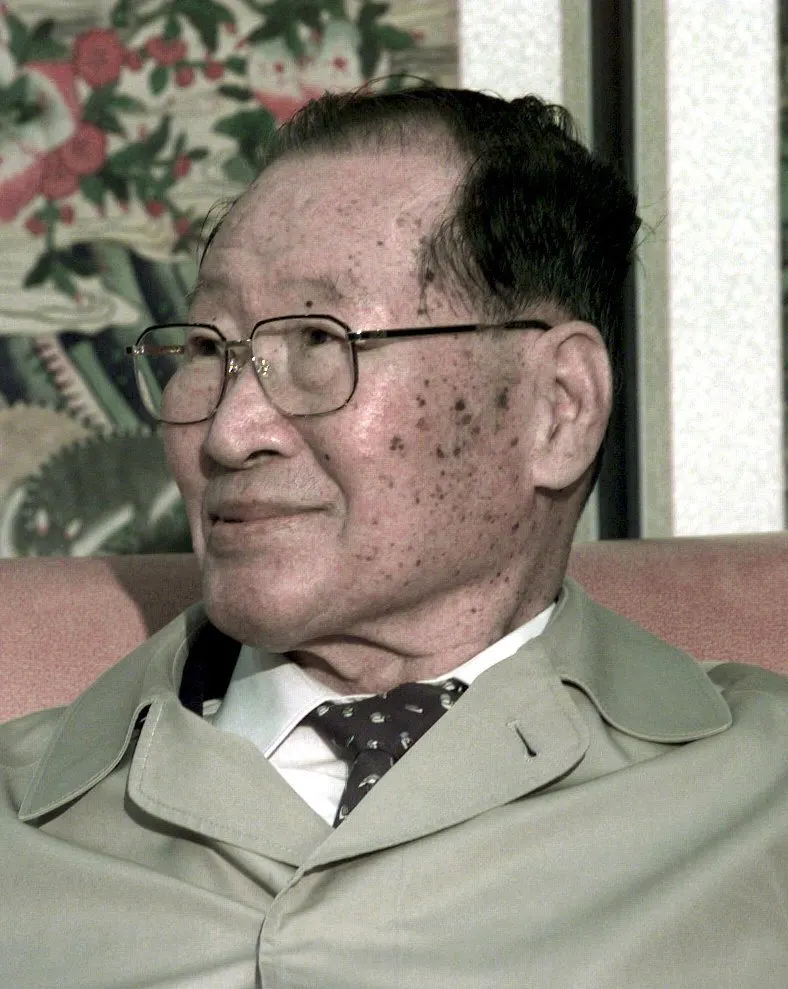
Quick Facts
| Full Name | Chung Ju-yung |
|---|---|
| Date of Birth | November 25, 1915 |
| Place of Birth | Tongchon County, Kangwon Province, Korea |
| Date of Death | March 21, 2001 |
| Place of Death | Seoul, South Korea |
| Cause of Death | Pneumonia and respiratory failure |
| Nationality | South Korean |
| Education | Songjon Primary School |
| Occupation | Entrepreneur, Industrialist, Philanthropist |
| Known For | Founder of Hyundai Group, driving South Korea's industrialization, inter-Korean peace initiatives |
| Notable Awards | Order of Civil Merit (Mugunghwa Medal), Order of Industrial Service Merit (Gold Tower), Commander of the Order of the British Empire (CBE), Olympic Medallion |
| Spouse | Byun Joong-seok |
| Children | 11 |
Introduction
Chung Ju-yung was a South Korean industrialist, entrepreneur, and nation-builder whose extraordinary life mirrored the modern transformation of South Korea. Born into extreme rural poverty during the Japanese colonial occupation, Chung rose from manual farm labor to found the Hyundai Group, developing it into one of the world's most formidable conglomerates (chaebols). His fierce determination, pragmatic ingenuity, and famous motto—"Have you tried it?"—became defining elements of South Korea's post-war economic miracle.
Beyond creating an industrial powerhouse spanning construction, automobiles, electronics, and shipbuilding, Chung played a decisive role in South Korea's civic and international standing. He spearheaded the bid that brought the 1988 Summer Olympic Games to Seoul, established one of Asia's most prominent charitable foundations, and in his final years pioneered cross-border reconciliation through unprecedented personal diplomacy with North Korea. His career remains an enduring testament to the power of entrepreneurial daring in lifting an entire nation from ruin to prosperity.
Early Life and Family
Chung Ju-yung was born on November 25, 1915, in the village of Asan-ri, Songjon-myeon, located in Tongchon County, Kangwon Province (in present-day North Korea). He was the eldest of eight children born to Chung Bong-sik and Han Seong-sil, tenant farmers who endured severe deprivation. From early childhood, Chung spent long, grueling hours laboring alongside his father in the family's fields, an experience that instilled in him an extraordinary work ethic but also convinced him that subsistence agriculture offered no escape from poverty.
Determined to chart his own course, Chung attempted to run away from home four times during his teenage years. On his first venture at age 16, he hiked across treacherous mountain passes to find work at a railway construction site before his father tracked him down and brought him back. On another escape attempt, Chung took the money his father had obtained from selling a family cow, boarded a train to Seoul (then known as Gyeongseong), and enrolled in a vocational accounting course. Although his father discovered his whereabouts once more and forced him to return, the young Chung never abandoned his ambition. In 1933, at the age of eighteen, he left home for good.
Education
Chung's formal education was very limited, a consequence of his family's rural poverty and the demanding labor required on the farm. He attended Songjon Primary School, graduating in March 1931 at age fifteen. Following graduation, he studied classical Chinese and traditional texts under his grandfather at a local village Confucian academy while continuing to work the fields.
Though Chung never had the opportunity to attend high school or university, he possessed a keen intellect and voracious curiosity. He educated himself through wide reading, practical experience, and meticulous observation. Later in life, when addressing academics and corporate executives, Chung frequently emphasized that deep, practical thinking and unwavering diligence far outweighed diplomas in determining a person's capability to solve complex problems.
Career and Major Achievements
From Delivery Boy to Independent Business Owner
After leaving Tongchon in 1933, Chung took on whatever grueling work he could find, including laboring as a dockworker at Incheon Harbor, hauling construction materials at Korea University, and working in a starch syrup factory. In 1934, he secured a position as a delivery clerk at the Bokheung Rice Store in Seoul. His punctuality, reliability, and diligence quickly earned the owner's absolute confidence. Chung taught himself bookkeeping and within months was managing the shop's finances.
When the owner fell ill in 1937, he handed the business over to Chung, who renamed it the Kyungil Rice Store. The young entrepreneur made the business a thriving commercial success. However, the venture ended abruptly in 1939 when the Japanese colonial administration enacted strict wartime rationing laws that banned private commercial rice sales by Koreans. Undeterred, Chung founded an auto repair shop named A-do Service in 1940 with borrowed money. Although the garage was destroyed by a fire shortly after opening, he borrowed more capital, rebuilt it, and made it known for rapid, round-the-clock repair work until it too was forcibly merged with a Japanese steel plant in 1943.
Founding Hyundai and Post-War Reconstruction
Following the liberation of Korea in 1945, Chung moved swiftly to re-enter business. In 1946, he established Hyundai Motor Industrial Company, choosing the Korean name Hyundai, meaning "modernity". In May 1947, he launched Hyundai Civil Works (later renamed Hyundai Engineering & Construction), positioning the company to participate in the physical rebuilding of the peninsula.
The Korean War (1950–1953) devastated the country, but it also created urgent logistical demands. Chung relocated operations to Busan and secured high-priority construction contracts with the United States military. His resourcefulness became legendary. When the U.S. Army urgently required a military cemetery to have vibrant green lawns in the middle of winter for a December 1952 visit by President-elect Dwight D. Eisenhower, Chung bypassed impossible turfgrass imports by transplanting thirty truckloads of green barley shoots from local farmlands. The military commanders were thrilled, and Hyundai earned a reputation for achieving the impossible on deadline.
During the 1960s, South Korean President Park Chung-hee launched an aggressive state-led industrialization drive. Chung became one of the primary executors of this vision. Hyundai constructed the landmark Soyang Dam, then one of the largest gravel-fill dams in the world, and completed the 428-kilometer Gyeongbu Expressway in 1970 ahead of schedule, connecting Seoul to the southern port of Busan and laying the physical spine for South Korea's manufacturing exports.
Hyundai Motor Company and the First Korean Automobile
In December 1967, Chung established Hyundai Motor Company. Initially assembling vehicles under license from the Ford Motor Company, Chung soon realized that South Korea needed its own indigenous automotive engineering capability. Foreign experts and international financial bodies warned that a developing nation lacked the technology, market, and supply chain to manufacture independent automobiles, but Chung pressed forward.
Recruiting top global engineering talent, including former Austin-Morris managing director George Turnbull, Hyundai collaborated with Mitsubishi Motors for drivetrains and Italian master designer Giorgetto Giugiaro for styling. In 1975, Hyundai unveiled the Hyundai Pony, South Korea's first mass-produced domestic car. The Pony revolutionized transportation within South Korea and quickly penetrated overseas export markets, serving as the foundation for what would evolve into the Hyundai Motor Group—one of the top automotive manufacturers in the world.
The Ulsan Shipyard and Global Shipbuilding Dominance
Perhaps Chung's most audacious gamble occurred in the early 1970s, when he resolved to build the world's largest shipyard in the quiet coastal village of Ulsan. At the time, South Korea had virtually no modern heavy shipbuilding infrastructure, and international banks refused to finance what seemed like a reckless scheme.
In 1971, Chung traveled to London seeking financial guarantees. During a meeting with British business contacts, he pulled out a South Korean 500-won banknote depicting the 16th-century "Turtle Ship" (Geobukseon) constructed by Admiral Yi Sun-sin. Chung boldly pointed out that Koreans had pioneered ironclad warships three centuries before Britain, insisting that the national capacity for shipbuilding was innate. Impressed by his conviction, British consultants helped broker meetings with Barclays Bank and Greek shipping magnate George Livanos. Chung negotiated a deal to construct two 260,000-ton Very Large Crude Carriers (VLCCs) before the shipyard had even broken ground.
Chung instituted an unprecedented construction method: building the dry docks and the supertankers simultaneously. In June 1974, Hyundai successfully launched the *Atlantic Baron*, completing both the shipyard and the supertanker in record time. Hyundai Heavy Industries rapidly ascended to become the world's largest shipbuilder by tonnage, anchoring South Korea's global industrial reputation.
Middle Eastern Megaprojects
When the 1973 global oil shock threatened South Korea's balance of payments, Chung turned the crisis into an engine of growth. He reasoned that the massive inflow of petrodollars into the Middle East would lead to unprecedented infrastructure spending. In 1976, Hyundai won the $930 million contract to build the Jubail Industrial Harbor project in Saudi Arabia—the largest civil engineering project South Korea had ever undertaken abroad.
To cut costs and meet grueling timelines, Chung had massive 550-ton steel structures pre-fabricated at the Ulsan shipyard and towed across the Indian Ocean on barges to Saudi Arabia. Hyundai's triumph at Jubail funneled vital foreign currency into South Korea, insulated the country from energy shocks, and established Korean engineering as a premier global brand.
Cattle Diplomacy and Inter-Korean Peace Initiatives
Chung never forgot his birthplace in northern Korea. In the twilight of his life, he channeled his influence and resources toward bridging the division of the Korean peninsula. In 1998, under President Kim Dae-jung's "Sunshine Policy," Chung made worldwide headlines by personally crossing the Demilitarized Zone (DMZ) at the truce village of Panmunjom.
In two symbolic cross-border journeys in June and October 1998, Chung led convoys of Hyundai trucks carrying a total of 1,001 head of native cattle (Hanwoo) into North Korea. He described this gesture as the symbolic repayment of the single cow he had taken from his father 65 years earlier when escaping the village. His direct discussions with North Korean leader Kim Jong-il opened the door to the historic Mount Kumgang tourism project and laid the foundational agreements for the Kaesong Industrial Complex, marking the high-water mark of post-war civilian cooperation between the two Koreas.
Awards and Recognition
Throughout his career, Chung Ju-yung received numerous prestigious national and international honors recognizing his transformative contributions to industry, sports, and international diplomacy:
- Order of Industrial Service Merit (Gold Tower): South Korea's highest decoration for exceptional contributions to the development of national industry.
- Order of Civil Merit (Mugunghwa Medal): Awarded for outstanding civilian service in advancing national development and peace initiatives.
- Honorary Commander of the Order of the British Empire (CBE): Conferred by Queen Elizabeth II in 1977 for fostering Anglo-Korean industrial and commercial ties.
- Olympic Medallion & Olympic Order: Conferred by the International Olympic Committee (IOC) for his pivotal leadership as chairman of the Seoul Olympic Bidding Committee.
- Honorary Doctorates: Conferred honorary degrees from prestigious global institutions, including George Washington University and Johns Hopkins University.
- Ten Greatest Persons in Asia: Named by the Far Eastern Economic Review in 1999 as one of the ten most influential Asians of the twentieth century.
Challenges and Struggles
Chung's extraordinary path was defined by continuous hardship and near-fatal setbacks. During the Japanese occupation, his early commercial efforts were wiped out repeatedly—first by wartime rice shop confiscation, then by an accidental inferno at his auto garage, and later by colonial industrial seizures. The outbreak of the Korean War in 1950 destroyed the fledgling Hyundai operations in Seoul, forcing him to flee south to Busan and rebuild from scratch.
In the late 1990s, the Asian Financial Crisis struck South Korea's leveraged corporate sector with devastating force. Hyundai, which had diversified aggressively into semiconductors, securities, and consumer goods, faced severe liquidity pressures. Simultaneously, an intense and highly publicized succession battle—known in the Korean press as the "Princes' War"—erupted between his sons Chung Mong-koo and Chung Mong-hun over corporate control. The resulting restructuring forced the breakup of the massive Hyundai Group into independent entities and cast a shadow over Chung's final years.
Personal Life
In 1936, Chung married Byun Joong-seok (1921–2007), a young woman from a neighboring village in Kangwon Province. Despite Chung's immense wealth, Byun maintained lifelong modesty and frugality, rarely appearing in public and famously stating that a sewing machine and traditional ceramic jars were her only valued possessions. Together they had one daughter and seven sons; Chung had eleven children in total.
Chung was legendary for his spartan lifestyle. He lived for decades in a modest home in the Cheongun-dong neighborhood of Seoul. Every morning at 5:00 AM, he held breakfast with his sons and top company executives, using the meal to review operational details and instill discipline. In 1977, he established the Asan Foundation, named after his ancestral village, dedicating a substantial portion of his personal equity to build hospitals in underserved rural communities, provide educational scholarships, and fund cutting-edge medical research.
Death and Legacy
Chung Ju-yung died on the evening of March 21, 2001, at the age of 85, at the Asan Medical Center in Seoul—a modern medical institution he had himself founded. His attending physicians confirmed the cause of death as respiratory failure resulting from pneumonia. His passing prompted widespread national mourning, with President Kim Dae-jung leading tributes that honored his indispensable role in South Korea's post-war economic resurrection.
Following his death, the Hyundai conglomerate was partitioned into several independently managed corporate groups, notably Hyundai Motor Group (headed by Chung Mong-koo), HD Hyundai (shipbuilding and heavy industry, associated with Chung Mong-joon), and Hyundai Department Store Group. Today, his legacy endures not only in South Korea's status as a top-tier automotive and shipbuilding nation, but also in the enduring cultural belief that bold ambition, disciplined execution, and resilience can overcome the most desperate beginnings.
Interesting Facts
- The 1,001 Cattle: When Chung crossed into North Korea with cattle in 1998, he brought exactly 1,001 head because he said that giving an even 1,000 might signify the end of the project, whereas adding one more signaled an ongoing commitment.
- The Banknote Bluff: He successfully secured critical British shipyard loans in 1971 by pulling out a 500-won banknote to prove Korea had built ironclad ships hundreds of years before European nations.
- Barley Grass Field: In 1952, to create green lawn turf in the dead of winter for visiting U.S. President-elect Dwight Eisenhower, Chung transplanted thousands of shoots of green winter barley.
- Olympic Upset: As chairman of the Seoul Olympic Bidding Committee in 1981, Chung spearheaded a relentless grassroots campaign that defeated the favored city of Nagoya, Japan, bringing the 1988 Summer Games to Seoul.
- 1992 Presidential Bid: Chung founded the United People's Party in 1992 and ran for President of South Korea, finishing third with 16.3 percent of the popular vote.
- Tanker Breakwater Method: In 1984, during the massive Seosan coastal reclamation project, Chung solved the problem of fierce ocean currents washing away rocks by intentionally sinking an old 226,000-ton oil tanker as a temporary cofferdam, a technique widely known as the "Chung Ju-yung Method".
Frequently Asked Questions
How did Chung Ju-yung get his start in business?
Chung began his commercial career in Seoul as a manual laborer and delivery man at the Bokheung Rice Store. Through punctuality and meticulous bookkeeping, he gained the owner's trust and inherited the business in 1937, renaming it the Kyungil Rice Store and later expanding into automotive repairs and civil construction.
What does the name "Hyundai" mean?
The word Hyundai (현대) translates to "modernity" or "the modern era" in Korean, reflecting Chung's lifelong aspiration to modernize his war-torn country's industry and infrastructure.
What was Chung Ju-yung's "cattle diplomacy"?
In 1998, Chung personally led two convoys carrying a total of 1,001 head of Korean cattle across the truce village of Panmunjom into North Korea. This act repaid the cow he had stolen from his father to finance his teenage runaway journey and opened the door to civilian inter-Korean projects, such as Mount Kumgang tourism.
Did Chung Ju-yung ever hold political office?
Yes. Chung was elected to the South Korean National Assembly in 1992 as leader of the United People's Party. That same year, he ran for the South Korean presidency, securing over three million votes and placing third behind Kim Young-sam and Kim Dae-jung.
Conclusion
Chung Ju-yung's journey from a penniless farmhand in northern Korea to the head of a multi-billion-dollar global conglomerate stands as one of the twentieth century's most extraordinary industrial sagas. Through fearless risk-taking, technological perseverance, and an unbreakable work ethic, he helped propel South Korea from the devastation of war to the forefront of modern global manufacturing. His life proved that poverty of circumstance need never dictate the boundaries of human potential.
Image: Wikimedia Commons, via Wikipedia (see the file page for author and license).
More biographies in Business → · All biographies
Related biographies
John Logie Baird Inventor of TV | Biography
Introduction: Many inventors in the world invent different things in the world. In them, there are scientists and former people…
Sakichi Toyoda | founder of Toyota Industries
Introduction: Toyoda designed and developed various material-centered weaving gadgets, acquainting imaginative energizing…
Bhagat Singh | Biography, Death, & Facts | OurNationalHeroes
Introduction to Bhagat Singh: Bhagat Singh was one of the most powerful rebels of the Indian Nationalist Movement. He had […]
Charles Babbage Biography | Computers & inventions | Real World Hero
Do you ponder who you need to thank for the amazing work area or PC you are presently using for […]
Amancio Ortega Gaona | History and Facts
Introduction: In this example of overcoming adversity, we will share Amancio Ortega Gaona account, a Spanish-style business…
Michio Suzuki | Woven into Suzuki Company History | Real World Hero
Michio had two brothers, Tatsuzo Suzuki and Sadao Suzuki. Michio Suzuki Studied got his education from the Third High School […]