
Talaat Harb – Pioneer of Egypt's Modern Economy
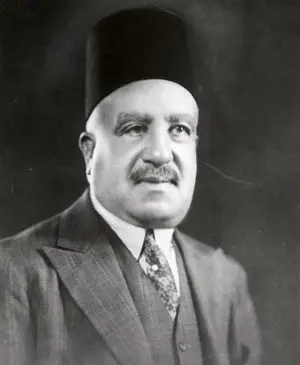
Quick Facts
| Full Name | Mohamed Talaat bin Hassan Mohamed Harb |
|---|---|
| Date of Birth | November 25, 1867 |
| Place of Birth | Gamaleya, Cairo, Egypt |
| Date of Death | August 13, 1941 |
| Place of Death | Damietta, Egypt |
| Nationality | Egyptian |
| Education | Khedivial School of Law |
| Occupation | Economist, Banker, Industrialist |
| Known For | Founding Banque Misr, EgyptAir, Studio Misr, and pioneering Egypt's national industrial independence |
| Notable Awards | Title of Pasha (1931), Grand Cordon of the Order of the Nile (posthumous, 1980) |
| Spouse | Amira Mohamed Mohsen |
| Children | Fatma, Aisha, Khadiga, Hoda |
Introduction
Mohamed Talaat Harb Pasha stands as one of the most transformative figures in modern Egyptian history. Widely revered as the father of Egypt's national economy, he recognized early in the twentieth century that genuine political sovereignty was unattainable without financial independence. At a time when foreign financiers, British colonial authorities, and overseas syndicates dictated the economic destiny of the country, Talaat Harb conceived and executed an audacious plan: to mobilize Egyptian savings and channel them into Egyptian hands.
His creation of Banque Misr in May 1920 dismantled the myth that Egyptians could not manage complex financial institutions. From that singular banking foundation, Harb orchestrated an expansive industrial renaissance that birthed flagships such as EgyptAir, Studio Misr, and massive textile mills across the Nile Delta. His visionary enterprise elevated national morale, broke foreign economic monopolies, and established the institutional blueprint that guided twentieth-century Egyptian nation-building.
Early Life and Family of Talaat Harb
Talaat Harb was born on November 25, 1867, in the Qasr al-Shawq alley of Cairo’s historic Gamaleya district. His father, Hassan Mohamed Harb, worked as an official in the state railway department, providing the family with a modest, respectable middle-class standing. Growing up in the historic heart of Cairo surrounded by rich Islamic architecture and bustling artisanal quarters, young Talaat developed an enduring appreciation for Egyptian heritage, community solidarity, and the dignity of everyday Egyptian laborers.
Raised in a traditional and religiously observant environment, Harb began his schooling in a neighborhood kottab, where he committed the Quran to memory and learned fundamental Arabic grammar and arithmetic. These early formative years instilled in him a meticulous work ethic, deep spiritual convictions, and a resolute loyalty to Arabic as a language of culture, governance, and commerce—values that later defined his professional crusade.
Education and Early Influences
Harb pursued his formal secondary studies at the Tawfikiya School in Cairo. Displaying exceptional academic aptitude and discipline, he gained admission in 1885 to the School of Law and Administration (the Khedivial School of Law). The institution was the premier training ground for Egypt’s intellectual, legal, and political elite, exposing students to rigorous legal frameworks, modern statecraft, and contemporary European thought.
Graduating in 1889, Talaat Harb possessed not only a command of civil and commercial law but also an acute analytical perspective on how legal systems governed ownership, contracts, and sovereignty. Through his coursework, he learned fluent French alongside standard Arabic. Rather than restricting his intellectual curiosity to courtrooms, he read voraciously in political economy, scrutinizing how Western powers leveraged foreign loans, concession contracts, and overseas banks to control Egypt's agricultural output and public revenues.
Career and Major Achievements of Talaat Harb
Talaat Harb’s journey from a judicial bureaucrat to the premier builder of modern Egyptian industry unfolded through visionary public advocacy followed by sweeping institutional execution.
Early Administrative Career and Public Intellectual Work
Harb commenced his professional career as an accountant and translator within the judicial administration of the Daira Saniya, the authority managing the private agricultural estates of the Khedivial family. Sifting through balance sheets, land titles, and agricultural mortgages, he witnessed firsthand how smallholders and royal estates alike suffered under ruinous foreign debt burdens. He later directed the legal dispute department at the court, succeeding noted nationalist figure Mohamed Farid.
His exceptional administrative capabilities attracted the attention of private enterprises. In the early 1900s, he became the central office director for the Wadi Kom Ombo agricultural and land development company and later served as director of the Egyptian Real Estate Company. His appointment was historic: it marked the first time an Egyptian national was entrusted with leading large-scale corporate entities previously dominated exclusively by foreign and European administrators.
Harb coupled his administrative ascendancy with prolific writing. In 1910, when the British-backed colonial regime attempted to extend the concession of the foreign-owned Suez Canal Company for an additional forty years, Harb launched a fierce public campaign. He published an influential treatise titled Egypt and the Suez Canal, mobilizing Egyptian public opinion and providing parliamentarians with the technical and economic arguments that ultimately led to the rejection of the extension.
The Vision for Financial Sovereignty and Banque Misr
For more than a decade before the creation of his bank, Talaat Harb campaigned for Egyptian financial self-sufficiency. In 1907, during a severe international financial panic that battered Egyptian markets, he published his initial appeals for a national financial institution. In 1911, he expanded his ideas in a groundbreaking book, The Egyptian Economic Reform and the Nation's Bank Project, outlining how domestic capital could be organized into an investment engine rather than left idle or deposited in foreign branches that funneled profits abroad.
The political watershed of the Egyptian Revolution of 1919 provided the patriotic momentum Harb needed. He argued that national protests and diplomatic delegations were insufficient without economic liberation. In May 1920, Talaat Harb officially established Banque Misr (Bank of Egypt). The bank broke every established colonial precedent: its shares were restricted exclusively to Egyptian citizens, its governing board consisted entirely of Egyptians, and Arabic was instituted as the mandatory language of administration, balance sheets, and correspondence.
Building the Backbone of National Industry: Textiles and Manufacturing
Unlike conventional commercial banks of the era that focused exclusively on short-term cotton trading, Banque Misr acted as a venture capital and holding engine designed to foster native Egyptian industries. Harb understood that Egypt could never claim true independence while exporting raw cotton at low prices and importing costly manufactured garments from European mills.
To reverse this dependency, he founded the Misr Cotton Ginning Company in 1924, followed in August 1927 by the landmark establishment of the Misr Spinning and Weaving Company in El Mahalla El Kubra. Starting with modern automated machinery and ambitious worker housing facilities, the Mahalla complex rapidly expanded into one of the largest integrated textile manufacturing centers in the world, turning Egyptian cotton into home-spun yarns, fabrics, and consumer apparel. Earlier, in 1922, Harb had launched the Misr Printing House to publish domestic educational, financial, and cultural materials, liberating Egyptian publishing from foreign print monopolies.
Pioneering Modern Aviation, Media, and Services
Talaat Harb’s industrial imagination extended into every sphere of modern commerce and communications. In May 1932, alongside aviation pioneers Kamal Elwi and Mohamed Sedki, Harb co-founded Misr Airwork—later known as EgyptAir. It became the very first airline in the Middle East and the seventh national commercial carrier founded worldwide, placing Egyptian aviation on the international map.
In 1935, Harb turned his attention toward arts and national culture by founding Studio Misr in the Pyramids area of Giza. Studio Misr became the premier cinematic production house of the Arab world, functioning as the Hollywood of the Middle East. The studio produced timeless masterworks starring Arab legends such as Umm Kulthum and Naguib el-Rihani, elevating Egyptian film and music across the entire Arabic-speaking world. In tandem, he founded Misr Insurance (1934), Misr Maritime Transport, and Misr Travel (1934), completing a comprehensive network of national services.
Regional Economic Cooperation
Harb believed that Egyptian financial autonomy should serve as a stepping stone toward broader regional integration across the Middle East and North Africa. Banque Misr opened operational branches and financed development projects across Sudan, Syria, Lebanon, Saudi Arabia, and Yemen. He visited Saudi Arabia during the formative years of King Abdulaziz Al Saud, offering technical advice, exploring trade routes, and financing logistical infrastructure for pilgrims travelling to Mecca.
Awards and Recognition for Talaat Harb
During his lifetime, Talaat Harb was showered with acclaim from across the social and political spectrum. In April 1931, King Fuad I granted him the noble title of Pasha, recognizing his unprecedented contributions to the Kingdom of Egypt’s economic vitality. Contemporary poets, including the famed "Prince of Poets" Ahmed Shawqi and Khalil Mutran, composed elaborate odes praising Harb as a modern builder of civilizational pride.
Following his death, the Egyptian state permanently etched his memory into national life. In 1980, on the sixtieth anniversary of Banque Misr’s founding, President Anwar Sadat posthumously awarded Talaat Harb the Grand Cordon of the Order of the Nile, Egypt's highest state decoration. One of Cairo’s most famous downtown hubs, formerly Soliman Pasha Square, was rechristened Talaat Harb Square, anchored by a prominent bronze statue of the economist in European suit and traditional tarboosh. The adjacent major commercial boulevard was similarly named Talaat Harb Street. Numerous public schools, financial institutions, and academic centers bear his name across Egypt.
Challenges and Struggles
Talaat Harb’s achievements emerged in the face of continuous structural and political resistance. Foreign banking monopolies, entrenched colonial advisers, and local skeptics frequently asserted that Egyptians lacked the technical acumen and institutional discipline required to operate sophisticated financial networks. In its earliest days, Banque Misr survived through grass-roots persistence, relying on modest contributions from small farmers, civil servants, and patriotic citizens rather than large institutional financiers.
The crowning crisis of Harb’s life occurred in the autumn of 1939 with the outbreak of World War II. As conflict erupted in Europe, panicked depositors lined the streets outside Egyptian banks. While foreign banks received liquidity cushions from European central banks, Banque Misr suffered an acute liquidity squeeze because its capital had been heavily invested into long-term national manufacturing projects and infrastructure.
Harb turned to the Egyptian government and the National Bank of Egypt (then heavily controlled by British authorities) to obtain emergency credit guaranteed by Banque Misr’s sound asset portfolio. British officials and political rivals seized upon the moment to demand a humiliating condition: the government would guarantee liquidity to protect depositors only if Talaat Harb resigned as head of Banque Misr. Placing the survival of his bank and the welfare of Egyptian depositors ahead of personal ambition, Harb stepped down in September 1939. His sacrifice preserved the bank, which emerged from the wartime crisis intact and stronger than ever.
Personal Life and Values
In his private life, Talaat Harb was known for remarkable modesty, austere personal habits, and deep religious devotion. Although billions of Egyptian pounds flowed through the conglomerates he oversaw, he never amassed excessive personal wealth, consistently refusing extravagant salaries and pouring board allowances back into charitable and cultural causes.
He married young to Amira Mohamed Mohsen. The couple had four surviving daughters: Fatma, Aisha, Khadiga, and Hoda. Later in life, his daughters carried forward his commitment to civic welfare, donating land and resources to medical and educational institutions, including funding specialized cardiac research initiatives at Ain Shams University.
Intellectually, Harb held conservative cultural and social views. Around the turn of the century, he engaged in famous literary polemics with reformers such as Qasim Amin, writing books titled Tarbiat al-Mar'a wa al-Hijab (The Education of Women and the Veil, 1899) and Fasl al-Khitab fi al-Mar'a wal-Hijab (The Decisive Word on Women and the Veil, 1901). While advocating female primary education and family literacy, he staunchly defended traditional Islamic modesty and argued that social modernization must remain anchored in native Islamic customs rather than uncritical emulation of Western trends. He also contributed 100 Egyptian pounds in 1907 toward the founding of Al Ahly Sporting Club, recognizing the vital role sports would play in youth development.
Death and Legacy of Talaat Harb
Following his resignation from Banque Misr in September 1939, Harb withdrew quietly from the intense public arena. He spent his final months in tranquility, largely in the countryside in the village of El-Ananiya near Damietta, where he lived unpretentiously surrounded by close companions and rural calm.
On August 13, 1941, Talaat Harb passed away at the age of 73. His passing was mourned nationwide as the loss of a founding father. State dignitaries, religious authorities, and ordinary citizens accompanied his funeral procession in Cairo, honoring the man whose singular determination had restored dignity to Egypt's productive capacity.
Harb's legacy endures as a masterclass in economic patriotism. Today, Banque Misr remains one of the preeminent state-owned financial powerhouses of Africa and the Arab world. The industries he planted—from the spinning complexes of Mahalla to the international routes of EgyptAir and the cultural vault of Studio Misr—formed the industrial spine that sustained Egypt throughout the twentieth century. He proved conclusively that national sovereignty is hollow without national economic independence.
Interesting Facts About Talaat Harb
- Mandated Arabic in Business: Before Talaat Harb founded Banque Misr in 1920, almost all banking and commercial transactions in Egypt were conducted in French or English; Harb made Arabic the compulsory official language for all company ledgers, checks, and correspondence.
- First Middle Eastern Airline: By creating Misr Airwork (EgyptAir) in 1932, Harb established the very first commercial airline in the entire Middle East and North Africa.
- Holy Kaaba Recognition: In appreciation of his pioneering economic, banking, and logistical assistance to Saudi Arabia during the Hajj, King Abdulaziz gifted Talaat Harb two historic segments of the embroidered Kiswa of the Holy Kaaba.
- Rejection of Foreign Concessions: His 1910 book opposing the extension of the Suez Canal concession galvanized Egyptian public opinion and directly caused the Egyptian Legislative Council to reject the 40-year colonial contract.
- Founding Supporter of Al Ahly: In 1907, Harb contributed 100 Egyptian pounds—a substantial sum at the time—to help launch Al Ahly Sporting Club, which later became Africa’s most successful football club.
- Cinema Powerhouse: He financed and opened Studio Misr in 1935, sparking the golden era of Egyptian cinema and producing classic motion pictures starring legendary Arab singers and actors.
Frequently Asked Questions About Talaat Harb
Why is Talaat Harb considered the father of Egypt's modern economy?
Talaat Harb is called the father of Egypt's modern economy because he ended foreign financial monopoly in the country. By founding Banque Misr and reinvesting domestic deposits into Egyptian-owned manufacturing, agricultural, transport, and media corporations, he built the initial infrastructure of national economic independence.
When did Talaat Harb establish Banque Misr, and why was it significant?
Banque Misr was established in May 1920. It was historic because it was the first modern bank in Egypt owned exclusively by Egyptian shareholders, managed by Egyptian staff, and operated entirely in the Arabic language, proving domestic capability in high finance.
What major companies did Talaat Harb found alongside Banque Misr?
Through Banque Misr, Harb launched dozens of pioneering national corporations, including the Misr Spinning and Weaving Company in Mahalla, EgyptAir (originally Misr Airwork), Studio Misr, Misr Insurance, Misr Cotton Ginning, Misr Printing House, and Misr Travel.
Why was Talaat Harb forced to resign from Banque Misr in 1939?
At the outbreak of World War II in 1939, a general financial panic caused a run on Banque Misr. To guarantee government credit and protect the life savings of Egyptian depositors, Harb accepted the conditional demand of British authorities and the Ministry of Finance to step down as bank chairman, sacrificing his post for the institution's survival.
How did Talaat Harb impact Egyptian cinema and aviation?
Harb founded Studio Misr in 1935, building modern production facilities that made Egypt the epicenter of cinematic production in the Arab world. In aviation, he established Misr Airwork in 1932, creating the Middle East’s first airline and giving Egypt its own national flag carrier, known today as EgyptAir.
Conclusion
Talaat Harb’s life stands as a testament to the power of economic self-determination. In an era of foreign domination, he possessed the rare foresight to recognize that political declarations alone could not guarantee freedom if foreign banks held the keys to the treasury. By building Banque Misr and using national capital to spawn vital industries, he fundamentally reshaped the socioeconomic landscape of Egypt and the wider Arab world. A century after his groundbreaking initiatives, Talaat Harb remains the quintessential symbol of patriotic enterprise, institutional courage, and enduring national pride.
Image: Wikimedia Commons, via Wikipedia (see the file page for author and license).
More biographies in Business Man → · All biographies
Related biographies
Miller Reese Hutchison Hearing Device Founder
Introduction: Today we will discuss the hearing aids invented by Miller Reese Hutchison. He was the inventor of vehicle horns, […]
Chuck Hull | 3D Printing Inventor | Real World Hero
Introduction of Chuck Hull: In today’s life, the printer became the most important part of everyday life. He is the […]
Philo Farnsworth Biography and Inventions
Introduction to Philo Farnsworth: Philo T. Farnsworth (1906-1971) was known as the father of TV by demonstrating, as a youngster…
Håkon Wium Lie | Inventor of CSS
Introduction: Håkon Wium Lie is a Norwegian web pioneer, a guidelines dissident, and the Chief Technology Officer of Opera…

Children’s Favorite Tomato Ketchup Invented by Henry J. Heinz
Introduction: Tomato Ketchup is using nowadays very popular among children, young and most likely by girls. Henry j. Heinz who […]
John Loudon McAdam, The inventor of Road Maker
Introduction: John Loudon McAdam was an 18th Century engineer who was famous for the inventor of roads. He was the […]