
Ybyrai Altynsarin: Pioneer of Modern Kazakh Secular Education
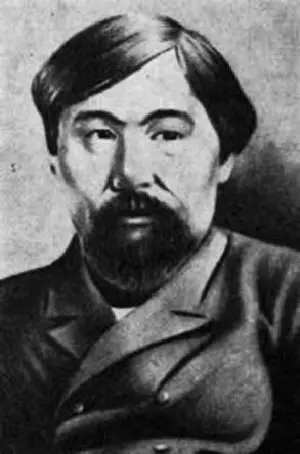
Quick Facts
| Full Name | Ibrahim (Ybyrai) Altynsarin |
|---|---|
| Date of Birth | November 1, 1841 |
| Place of Birth | Arakaragay volost, Turgay Region, Russian Empire |
| Date of Death | July 29, 1889 |
| Place of Death | Kostanay, Russian Empire |
| Nationality | Kazakh |
| Education | Orenburg Border Commission School for Kazakh Children |
| Occupation | Educator, writer, ethnographer, school inspector, translator |
| Known For | Founding Kazakhstan's first secular and vocational schools, authoring the Kazakh Reader (Qazaq Khrestomatiyasy), developing the first Cyrillic-based Kazakh alphabet, pioneering female boarding education |
| Notable Awards | State Councillor (Imperial Russian Civil Service rank) |
| Spouse | Aiganys |
| Children | Abdulla, Abdrakhman, Sharipa |
Introduction
Ybyrai Altynsarin (1841–1889) was a trailblazing nineteenth-century Kazakh educator, writer, ethnographer, and social reformer whose visionary work laid the structural and pedagogical foundation of modern secular schooling in Kazakhstan. Emerging during an era of expanding Russian imperial rule across the Central Asian steppe, Altynsarin recognized that the survival, dignity, and future self-determination of the Kazakh people depended fundamentally on widespread literacy, scientific enlightenment, and economic adaptability. Rather than viewing education as a privilege for an imperial or tribal aristocracy, he dedicated his life to democratizing learning for ordinary pastoralist families.
Altynsarin matters because he created an entire national school system virtually from scratch. He established Kazakhstan's first network of secular primary schools, designed the nation's earliest vocational and agricultural training colleges, and boldly opened the steppe's first boarding school for girls. In tandem with his administrative achievements, Altynsarin developed the first functional Kazakh alphabet based on the Cyrillic script and authored foundational textbooks, including the monumental Qazaq Khrestomatiyasy (Kazakh Reader). His call to youth, encapsulated in the immortal poetic line "Kel, balalar, oqylyq!" ("Come, children, let us learn!"), transformed public consciousness and ignited the intellectual renaissance that shaped twentieth-century Kazakhstan.
Early Life and Family
Ybyrai (born Ibrahim) Altynsarin was born on November 1, 1841, in the Arakaragay region of the Turgay oblast, territory that corresponds to modern-day Kostanay Region in northern Kazakhstan. He belonged to the Altybas lineage of the Uzun-Kipchak clan within the Middle Zhuz. His family tree was steeped in steppe leadership and martial valor; his maternal line traced back to the celebrated hero Shakshak Zhanibek Batyr, the first Kazakh granted the noble imperial military rank of Tarkhan, and the respected orator Shegen Bi.
Tragedy struck the family early when Ybyrai's father, Altynsary Balgozhin, died before the boy reached four years of age. Following nomadic tradition, the orphaned child was taken into the direct care of his paternal grandfather, Balgozha Zhanburchin. Balgozha biy was one of the most prominent, respected tribal judges and elder-administrators in the entire Middle Zhuz, holding significant authority among both local nomadic clans and the imperial officials of the Orenburg Border Commission. Growing up in his grandfather's household exposed young Ybyrai to customary Kazakh law, rich oral poetry, and steppe diplomacy, while simultaneously illuminating the encroaching political realities of the Russian Empire. Balgozha recognized his grandson's uncommon intellect and determined that the boy should receive a formal modern education.
Education
In 1850, when the Orenburg Border Commission established a specialized seven-year boarding school designed to prepare Kazakh youth for clerical and administrative roles, Balgozha biy secured one of the thirty coveted placements for the nine-year-old Ybyrai. Moving from the open pastures to the garrison town of Orenburg represented a profound cultural transition. Altynsarin quickly distinguished himself among the faculty and student body, demonstrating an insatiable appetite for learning, disciplined work habits, and a remarkable facility for languages. He studied Russian grammar, arithmetic, geography, world history, and classical Islamic humanities.
In 1857, Altynsarin graduated from the Orenburg boarding school with top honors. Rather than concluding his studies, graduation marked the beginning of intensive independent scholarship. While serving as a clerk and translator, he met Professor Vasily V. Grigoriev, a renowned Russian orientalist and chairman of the Orenburg Border Commission. Recognizing the young Kazakh graduate's exceptional intellectual promise, Grigoriev gave Altynsarin full access to his vast personal library.
Immersed in Grigoriev's collection, Altynsarin devoured world literature, philosophy, and pedagogical theory. He read William Shakespeare, Lord Byron, Johann Wolfgang von Goethe, and Alexander Pushkin, alongside classical eastern masters like Firdausi and Alisher Navoi. Most crucially, he studied the progressive educational theories of Konstantin Ushinsky and Leo Tolstoy. Ushinsky's core thesis—that authentic education must be conducted in a child's native mother tongue, cultivate humane values, and balance intellectual instruction with practical civic labor—became the guiding north star of Altynsarin's career.
Career and Major Achievements of Ybyrai Altynsarin
Early Administrative Service and the First Steppe School
Between 1857 and 1860, Altynsarin worked as a secretary for his grandfather Balgozha and as an official translator for the Orenburg regional administration. However, the routine paperwork of colonial bureaucracy chafed against his deeper sense of duty. In 1860, regional authorities appointed him as a prospective teacher of the Russian language for a planned primary school in the remote steppe fortress of Turgay.
Opening the school proved to be an arduous struggle. Imperial funding was scarce, regional bureaucrats dragged their feet, and many local nomadic clans were deeply suspicious of colonial intentions. Refusing to relent, Altynsarin traveled across the steppe on horseback from encampment to encampment, meeting with clan elders, biys, and cattle herders. He explained the tangible benefits of arithmetic, reading, and legal literacy for protecting clan pastures and trading equitably. Through his sheer persistence and persuasive diplomacy, he gathered private subscriptions and donations to construct a dedicated schoolhouse.
On January 8, 1864, the Turgay primary school officially opened its doors. Starting with sixteen nomadic boys enrolled as residential boarders, Altynsarin stepped into the classroom as Kazakhstan's first formal secular schoolmaster. His teaching was revolutionary: rather than rote recitation and corporal punishment, he employed conversational explanations, storytelling, mutual respect, and native-language instruction. The school's rapid success proved that Kazakh children possessed an extraordinary appetite for modern learning when approached with empathy and cultural relevance.
Appointment as Regional Inspector of Schools
Altynsarin's remarkable pedagogical achievements and administrative acumen led to his appointment in 1879 as the Chief Inspector of Public Schools for the entire Turgay Region—an administrative territory encompassing four vast districts: Nikolaevsk (Kostanay), Turgay, Irgiz, and Iletsk. From this influential post, which he held until his death, he embarked on an unprecedented campaign of institutional construction.
Over a single decade, Altynsarin systematically constructed an educational infrastructure where none had existed. He opened four central two-class Russian-Kazakh primary schools, five volost (township) primary schools, and two academies catering to the children of rural settlers. Recognizing that sustainable education required qualified indigenous educators, he spearheaded the establishment of a specialized pedagogical teachers' seminary in Troitsk (later relocated to Orenburg), which trained the first generation of professionally certified Kazakh educators.
Pioneering the Kazakh Cyrillic Script and Foundational Textbooks
One of Altynsarin's most consequential historical milestones was his reform of written pedagogy. Prior to his work, the sparse written materials in the steppe were transcribed in the Perso-Arabic script, heavily encumbered by Chagatai literary conventions and deficient in representing the Kazakh language's distinct vowel harmony and phonetic nuances. Altynsarin recognized that nomadic children struggled to decipher Arabic orthography, which created unnecessary educational barriers.
In 1879, Altynsarin published two monumental instructional texts in Orenburg: Qazaq Khrestomatiyasy (Kazakh Reader) and Initial Guidance for Teaching Kazakhs the Russian Language. For the reader, he devised a clear, thirty-letter phonetic alphabet based on the Cyrillic script adapted to Kazakh phonology. This marked the first time the spoken vernacular of the Kazakh steppe was captured systematically in a secular print format.
The Kazakh Reader was not merely a grammar primer; it was a comprehensive cultural and literary compendium. Altynsarin filled its pages with native proverbs, historical legends, folk tales, original didactic short stories, and his own moral poetry. To broaden his pupils' horizons, he translated selected masterworks of world literature into pure, rhythmic Kazakh, including fables by Ivan Krylov and short pedagogical tales by Leo Tolstoy and Konstantin Ushinsky. Through stories such as Taza Bulaq (The Pure Spring) and Baikyzy men Jarly Balasy (The Son of the Rich Man and the Son of the Poor Man), he championed honesty, compassion, brotherhood, and the transformative power of manual work.
Founding Female Boarding Education and Technical Schools
Altynsarin understood that true national progress was impossible as long as half the population remained disenfranchised. At a time when traditional patriarchal customs and early marriages severely constrained the public role of steppe women, he fought tenaciously for female literacy. In 1887, through immense administrative perseverance, Altynsarin founded the first boarding school for Kazakh girls in the town of Irgiz. He subsequently oversaw the founding of girls' schools and boarding dormitories in Turgay, Kostanay, Karabutak, and Aktobe.
"Only a teacher can teach a child to admire their native land, feel the joys and heartaches of nature, and instill a love for the Homeland that remains in the heart for life."
Alongside female education, Altynsarin recognized the rapid socioeconomic transition taking place across the Eurasian steppe as nomadic pastoralism collided with sedentary agriculture and imperial commerce. To ensure Kazakhs could participate in and lead these changes, he founded Kazakhstan's first vocational institution—the Turgay Craft and Industrial School (later named the Yakovlevskaya artisan school). In these classrooms, students learned blacksmithing, carpentry, mechanics, agricultural sciences, and tailoring, acquiring practical trades that offered economic independence.
Awards and Recognition
Altynsarin's tireless administrative effectiveness earned him immense official esteem within the imperial ministry of education, while his absolute integrity protected him from bureaucratic corruption. Rising steadily through the civil ranks of the Russian Imperial Table of Ranks, he was eventually awarded the prestigious rank of State Councillor (Statskiy Sovetnik), an extraordinary civil standing for an indigenous Central Asian educator of his era. He was also decorated with imperial medals for his civil service, public welfare initiatives, and educational leadership.
In modern Kazakhstan, Altynsarin's stature as a national hero is profound. He is revered as the Dala Qyrany (Steppe Eagle) of enlightenment and the father of Kazakh school education. The National Academy of Education of the Republic of Kazakhstan in Astana proudly bears his name, as does the Arkalyk State Pedagogical Institute, the Kostanay Regional Universal Scientific Library, and numerous prestigious lyceums across the country. The government of Kazakhstan established the official "Ybyrai Altynsarin Medal," the nation's premier ministerial award presented annually to exceptional educators and pedagogical innovators.
Challenges and Struggles
Altynsarin pursued his reforms amidst constant political, religious, and cultural tension. He was compelled to fight a complex two-front battle. On one front stood conservative steppe traditionalists, tribal aristocrats, and orthodox Islamic mullahs. Many viewed secular schools as an existential threat to Islamic faith and clan customs, accusing Altynsarin of attempting to assimilate Kazakh children into Russian culture or secretly convert them. To defuse these fears, Altynsarin composed Musylmandyq Tutqasy (Basics of Islamic Belief) in 1883, writing a lucid exposition of Islamic principles in the Kazakh language to prove that modern learning and moral faith were entirely harmonious.
On the opposite front, Altynsarin faced imperial colonial bureaucrats and missionary ideologues. Although he was a close intellectual friend of the prominent Russian orientalist Nikolai Ilminsky, Altynsarin fiercely opposed the Russian Orthodox Church's missionary efforts to convert non-Russian pupils. He insisted that state-funded steppe schools must remain purely secular, civic institutions and resolutely rejected any attempts to turn them into instruments of religious proselytization. Furthermore, he struggled chronically against imperial underfunding, frequently spending his own personal salary and tribal property to purchase clothes, books, and winter firewood for destitute pupils.
Personal Life
Ybyrai Altynsarin married Aiganys, the daughter of Sholaq Abilev from the Zhappas lineage. Aiganys was a devoted partner who supported her husband’s intellectual mission and maintained an open, hospitable home for teachers, steppe elders, and traveling scholars. While she maintained traditional Kazakh domestic customs within nomadic communities, she carried herself with effortless dignity when accompanying her husband to official functions in Russian administrative centers.
The couple experienced profound personal tragedy in their family life. They raised three children: sons Abdulla (born c. 1880) and Abdrakhman (born c. 1884), and a daughter named Sharipa (born c. 1886). Tragically, both Abdrakhman and Sharipa died of severe childhood illnesses—Abdrakhman succumbing to tuberculosis at the age of fifteen while studying at the Troitsk Gymnasium. Only Abdulla lived to adulthood. Altynsarin was known for his warmth toward children, his modest personal habits, and his dedication to agriculture; in his later years, he cultivated experimental fruit orchards and model vegetable gardens around his estate.
Death and Legacy
Exhausted by decades of unrelenting administrative travel, stressful confrontations with bureaucrats, and fragile health, Ybyrai Altynsarin died on July 29, 1889 (July 17 according to the Old Style Julian calendar), at the age of forty-seven. He passed away at his home on the shores of Lake Tastak near the Tobol River, just three kilometers from Kostanay. In accordance with his wishes, he was buried on the high banks of the Tobol River near the resting place of his father. A massive procession of teachers, nomadic elders, government figures, and hundreds of his former students gathered across the steppe to pay their final respects.
Altynsarin's historical legacy is immeasurable. He democratized knowledge across the Kazakh steppe, proving that the mother tongue was fully capable of modern literary, scientific, and educational expression. The generations of young boys and girls who passed through his Russian-Kazakh schools, vocational workshops, and teacher seminaries became the teachers, agronomists, physicians, and civic leaders who formed the backbone of the Kazakh national intelligentsia in the early twentieth century. Through their voices, Altynsarin's dream of an enlightened, literate, and sovereign nation came to life.
Interesting Facts
- Immortal Anthem of Schooling: His famous pedagogical poem "Kel, balalar, oqylyq!" ("Come, Children, Let Us Learn!") is taught to every primary student in Kazakhstan and remains the country's unofficial anthem for the start of the school year.
- First Girls' Boarding School: In 1887, Altynsarin defied entrenched steppe customs by establishing Kazakhstan's first boarding school for girls in Irgiz, laying the groundwork for Central Asian female empowerment.
- Steppe Cyrillic Pioneer: He designed the first functional Cyrillic-based Kazakh alphabet in 1879, recognizing that phonetic letters made literacy far easier for nomadic children than the classical Arabic script.
- Donating His Own Land: Committed to practical development, Altynsarin willed his own personal land near Kostanay to the state for the permanent establishment of an agricultural college.
- Enlightenment through Literature: He was the first to adapt and translate the works of Leo Tolstoy and the fables of Ivan Krylov directly into the Kazakh vernacular.
- The Steppe's First Ethnographer: Beyond education, he published authoritative ethnographic essays on Kazakh marriage, folklore, and funeral traditions in the imperial geographic journals, preserving 19th-century steppe customs for posterity.
Frequently Asked Questions
Why is Ybyrai Altynsarin known as the "First Teacher" of Kazakhstan?
Altynsarin earned this honorary title because he built the foundational apparatus of secular education in the Kazakh steppe. He opened the first secular primary school in Turgay in 1864, authored the first Kazakh grammar primers and reading textbooks, and trained the first generation of indigenous schoolteachers.
What was the significance of the Qazaq Khrestomatiyasy?
Published in 1879, the Qazaq Khrestomatiyasy (Kazakh Reader) was the first secular schoolbook written in the Kazakh language using an adapted Cyrillic script. It introduced children to scientific knowledge, moral parables, native oral history, and translated world literature, sparking modern written Kazakh prose.
How did Ybyrai Altynsarin promote vocational and practical education?
Altynsarin believed that academic literacy had to be paired with practical trades so that youth could prosper during rapid economic transitions. In 1884, he founded Kazakhstan's first vocational institution, the Turgay Craft School, which provided formal training in carpentry, blacksmithing, tailoring, and agricultural techniques.
What challenges did he face while founding schools?
Altynsarin faced intense resistance on two fronts: conservative tribal and clerical factions who feared secular schooling would undermine religious traditions, and imperial Russian bureaucrats who starved his schools of funding or attempted to use education for religious conversion. He overcame these barriers through public diplomacy, personal funding, and unwavering integrity.
Where is Ybyrai Altynsarin buried?
Altynsarin is buried on the scenic banks of the Tobol River, approximately three kilometers from the city of Kostanay in northern Kazakhstan, near the grave of his father. Today, his gravesite features an official memorial complex and mausoleum dedicated to his enduring pedagogical legacy.
Conclusion
Ybyrai Altynsarin remains a towering beacon of enlightenment in Central Asian history. In an era of immense social upheaval, colonial pressure, and cultural dislocation, he possessed the moral clarity to recognize that knowledge was the ultimate liberator of the human spirit. Through his pioneering schools, revolutionary textbooks, commitment to female education, and profound humanism, Altynsarin unlocked the gates of literacy for generations of Kazakhs. His legacy endures in every schoolhouse, library, and university across Kazakhstan, a testament to his eternal conviction that true greatness begins in the classroom.
Image: Wikimedia Commons, via Wikipedia (see the file page for author and license).
More biographies in Education → · All biographies
Related biographies

The inventor of the Atomic Number and the Periodic Table, Henry Mosley
Introduction: Henry Mosley was an English Physicist, who pays to the discipline of astronomy was the explanation from the rules…
Cai Lun Biography and Paper Discovery
Introduction: Cai Lun was a lawyer and Chinese eunuch, living in the Leiyang, Guiyang Commandery, Han Empire (modern-day Hunan…
J. Robert Oppenheimer – Inventor of Nuclear Bomb | Real World Hero
Introduction: Many of the scientists written about J. Robert Oppenheimer who was the physicist, the substance of his life, his […]
Christiaan Huygens Principle and Wave Theory of Light
Introduction: Christiaan Huygens was a Dutch physicist, mathematician, stargazer, and creator. He is generally viewed as probably…
Asad Ali Abidi | An Engineer and Scientist of Pakistan
Introduction: Asad Ali Abidi was born on 12th July 1956. He is a Pakistani electrical designer who fills in as […]
Pakistan’s Attractive and Beautiful National Monument
Many countries have their national places in them but Pakistan’s attractive and beautiful monuments are very fascinating. These…