
Ousmane Sembène Biography: Life of the Father of African Cinema
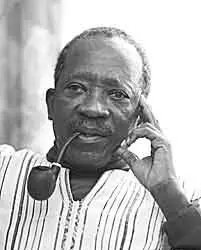
Quick Facts
| Full Name | Ousmane Sembène |
|---|---|
| Date of Birth | January 1, 1923 |
| Place of Birth | Ziguinchor, Casamance, Senegal |
| Date of Death | June 9, 2007 |
| Place of Death | Dakar, Senegal |
| Nationality | Senegalese |
| Education | Gorky Film Studio (VGIK), Moscow |
| Occupation | Film director, producer, writer |
| Known For | Pioneering indigenous African cinema, directing Black Girl and Moolaadé, authoring God's Bits of Wood |
| Notable Awards | Prix Jean Vigo (1966), Special Jury Prize at Venice Film Festival (1969), Silver Prize at Moscow International Film Festival (1971), Un Certain Regard Prize at Cannes Film Festival (2004) |
| Spouse | Carrie Moore (divorced) |
| Children | Alain Sembène, Moussa Sembène |
Introduction: The Voice and Vision of Ousmane Sembène
Widely celebrated across the globe as the "father of African cinema," Ousmane Sembène stands among the most influential cultural figures of the twentieth century. Born in Senegal during French colonial rule, Sembène transformed modern storytelling by placing African experiences, languages, and struggles at the center of world literature and film. Before his groundbreaking work, sub-Saharan cinema had been virtually nonexistent from an indigenous perspective, largely dominated by colonial ethnographers and foreign gaze. Sembène boldly reclaimed the visual and literary medium as a weapon of liberation, truth-telling, and political empowerment.
Sembène regarded cinema as an école du soir—an evening school for the masses—designed to educate, provoke debate, and restore historical memory. His prolific artistic output spanned five decades, producing classic novels such as God's Bits of Wood and epochal films like Black Girl, Mandabi, and Moolaadé. Rather than flattering political rulers or adopting Western cinematic formulas, Sembène remained an uncompromising artist dedicated to ordinary working people, women's liberation, and the unvarnished realities of post-independence Africa.
Early Life and Family of Ousmane Sembène
Ousmane Sembène was born on January 1, 1923, in Ziguinchor, a major city in the southern Casamance region of Senegal, then a territory of French West Africa. He was born into a family of the Lébou community, an ethnic group traditionally connected to coastal fishing and maritime labor. His father, Moussa Sembène, was a fisherman, and from a young age, the boy was expected to learn the family trade. Sembène also maintained strong cultural roots through his maternal heritage, descending from the Serer people, whose spiritual rites and cultural traditions profoundly influenced his artistic imagination.
Growing up under colonial governance, Sembène experienced poverty, hardship, and the systemic inequalities of the French imperial apparatus firsthand. Despite his humble surroundings, he possessed a fiercely independent character and an intense curiosity about oral history, drawing wisdom from the stories told by his grandmothers and village elders. After leaving primary school early, he moved to the colonial capital of Dakar to live with relatives. There, he took on a wide range of manual jobs to survive, working as an apprentice mechanic, bricklayer, and carpenter. These gritty, real-world experiences alongside the urban working class provided the foundational material for the characters and social consciousness that would later define his literary and cinematic masterpieces.
Education and Political Awakening
Sembène's formal schooling was brief and abruptly terminated. In 1936, while attending the École de Marsassoum, he had an altercation with a French teacher who demanded obedience under colonial disciplinary practices. The young Sembène struck the instructor back, resulting in his immediate expulsion from the colonial school system. Deprived of classroom instruction, he embarked on a lifelong journey of rigorous self-education, devouring whatever literature, pamphlets, and historical texts he could acquire.
His broader political education occurred on the battlefields of World War II and the docks of Europe. In 1944, Sembène was drafted into the French colonial army as part of the Tirailleurs Sénégalais, serving with the Free French forces during the liberation of France and operations in Germany. Witnessing European nations in ruins shattered any lingering colonial illusions of Western moral superiority. After being demobilized, Sembène returned briefly to Senegal, where he witnessed the monumental 1947–1948 Dakar-Niger railway strike, an event that crystalized his socialist convictions.
In the late 1940s, Sembène migrated to Marseille, France, where he worked as a dockworker (longshoreman) hauling cargo under grueling conditions. In Marseille, he joined the Confédération Générale du Travail (CGT), the powerful communist-led trade union, and eventually the French Communist Party. After suffering a severe spinal injury while unloading sacks of coffee on the docks, Sembène spent months recuperating in a hospital bed, reading Marxist theory, classic literature, and global history. It was during this enforced convalescence that he recognized a painful reality: the true voice, humanity, and soul of Africa were utterly missing from published world literature.
Ousmane Sembène’s Career and Major Achievements
Driven by the imperative to correct this silence, Sembène embarked on a remarkable creative journey that started with the written word and blossomed into foundational works of world cinema.
Literary Breakthroughs and 'God's Bits of Wood'
Sembène's writing career began in the mid-1950s in France. In 1956, he published his debut novel, Le Docker noir (The Black Docker), a semi-autobiographical account detailing the racial discrimination, labor exploitation, and artistic dreams of African dockworkers in Marseille. This was followed by Ô pays, mon beau peuple! in 1957, which explored the challenges facing an African intellectual returning home with a European wife.
His literary masterpiece arrived in 1960 with the publication of Les Bouts de bois de Dieu (God's Bits of Wood). Based on the historic 1947–1948 strike of African railway workers across Senegal and Mali, the epic novel depicted a collective fight for wage equality, human dignity, and self-determination. Rather than lionizing a solitary hero, Sembène highlighted the collective spirit of the community, paying exceptional tribute to the courage and decisive leadership of African women who organized a historic march from Thiès to Dakar. The novel cemented Sembène's reputation as one of Africa's foremost literary figures.
The Shift to Cinema: 'Borom Sarret' and 'Black Girl'
Despite his literary success, Sembène grew frustrated by the reality that his novels could reach only the small, French-literate elite in Africa. Determined to communicate directly with the vast majority of his people, including the non-reading working class, he made a daring decision in his late thirties to switch to filmmaking. In 1961, he traveled to the Soviet Union to study cinematic technique at the renowned Gorky Film Studio (VGIK) in Moscow, where he was mentored by masters Mark Donskoy and Sergei Gerasimov.
Returning to Senegal, Sembène directed the landmark short film Borom Sarret (The Wagoner) in 1963. Often cited as the earliest indigenous fiction film produced in sub-Saharan Africa, it captured a working-class horse-cart driver navigating the stark social divides of post-independence Dakar. Three years later, in 1966, Sembène completed his first feature film, La Noire de... (Black Girl). The film follows Diouana, a young Senegalese woman who travels to Antibes, France, expecting employment as a governess, only to be subjected to dehumanizing domestic servitude by her white bourgeois employers. Black Girl was an international sensation, winning France's prestigious Prix Jean Vigo and the Tanit d'Or at the inaugural Carthage Film Festival, effectively announcing the birth of sub-Saharan African cinema on the global stage.
Championing Indigenous Language in 'Mandabi'
In 1968, Sembène broke yet another critical barrier with Mandabi (The Money Order), adapted from his own novella. Filmed in vibrant color, Mandabi made cinematic history as the first full-length African feature produced entirely in an indigenous language—Wolof—alongside a French-language version. The film is a biting satirical comedy about Ibrahima Dieng, an unemployed man in Dakar who receives a money order from his nephew working in Paris. As Dieng tries to cash the check, he is trapped in an absurd labyrinth of corrupt post-colonial bureaucracy, opportunists, and false friends. Mandabi claimed the Special Jury Prize at the Venice Film Festival, proving that indigenous languages possessed universal dramatic appeal and commercial viability.
Political Critique and Satire: 'Xala' and 'Ceddo'
Sembène consistently used his camera to critique not only European colonialism but also the shortcomings of Africa's post-independence leaders. In 1971, he directed Emitaï (God of Thunder), which reenacted the historical resistance of the Diola people against French colonial requisitions during World War II, winning the Silver Prize at the Moscow International Film Festival.
In 1975, Sembène released Xala, a devastating satire based on his 1973 novel. The title refers to a Wolof curse of temporary erectile dysfunction, which afflicts an arrogant, corrupt Senegalese businessman on the night of his third wedding. Sembène used the protagonist's impotence as a metaphor for the newly independent African elite—a class that had achieved political sovereignty but remained financially dependent and culturally subservient to foreign masters. Two years later, he released Ceddo (1977), an ambitious historical epic exploring the clash between indigenous traditions, expanding Islamic hegemony, and European Christian incursions.
Historical Reckoning and the Final Masterpiece: 'Camp de Thiaroye' to 'Moolaadé'
In 1988, Sembène co-directed Camp de Thiaroye with Thierno Faty Sow. The film courageously dramatized the long-suppressed 1944 Thiaroye massacre, in which French colonial forces opened fire on returning Senegalese riflemen demanding their unpaid military allowances. The production was hailed for its historical accuracy and artistic power, winning the Grand Special Jury Prize at the Venice Film Festival.
In his final years, Sembène conceived a planned cinematic triptych titled L'Héroïsme au quotidien (Everyday Heroism), focusing on the resilience of African women. The first entry, Faat Kiné (2000), celebrated a successful single mother navigating patriarchal society in contemporary Dakar. In 2004, at the age of 81, Sembène completed his crowning achievement: Moolaadé. Set in a rural village in Burkina Faso, the film tells the story of Colle Ardo, a determined woman who invokes the ancient right of moolaadé (sanctuary) to protect four young girls from the agonizing ritual of female genital mutilation (FGM). The film achieved worldwide critical acclaim, earning the Un Certain Regard award at the 2004 Cannes Film Festival and serving as a catalyst for human rights advocacy across Africa and the world.
Awards and Recognition
Over his extraordinary career, Ousmane Sembène received widespread international recognition for his pioneering artistic bravery:
- Prix Jean Vigo (1966): Awarded for Black Girl, marking the first time an African director earned this prestigious French honor.
- Tanit d'Or (1966): Won the premier prize at the first Carthage Film Festival for Black Girl.
- Venice Film Festival Honors: Received the Special Jury Prize for Mandabi (1968) and the Grand Special Jury Prize for Camp de Thiaroye (1988).
- Moscow International Film Festival Silver Prize (1971): Awarded for Emitaï.
- Prix Un Certain Regard (2004): Earned at the Cannes Film Festival for his final feature film, Moolaadé.
- Panafrican Film and Television Festival of Ouagadougou (FESPACO): Honored repeatedly as a founding father and guiding elder of African cinematic arts.
Challenges and Struggles
Sembène's artistic journey was marked by fierce institutional opposition and chronic economic barriers. Filming in post-colonial West Africa was an uphill struggle: there were no established film studios, indigenous labs, or domestic distribution networks. Filmmakers were routinely forced to seek European production funds or film stock, which often came attached to editorial expectations or censorship constraints. Sembène fiercely guarded his creative independence, often financing projects on shoestring budgets and shooting in demanding rural environments under extreme physical strain.
Furthermore, his fearless critiques repeatedly subjected his works to harsh political censorship. Emitaï was banned across French-speaking Africa for five years due to its depiction of colonial violence. His 1975 satire Xala had significant scenes cut by the Senegalese state censor before it could be screened publicly. His historical drama Ceddo was banned in Senegal for over a decade by President Léopold Sédar Senghor, under the official pretext of a dispute over the Wolof spelling of the title (Senghor's orthography rules demanded "Cedo" with one "d," while Sembène insisted on "Ceddo"). Meanwhile, Camp de Thiaroye was virtually banned from French commercial cinema screens for ten years because it brought to light a shameful colonial massacre that official French history had long obscured. Sembène never backed down, famously insisting that an artist's loyalty belongs to the truth and the people, never to governments.
Personal Life of Ousmane Sembène
Sembène was a private man whose life was dominated by his creative mission, intellectual work, and political activism. Those who knew him described him as a complex, intensely disciplined, and occasionally austere figure who placed the demands of art above domestic tranquility. In 1974, he married Carrie Moore, an African American scholar and translator specializing in African literature and cinema. The marriage later ended in divorce. Sembène had two sons, Alain and Moussa. He spent his later decades living and working in Dakar, rarely separating his daily existence from the wider political and cultural struggles of the African continent.
Death and Legacy
On June 9, 2007, Ousmane Sembène passed away at his home in Dakar at the age of 84, following a protracted illness. He was laid to rest at the Yoff Muslim Cemetery in Dakar, mourned by artists, political leaders, and everyday citizens across Africa and the international cinematic community.
His legacy remains monumental. By demonstrating that African stories could be told with dignity, formal brilliance, and unfiltered political honesty, Sembène paved the way for generations of African directors, including Djibril Diop Mambéty, Souleymane Cissé, Idrissa Ouédraogo, and Mati Diop. He was instrumental in building pan-African cultural infrastructure, co-founding the Pan-African Federation of Filmmakers (FEPACI) and championing the biennial FESPACO film festival in Burkina Faso. Today, Sembène is recognized not just as a pioneer of Third Cinema, but as a titanic visionary of world art whose films remain vital guides for political courage, decolonization, and social justice.
Interesting Facts About Ousmane Sembène
- Subverting naming rituals: He frequently credited himself as "Sembène Ousmane" (family name first) to subvert the French colonial imposition of Western naming conventions.
- The Evening School: He deliberately conceptualized cinema as the école du soir (evening school) for the illiterate working-class public who could not access written literature.
- The iconic pipe: Throughout his adult life, Sembène was rarely seen in public or on set without his trademark pipe, which became an enduring visual symbol of his contemplative, resolute personality.
- Linguistic milestone: His 1968 classic Mandabi was the first full-length feature film shot in the Wolof language, proving that African mother tongues were fully viable for modern cinema.
- Spelling feud with a president: His film Ceddo was suppressed for years in Senegal due to an ideological feud with President Léopold Sédar Senghor over whether the title should be spelled with one "d" or two.
- Directing on sheer willpower: While directing Moolaadé at the age of 81 in remote Burkina Faso, Sembène was so physically frail that he was administered intravenous fluids overnight and returned to the director's chair at sunrise.
Frequently Asked Questions About Ousmane Sembène
Why is Ousmane Sembène known as the "father of African cinema"?
Ousmane Sembène earned this title because he was the first sub-Saharan African to direct and distribute an internationally recognized fiction film (Borom Sarret in 1963) and feature film (Black Girl in 1966). Beyond his early breakthroughs, he spent decades establishing the creative grammar, themes, and institutional backing for indigenous African filmmaking.
What inspired Ousmane Sembène to switch from writing novels to directing films?
Although Sembène was a celebrated novelist, he recognized that high illiteracy rates across post-colonial Africa prevented ordinary working people from reading his books. He turned to cinema because moving images and spoken African languages could instantly reach and educate mass audiences regardless of formal literacy.
What is the message of Sembène’s film 'Moolaadé'?
Released in 2004, Moolaadé takes an uncompromising stand against female genital mutilation (FGM). The film emphasizes that real cultural progress requires defending human dignity and individual rights, showing that African traditions of sanctuary and moral courage can be harnessed to eradicate harmful patriarchal practices.
Was Ousmane Sembène’s work banned in Africa?
Yes. Several of his films faced censorship from governments. Emitaï was banned in French-speaking Africa for five years; Xala had significant scenes excised by Senegalese authorities; Ceddo was banned in Senegal for over a decade; and Camp de Thiaroye was blocked in France for ten years.
Where was Ousmane Sembène trained in filmmaking?
In 1961, Sembène received a scholarship to study film direction and cinematography at the Gorky Film Studio (VGIK) in Moscow, where he was mentored by renowned Soviet directors Mark Donskoy and Sergei Gerasimov.
Conclusion: The Enduring Impact of Ousmane Sembène
Ousmane Sembène's journey from a Casamance fishing village and the docks of Marseille to the grand stages of international cinema remains an inspiring testament to the power of committed art. He did not treat filmmaking merely as entertainment or a path to personal wealth, but as an urgent social mission to restore dignity, historical memory, and pride to the African people. By turning his camera on the marginalized, confronting bureaucratic corruption, and celebrating the moral strength of African women, Sembène built a towering cinematic canon that continues to instruct, challenge, and inspire audiences around the world.
Image: Wikimedia Commons, via Wikipedia (see the file page for author and license).
More biographies in Films and Dramas → · All biographies
Related biographies
Tayeb Salih – The Genius of the Arabic Novel
Celebrated as the "genius of the Arabic novel," Sudanese author Tayeb Salih redefined postcolonial literature with masterpieces…

Merata Mita: The Inspiring Life of a Māori Cinema Pioneer
Merata Mita was a trailblazing Māori filmmaker and activist who made history as the first Indigenous woman to solely write and…
Ybyrai Altynsarin: Pioneer of Modern Kazakh Secular Education
Explore the inspiring life of Ybyrai Altynsarin, the 19th-century educator who established Kazakhstan's first secular and girls'…
Talaat Harb – Pioneer of Egypt's Modern Economy
Revered as the father of Egypt's modern economy, Talaat Harb broke foreign financial domination by founding Banque Misr and…
Chung Ju-yung Biography: Founder of Hyundai and Industrial Pioneer
Rising from rural poverty, Chung Ju-yung founded Hyundai, drove South Korea's post-war economic modernization, and orchestrated…
Oodgeroo Noonuccal Biography: Life of a Trailblazing Poet
Oodgeroo Noonuccal was a pioneering Aboriginal Australian poet, political activist, and educator who became the first published…