
Louis Braille: The Inventor Who Unlocked Literacy for the Blind
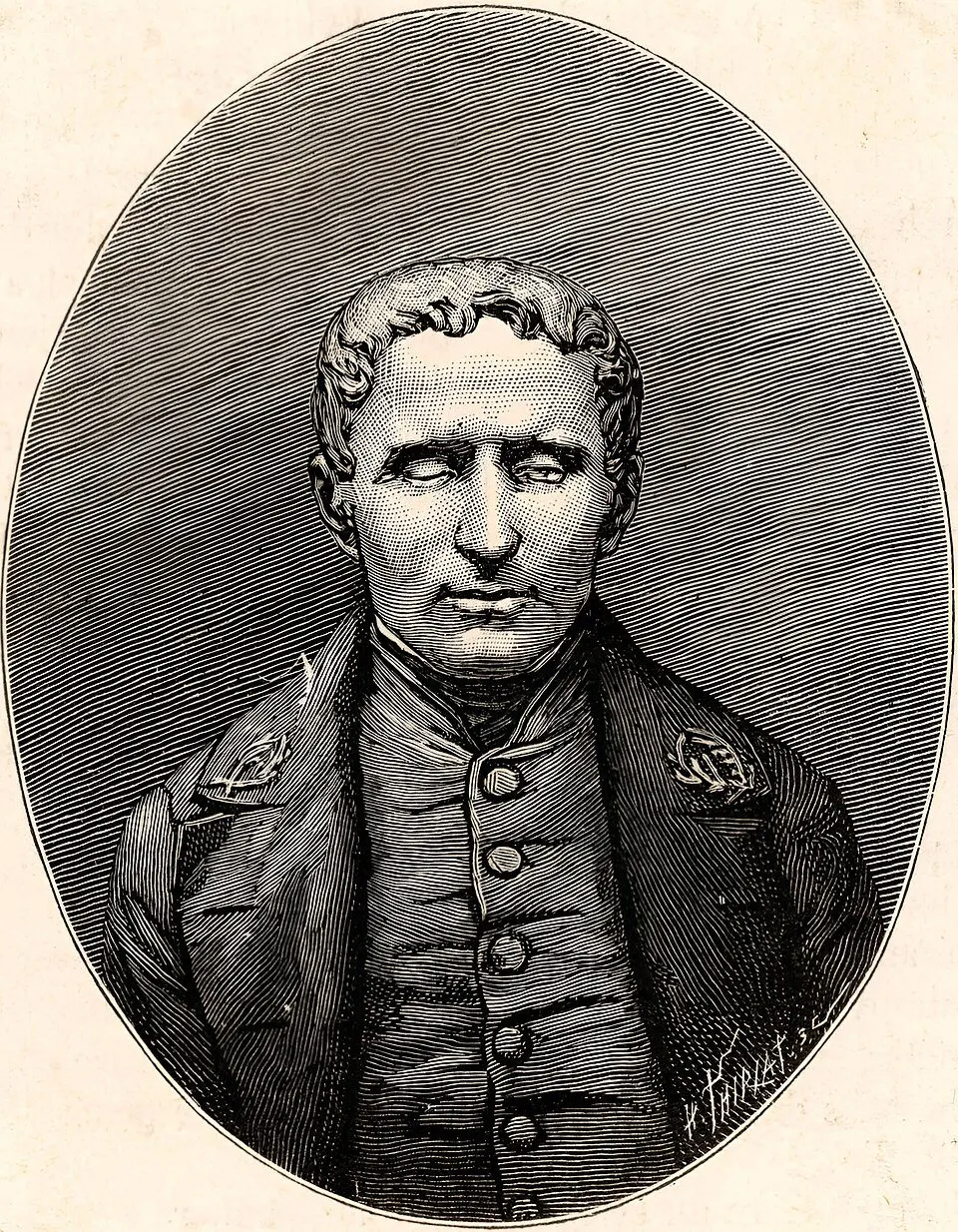
Quick Facts
| Full Name | Louis Braille |
|---|---|
| Date of Birth | January 4, 1809 |
| Place of Birth | Coupvray, France |
| Date of Death | January 6, 1852 |
| Place of Death | Paris, France |
| Cause of Death | Tuberculosis |
| Nationality | French |
| Education | Royal Institute for Blind Youth (Institution Royale des Jeunes Aveugles), Paris |
| Occupation | Educator, inventor, musician |
| Known For | Invention of the braille tactile reading and writing system |
Introduction
Louis Braille was a French educator, inventor, and accomplished musician whose ingenious tactile writing system unlocked literacy, education, and social independence for millions of blind and visually impaired people across the globe. Blinded in early childhood by a tragic workshop accident, he refused to allow physical darkness to constrain his intellect. Instead, he harnessed his deep love for learning to solve one of the most stubborn human dilemmas of his era: how the blind could read and write efficiently, independently, and on equal footing with the sighted world.
At just fifteen years of age, Braille conceived an elegant, six-dot tactile cell that replaced slow, cumbersome embossed letters with a nimble alphabet that fingertips could read in a single touch. He subsequently expanded the system to encompass mathematics and musical notation, creating a comprehensive language of touch. Although institutional resistance delayed the official adoption of his invention during his lifetime, the braille system evolved into the undisputed universal standard for tactile communication, cementing Louis Braille's place among history's greatest humanitarian innovators.
Early Life and Family
Louis Braille was born on January 4, 1809, in the small rural village of Coupvray, located roughly twenty miles east of Paris. He was the youngest of four children born to Simon-René Braille, a skilled master harness maker and leather craftsman, and Monique Baron. The Braille household was modest but industrious, deeply rooted in artisanal craftsmanship and community life. Despite the difficult economic and political conditions of Napoleonic France, Louis spent his earliest years surrounded by the affectionate support of his parents and older siblings.
In 1812, when Louis was only three years old, a catastrophic accident altered the course of his life. While playing in his father’s workshop, the inquisitive toddler attempted to punch a hole into a strip of leather using a sharp stitching awl. The tool slipped, piercing his right eye. In the early nineteenth century, antiseptic surgical practices and antibiotics did not exist; an infection soon took hold and spread to his left eye via sympathetic ophthalmia. By the time he was five years old, Louis had lost his sight entirely.
Rather than succumbing to despair, the Braille family worked to ensure Louis developed self-reliance. Simon-René carved tactile wooden letters so his young son could learn the alphabet, while Louis learned to navigate the cobblestone streets of Coupvray using a small cane his father fashioned for him. Recognizing the boy's sharp mind, the village priest, Father Jacques Palluy, and local schoolmaster Antoine Bécheret arranged for Louis to attend the village school. Although he could not read the textbooks, young Louis astonished his teachers by memorizing oral lessons and outperforming many of his sighted classmates.
Education
Louis’s exceptional memory and intellectual hunger convinced his mentors that he required specialized instruction. In 1819, at the age of ten, he earned a scholarship to attend the Royal Institute for Blind Youth (Institution Royale des Jeunes Aveugles) in Paris, the world's first specialized school for blind children, founded decades earlier by Valentin Haüy.
The institute, situated in a converted seminary building on the Rue Saint-Victor, offered rigorous academics alongside harsh, spartan living conditions. The building was damp, cold, and poorly ventilated, with students subjected to strict military-style discipline and meager rations. Yet for Louis, the school represented an intellectual sanctuary. He threw himself into a demanding curriculum that included Latin, French grammar, geography, history, mathematics, and instrumental music, quickly rising to the top of his classes.
Reading instruction at the school relied on the method devised by its founder, Valentin Haüy: large paper pages embossed with the raised outlines of standard Latin letters. While ingenious for its time, the Haüy system suffered from crippling flaws. The embossed letters were difficult for sensitive fingertips to distinguish rapidly, the books were enormous and heavy, and reading was painfully slow. Most critically, students had no mechanism to write for themselves. They could passively trace the words created by sighted printers, but they remained unable to record notes, write compositions, or express their own thoughts in print. This one-way street of literacy frustrated Louis, planting the seeds for his life’s defining work.
Career and Major Achievements
The Encounter with Charles Barbier's Point Writing
In 1821, a breakthrough occurred when Charles Barbier de la Serre, a retired French artillery officer and inventor, visited the Royal Institute to demonstrate an alternative tactile communication code. Barbier had developed a system known as sonographie (often called "night writing"), which used raised dots and dashes arranged in a two-by-six grid to encode French phonetically. Barbier originally developed raised-point codes for silent night communications and tactile reading.
While the school administration initially regarded the concept as little more than an interesting novelty, the twelve-year-old Louis Braille immediately grasped its revolutionary significance: raised dots, unlike solid embossed letters, could be detected instantly by the nerve endings in a fingertip. However, Barbier’s system had severe limitations. The twelve-dot cell was too tall to fit under the pad of a single finger without moving up and down, making reading laborious. Furthermore, because it was phonetic rather than alphabetic, it ignored standard spelling, punctuation, capitalization, and numbers, preventing true literacy. Braille respectfully pointed out these deficiencies and set out to craft an improved tactile script.
Inventing the Six-Dot Cell (1824–1829)
Between 1821 and 1824, Louis Braille devoted nearly all his free hours—often working deep into the night—to perfecting his tactile code. Using a slate and an awl identical to the instrument that had blinded him, he punched raised dots into sheets of thick paper.
By late 1824, at just fifteen years of age, Braille unveiled his masterpiece. He reduced Barbier’s bulky twelve-dot grid to a compact cell of six dots, arranged in two vertical columns of three. This dimensions-matched design was a stroke of ergonomic genius: a reader's fingertip could rest over all six dots at once, recognizing any of the sixty-four possible combinations without having to shift position. Braille arranged the system logically: the first ten letters (A through J) utilized only the top four dots; the next ten letters (K through T) repeated the identical patterns with the bottom-left dot added; subsequent letters incorporated both bottom dots.
In 1829, at age twenty, Braille published his first formal treatise outlining the system: Procédé pour écrire les paroles, la musique et le plain-chant au moyen de points, à l'usage des aveugles et disposés pour eux ("Procedure for Writing Words, Music, and Plainsong in Dots, for the Use of the Blind and Arranged for Them"). The breakthrough gave visually impaired people a fast, tactile medium for both reading and independent handwriting.
Teaching Career and Musical Mastery
Braille's academic prowess led the Royal Institute to appoint him as an apprentice teacher in 1826 and a full professor in 1833. Over the next two decades, he taught grammar, history, geography, arithmetic, and geometry. Students revered him for his extraordinary patience, warmth, clarity of thought, and unfailing encouragement.
Simultaneously, Braille pursued a parallel career in music. A talented cellist and organist, he held prestigious organist posts in Paris, including services at the churches of Saint-Nicolas-des-Champs and Saint-Vincent-de-Paul. Because music was one of the few viable professions open to blind individuals in nineteenth-century Europe, Braille worked to adapt his six-dot code into a complete system of tactile musical notation. This allowed blind musicians to study complex scores, learn classical compositions, and write original music independently.
System Revisions and the Raphigraph
In 1837, Braille published an updated edition of his tactile system, removing earlier experiments with linear dashes and establishing the pure six-dot cell in the exact configuration used around the world today. That same year, the Royal Institute printed the world's first braille book using the finalized alphabet, a three-volume history text.
Recognizing that his code still created a barrier between blind individuals and the sighted community, who could not read the raised dots without training, Braille tackled the challenge of two-way communication. In 1839, he introduced Decapoint, a system that used a ten-by-ten dot matrix to produce raised characters resembling standard printed Latin letters. Sighted people could easily read these embossed outlines visually, while blind users could trace them by touch.
To mechanize the slow process of hand-punching Decapoint letters, Braille collaborated in the 1840s with François-Pierre Foucault, a blind mechanic and fellow alumnus of the institute. Foucault engineered the Raphigraph, a pioneering mechanical embossing device featuring ten keys that stamped raised dot patterns into paper. Recognized as a forerunner of the modern typewriter, the Raphigraph won awards at the 1851 Universal Exhibition in London and enabled blind writers to correspond directly with sighted readers.
Awards and Recognition
During his lifetime, Louis Braille received little public acclaim or institutional reward. He worked modestly on a teacher's salary, and the French educational establishment remained slow to validate his innovations. However, posthumous recognition elevated him to the status of a global humanitarian icon:
- 1854 Official French Adoption: Just two years after Braille's death, the Royal Institute for Blind Youth officially adopted the braille system as its primary reading and writing method.
- 1878 Universal Standard: The World Congress for the Blind, held in Paris, formally endorsed braille as the international standard for tactile reading, paving the way for its adoption across Europe and the Americas.
- Panthéon Interment (1952): On the centenary of his death, the French government officially declared Braille a national hero and transferred his remains to the Panthéon in Paris, resting alongside luminaries like Victor Hugo, Voltaire, and Jean-Jacques Rousseau.
- Bicentenary Honors (2009): Nations worldwide celebrated the 200th anniversary of his birth; France, Belgium, and India minted commemorative coins, and UNESCO celebrated the braille code as an indispensable instrument of human rights.
- Astronomical Honor: In 1999, NASA's Deep Space 1 spacecraft flew past asteroid 9969, which astronomers had officially named 9969 Braille in honor of the French inventor.
Challenges and Struggles
Braille's path was marked by institutional skepticism and poor health. His most frustrating obstacle was the resistance of sighted administrators at the Royal Institute. While blind students and teachers immediately embraced the six-dot system, sighted educators feared that a unique code would cut off blind students from mainstream printed literature.
This resistance turned hostile in the early 1840s under the tenure of the institute's new director, Pierre-Armand Dufau. Dufau, determined to enforce the traditional Haüy embossed letter system, banned the braille code from the school, confiscated dot-embossed books, and publicly burned several volumes in the courtyard. Braille and his fellow blind students continued using the system in secret, passing embossed notes to one another. Dufau eventually relented in 1844, when an undeniable public demonstration demonstrated the superiority of Braille's code over embossed letters.
Beyond institutional hurdles, Braille struggled with chronic illness. The damp, poorly heated, and unsanitary dormitories of the Rue Saint-Victor school contributed to respiratory disease. Around 1835, at age twenty-six, Braille was diagnosed with tuberculosis. He suffered recurring bouts of fatigue, violent coughing fits, and severe pulmonary hemorrhages. As his illness progressed, he was repeatedly forced to take extended leaves of absence to convalesce in the fresh country air of Coupvray, yet he returned to his Paris classroom whenever his strength allowed.
Personal Life
In his private life, Louis Braille was known for his humility, gentle demeanor, and deep Catholic faith. He never married, dedicating his energy entirely to his students, his music, and the refinement of his tactile systems. He lived simply within the quarters of the Royal Institute, prioritizing the needs of others over personal comfort.
Braille was remarkably generous with his limited finances. He frequently purchased clothes and books for impoverished students and quietly loaned money to friends in need. In his final will, dictated shortly before his death, he forgave every debt owed to him and bequeathed his remaining modest personal savings to charitable causes supporting blind individuals and the local parish church. He maintained a lifelong devotion to his birthplace in Coupvray, frequently visiting his mother and relatives to recharge away from the demands of Paris.
Death and Legacy
By late 1851, the tuberculosis that had plagued Braille for nearly two decades reached an acute stage. Confined to his bed in the infirmary of the Royal Institute in Paris, he endured severe internal hemorrhaging. On January 6, 1852, two days after his forty-third birthday, Louis Braille passed away peacefully, attended by his closest friends and colleagues. His funeral was held at the institute's chapel, and he was laid to rest four days later in the village cemetery of Coupvray beside his father and sister.
Following his death, the undeniable brilliance of his system swept away remaining bureaucratic opposition. The Royal Institute officially implemented the code in 1854, and blind delegates carried the system across the globe. Over the late nineteenth and twentieth centuries, braille was adapted to virtually every major world language—including character-based scripts such as Chinese and Japanese, as well as right-to-left scripts like Arabic and Hebrew. In the scientific arena, Abraham Nemeth adapted braille into the Nemeth Code, enabling blind students to perform advanced calculus and mathematical notation.
A century after his death, on June 22, 1952, France rectified its decades of initial hesitation by interring Braille’s remains in the Panthéon in Paris. In a moving symbolic compromise requested by the citizens of Coupvray, Braille’s hands were removed and preserved in a sealed urn in his original tomb in the village cemetery, allowing his home town to keep the hands that had brought light to the world. During the Panthéon ceremonies, renowned deaf-blind activist Helen Keller delivered an address praising Braille, asserting that he had bestowed upon the sightless a gift equivalent to the gift of speech itself.
Interesting Facts
- The Awl Irony: The very leatherworking tool that caused the childhood accident leading to Braille's blindness—an awl—became the primary stylus he used to punch dots into paper while developing his tactile alphabet.
- A Teenager's Invention: Braille completed the foundational design of his six-dot tactile writing code in 1824 when he was only fifteen years old.
- Two Places of Rest: While Braille's body rests inside the Panthéon alongside France's most celebrated national heroes, his hands remain buried in an urn in his home village of Coupvray.
- Music Before Math: Passionate about music, Braille adapted his tactile code for musical notation in 1829 before adapting it for complex mathematics and arithmetic.
- A Precursor to the Typewriter: Braille co-developed the Raphigraph in the 1840s with blind engineer François-Pierre Foucault, creating one of the earliest working keyboard-operated typing machines.
- Asteroid in the Stars: In 1999, the asteroid 9969 Braille was visited by NASA’s Deep Space 1 probe, carrying the French inventor's name across the solar system.
Frequently Asked Questions
How did Louis Braille lose his sight?
At age three, Louis injured his right eye while playing with a sharp leather-punching awl in his father's saddlery workshop. The wound developed an infection that subsequently spread to his left eye via sympathetic ophthalmia, resulting in complete and irreversible blindness by age five.
What inspired the creation of the braille system?
Braille was inspired by a tactile military code known as "night writing" (sonographie), presented to his school by Charles Barbier in 1821. Finding Barbier's twelve-dot phonetic system too cumbersome to read smoothly, Braille simplified it into an efficient, ergonomic six-dot cell that represented letters, numbers, and punctuation.
Was braille officially used during Louis Braille's lifetime?
Although widely used and beloved by students and teachers within the Royal Institute, the braille system was not officially adopted as the school's authorized teaching method during Braille's lifetime. The school formally recognized and adopted it in 1854, two years after his death from tuberculosis.
Why are Louis Braille's hands buried separately from his body?
When the French government decided to move Braille’s remains to the Panthéon in Paris in 1952 for the centenary of his death, the citizens of his hometown of Coupvray protested losing him. As a symbolic compromise, his hands were disinterred and placed in a sealed urn atop his tomb in Coupvray, while the rest of his remains were moved to the Panthéon.
How does the braille system work?
The system uses a rectangular matrix known as a braille cell, consisting of six dot positions arranged in two columns of three. By raising different combinations of these six dots, sixty-four distinct patterns can be produced to represent letters of the alphabet, punctuation marks, numerals, musical notes, and mathematical symbols.
Conclusion
Louis Braille’s life stands as a testament to the transformative power of human ingenuity over adversity. Refusing to accept the marginalization and enforced passivity experienced by the blind in nineteenth-century society, he created an enduring system that unlocked the written word through touch. His invention democratized education, dismantled communication barriers, and provided generations of visually impaired individuals with intellectual autonomy. By turning an instrument of tragedy into an instrument of liberation, Louis Braille forever altered the landscape of human knowledge, ensuring that the light of literacy could be accessed without sight.
Image: Wikimedia Commons, via Wikipedia (see the file page for author and license).
More biographies in Invention → · All biographies
Related biographies
Savitribai Phule Biography: India's Pioneer Female Educator
Savitribai Phule was a trailblazing Indian educator, social reformer, and poet who dismantled caste and gender boundaries to…
Benjamin Franklin Inventions & Biography
Introduction: Benjamin Franklin was born on 17th January 1706 in Boston, Massachusetts, British America. He was known to be the…
Momofuku Ando: Life and Inventions of the Instant Ramen Creator
Momofuku Ando was the visionary inventor and Nissin Foods founder who developed instant ramen and Cup Noodles. Driven by post-war…
Gottlieb Daimler | Four Stroke Automobile inventor | Real World Hero
Introduction of Gottlieb Daimler: Many personalities invented different engines from different areas of the world. All of them…
Robert William Thomson, Inventor of Tire
Introduction: Robert William Thomson PRSSA FRSE from Stonehaven which is located in Scotland. He was the inventor of the Fountain…
Brahmagupta Indian Mathematician and cosmologist
Introduction: Brahmagupta Indian mathematician and cosmologist is the creator of two early takes a shot at arithmetic and…