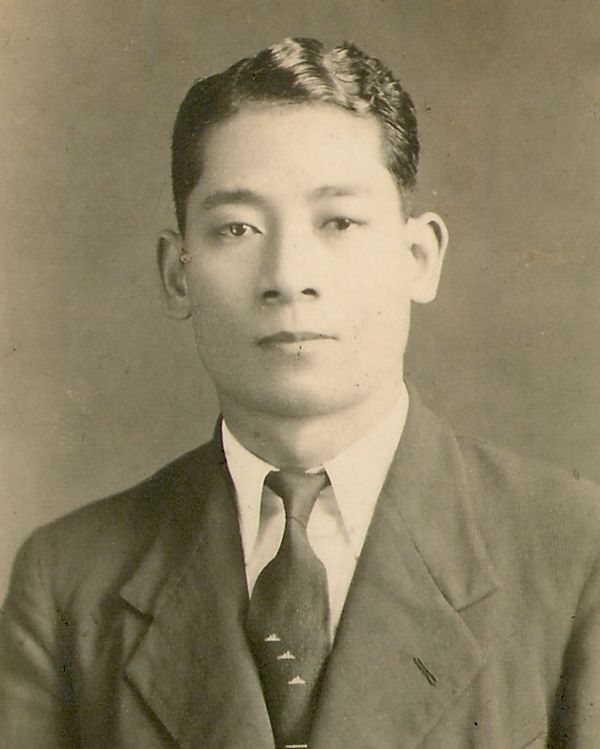
Introduction
Momofuku Ando was a transformative inventor and business leader whose relentless curiosity reshaped how the modern world eats. As the founder of Nissin Food Products Co., Ltd., Ando invented flash-fried instant ramen and Cup Noodles, turning traditional noodle preparation into a shelf-stable, rapid-cooking meal accessible to virtually anyone with hot water. His innovations grew out of a turbulent historical era into an international dietary phenomenon, producing an industry that now manufactures tens of billions of servings each year.
Ando believed that food was not merely a consumer product, but the foundation of human peace and societal stability. Witnessing widespread hunger in Japan following World War II, he resolved to invent an affordable, convenient, and safe food source. Through decades of perseverance, commercial risk, and late-career ingenuity, he proved that transformative ideas can emerge at any age, establishing an enduring legacy in modern manufacturing, industrial design, and food security.
Early Life and Family
Momofuku Ando was born Go Pek-Hok on March 5, 1910, in Chiayi County, Taiwan, during the era of Japanese colonial rule. He experienced tragedy at an early age when both of his parents passed away, leaving him to be raised by his grandparents in the vibrant trading city of Tainan. His grandparents owned and operated a successful textiles and kimono fabric merchant business, an environment that served as the boy's earliest classroom in commerce.
Observing the daily rhythms of his grandparents' store gave Ando an early appreciation for merchandise, salesmanship, and supply chains. In 1932, at the age of twenty-two, he used an inheritance to establish his first venture in Taipei, a wholesale textiles and knitwear trading business. Displaying sharp business instincts, he expanded operations between Taiwan and Japan, demonstrating an entrepreneurial spirit that would carry him through numerous economic upheavals.
Education
In 1933, seeking larger commercial horizons, Ando traveled to Osaka, Japan, to expand his textile trade. Recognizing that lasting entrepreneurial success required a structured understanding of financial systems, he enrolled in the Department of Economics at Ritsumeikan University in Kyoto.
Ando balanced his expanding business activities with his university studies, graduating with an economics degree in 1934. The economic principles he studied—such as consumer demand curves, efficient distribution, and industrial cost structures—served as crucial intellectual tools when he later built mass-production food processing networks. Decades later, Ritsumeikan University recognized his global contributions by awarding him an honorary doctorate.
Career and Major Achievements
Post-War Realities and the Vision for Nourishment
Following the end of World War II, Osaka lay in ruins, and widespread food shortages afflicted the Japanese populace. The Japanese Ministry of Agriculture and Forestry encouraged citizens to consume bread and biscuits made from wheat flour supplied as humanitarian aid by the United States. Ando found this strategy puzzling, asking officials why the government did not promote traditional noodles, which were far more culturally familiar to Japanese palates. The ministry responded that existing noodle companies were too small and lacked the industrial technology to produce shelf-stable noodles at scale.
One freezing winter evening in post-war Osaka, Ando witnessed a long line of hungry, exhausted workers waiting outside an open-air black-market noodle stall, shivering in the cold just to purchase a single warm bowl of ramen. The sight left an indelible mark on him. He realized that a bowl of hot noodles offered comfort as well as nutrition, cementing his guiding philosophy: "Peace will come to the world when the people have enough to eat".
The Backyard Shed and the Invention of Chikin Ramen (1958)
In 1957, following the financial ruin of a credit association where he had served as director, Ando lost nearly all his assets. Left with only his rented home in Ikeda, Osaka Prefecture, the 47-year-old entrepreneur decided to channel his remaining energy into solving the noodle problem. He erected a modest 100-square-foot wooden shed in his backyard, equipped it with basic cooking tools, a noodle-making machine, and a wok, and began twelve months of rigorous experimentation.
Ando worked entirely on his own, sleeping an average of four hours per night without taking a single day off. His goal was to formulate a noodle that satisfied five strict criteria: delicious taste, long shelf life, rapid cooking time (under three minutes), affordability, and food safety. The primary obstacle was drying the noodles in a manner that allowed rapid rehydration when boiling water was added.
The eureka moment arrived when Ando watched his wife, Masako, prepare tempura in the family kitchen. He noticed that dropping batter into bubbling oil caused the moisture within to vaporize rapidly while hardening the outer coating. Applying this flash-frying technique to seasoned noodles, Ando discovered that high-temperature oil rapidly dehydrated the dough, creating countless microscopic perforations. When consumers subsequently poured boiling water over the noodle cake, the water swiftly entered the pores, restoring the noodles to a fresh, chewy texture in just three minutes.
On August 25, 1958, Ando launched "Chikin Ramen" under his enterprise, which soon adopted the name Nissin Food Products. He selected a chicken-based broth deliberately, noting that while religious and cultural traditions often restrict beef or pork, chicken is enjoyed across global borders without widespread religious prohibition. Although initially priced as a premium convenience item, Chikin Ramen's taste and ease of preparation turned it into an explosive commercial success across Japan, earning the public nickname "magic ramen".
The Global Breakthrough: Invention of Cup Noodles (1971)
In 1966, Ando embarked on a fact-finding tour of North America and Europe to explore export opportunities for instant noodles. During a meeting with supermarket executives in the United States, he encountered an unexpected obstacle: Western consumers did not typically own the specialized ramen bowls or chopsticks standard in East Asian households. Improvising, the American buyers broke the Chikin Ramen blocks in half, placed them into paper cups, poured hot water over them, and ate them with forks.
Ando realized that achieving international adoption required overcoming cultural barriers surrounding eating utensils and tableware. He returned to Osaka determined to design a single container that served as the packaging, cooking vessel, and eating bowl. On September 18, 1971, Nissin introduced Cup Noodles. The product featured noodles suspended securely in the center of an insulating, waterproof polystyrene cup, accompanied by freeze-dried ingredients and an airtight pull-tab lid. The design ensured durability, rapid rehydration, and true portability, turning instant ramen into a global household staple.
Setting Industry Standards and Associations
As the instant ramen market expanded during the 1960s, low-quality copycats and counterfeiters emerged, compromising consumer safety with substandard ingredients and rancid oils. Rather than engaging purely in trademark lawsuits, Ando worked to protect the wider category. In 1964, he established the Instant Food Industry Association, setting rigorous production standards and promoting fair competition across Japanese manufacturers.
Through this body, Ando pioneered the practice of printing manufacturing and expiration dates directly on packaged consumer foods in Japan, a consumer-safety benchmark that was eventually adopted across the broader food processing industry. Later, in 1997, he helped establish the International Ramen Manufacturers Association (known today as the World Instant Noodles Association, or WINA), serving as its chairman to foster food aid initiatives and maintain quality across global producers.
Space Ram: Dining in Microgravity (2005)
Even in his tenth decade, Ando retained his passion for inventive engineering. In 2001, he initiated a specialized Nissin research team to design instant noodles capable of being consumed in zero gravity. The project resulted in "Space Ram," a vacuum-sealed noodle pouch containing a concentrated broth that thickened to avoid dispersing in microgravity, capable of rehydrating at 70°C without requiring boiling water.
In July 2005, during the STS-114 mission of Space Shuttle Discovery, Japanese astronaut Soichi Noguchi consumed Space Ram in orbit. The achievement fulfilled a lifelong ambition for Ando, proving that his culinary creation could nourish humans beyond Earth's atmosphere.
Awards and Recognition
Ando received numerous honors from the Japanese government and international institutions in recognition of his contributions to industrial development, food safety, and post-war reconstruction:
- Medal of Honor with Blue Ribbon (1977): Bestowed by the Japanese government for outstanding public service and contributions to national welfare.
- Order of the Sacred Treasure, Second Class (1982): Awarded with Gold and Silver Star in recognition of his significant economic and civic achievements.
- Medal of Honor with Purple Ribbon (1983): Conferred for inventive breakthroughs in food science and industrial technology.
- Distinguished Service Award (1992): Presented by the Director-General of Japan's Science and Technology Agency.
- Order of the Rising Sun, Second Class (2002): Bestowed with Gold and Silver Star, representing one of the highest civilian honors in Japan.
Challenges and Struggles
Ando's path to global success was marked by recurring crises and severe reversals of fortune. During World War II, his commercial activities were disrupted by strict wartime controls, raw-material rationing, and destructive airstrikes. Following the war, in 1948, he was arrested by tax authorities over educational scholarships he had funded for low-income vocational students, which the government viewed as taxable income evasion. Ando spent two years in prison before the charges were resolved, an ordeal that shuttered his business ventures.
A more devastating setback arrived in 1957 when an Osaka-based credit cooperative, where he had accepted the role of chief director as a civic duty, collapsed under heavy debt. Under Japanese business regulations of the era, Ando bore personal liability for the association's obligations. Virtually all of his accumulated property, savings, and assets were seized to repay creditors, leaving him nearly destitute at the age of forty-seven.
Even after perfecting instant ramen, Ando had to defend his creation against rampant intellectual property theft. Because the initial recipe utilized accessible kitchen staples, dozens of unauthorized manufacturers copied the concept, frequently using inferior oils that sickened customers. Ando spent years defending his patents while organizing industry consortia to guarantee uniform health standards.
Personal Life
Ando married Masako Ando, taking her family name as his own. Following the conclusion of World War II and the geopolitical realignment of Taiwan, he held citizenship under the Republic of China before officially becoming a naturalized Japanese citizen in 1966.
Together, the couple raised three children: sons Hirotoshi and Koki, and daughter Akemi. His son Koki Ando later joined Nissin Food Products, eventually becoming its President and Chief Executive Officer and helping lead the company's continuous worldwide expansion.
Known for his vitality and disciplined lifestyle, Ando remained active into his nineties. He attributed his longevity to a daily regimen that combined physical activity—particularly regular rounds of golf—with eating a serving of Chikin Ramen for lunch every single day.
Death and Legacy
Momofuku Ando passed away from heart failure on January 5, 2007, at a hospital in Ikeda, Osaka, at the age of ninety-six. His death occurred just days after he delivered his customary New Year's address to Nissin employees. A massive memorial service was held at the Kyocera Dome in Osaka, attended by thousands of mourners, including former Japanese prime ministers and corporate executives.
Ando's legacy endures as a cornerstone of modern industrial design and humanitarian food aid. Today, the World Instant Noodles Association estimates global consumption of instant noodles at well over 100 billion servings annually. Due to their compact size, long shelf life, and ease of preparation, instant noodles serve as critical relief provisions dispatched by governments and international charities in the immediate aftermath of earthquakes, tsunamis, and geopolitical displacements.
To celebrate his philosophies of creative thinking and tenacity, Nissin opened the CUPNOODLES Museum in Ikeda, Osaka, as well as an expanded museum in Yokohama. These institutions showcase Ando's reconstructed backyard shed and feature hands-on workshops designed to inspire younger generations to embrace invention and scientific problem-solving.
Interesting Facts
- Late-career breakthrough: Ando did not invent instant ramen until 1958, when he was forty-eight years old, proving that major innovations can occur later in life.
- Tempura connection: The foundational process of flash-frying noodles was inspired by watching his wife prepare tempura shrimp in their kitchen.
- Global broth philosophy: Ando specifically formulated Chikin Ramen with chicken broth because chicken faces almost no religious or dietary restrictions across major world cultures.
- Origin of package dates: Ando was instrumental in establishing the requirement to print manufacturing and "best before" dates on processed food packages in Japan.
- Noodles in the cosmos: At ninety-five years old, Ando oversaw the creation of "Space Ram," which Japanese astronaut Soichi Noguchi ate aboard the Space Shuttle Discovery in 2005.
- Lifelong consumer of his invention: Up until the final days of his life, Ando ate his proprietary ramen for lunch nearly every day.
Frequently Asked Questions
What motivated Momofuku Ando to invent instant ramen?
Ando was motivated by the extreme food shortages in Japan following World War II. After seeing hungry citizens standing in freezing queues for a bowl of fresh ramen at black-market food stalls, he became convinced that providing quick, affordable, and warm food was essential to restoring social peace and stability.
How did Momofuku Ando dry the noodles so they could cook quickly?
Ando discovered the technique of flash-frying noodles in hot palm oil, a method inspired by watching his wife cook tempura. The hot oil quickly removed moisture and created tiny pores inside the noodles, allowing them to rapidly absorb boiling water and reconstitute in three minutes.
When and why was Cup Noodles invented?
Ando invented Cup Noodles in 1971 after a business trip to the United States. Seeing American supermarket buyers break up ramen and eat it out of paper cups with forks, he designed an all-in-one container that held the noodles, served as the cooking vessel, and eliminated the need for specialized bowls or chopsticks.
What was Momofuku Ando's birth name?
Ando was born Go Pek-Hok (in Taiwanese Hokkien; Wu Baifu in Mandarin) in Taiwan in 1910. He adopted the Japanese reading "Momofuku" for his given name and took his wife's surname, Ando, after moving to Japan and marrying Masako Ando.
How old was Momofuku Ando when he died?
Momofuku Ando died of heart failure on January 5, 2007, in Ikeda, Osaka Prefecture, Japan, at the age of ninety-six.
Conclusion
Momofuku Ando's life exemplifies the transformative power of perseverance, observation, and civic-minded innovation. Starting from a humble backyard workshop at an age when many contemplate retirement, he developed products that transcended geographic borders and revolutionized global eating habits. By turning a simple noodle into an instrument of emergency aid and universal nourishment, Ando fulfilled his core belief that feeding humanity with dignity is the first step toward lasting peace.
Image: Wikimedia Commons, via Wikipedia (see the file page for author and license).