
Tayeb Salih – The Genius of the Arabic Novel
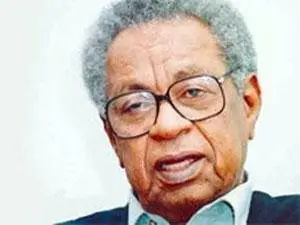
Quick Facts
| Full Name | Al-Tayeb Mohammed Salih Ahmed |
|---|---|
| Date of Birth | July 12, 1929 |
| Place of Birth | Karmakol, Northern Province, Anglo-Egyptian Sudan |
| Date of Death | February 18, 2009 |
| Place of Death | London, England |
| Cause of Death | Kidney failure |
| Nationality | Sudanese |
| Education | Gordon Memorial College (University of Khartoum), University of London |
| Occupation | Novelist, short-story writer, broadcast journalist, diplomat |
| Known For | Authoring Season of Migration to the North, The Wedding of Zein, and exploring postcolonial cultural identity |
| Notable Awards | Cairo International Book Fair Award for Creativity in the Novel (2005) |
| Spouse | Julia Maclean (m. 1965) |
| Children | Zainab Salih, Sara Salih, Samira Salih |
Tayeb Salih biography: Novelist, short-story writer, broadcast journalist, diplomat. Born on July 12, 1929 in Karmakol, Northern Province, Anglo-Egyptian Sudan. Died on February 18, 2009 in London, England. Known for authoring Season of Migration to the North, The Wedding of Zein, and exploring postcolonial cultural identity.
Introduction to Tayeb Salih
Tayeb Salih was a renowned Sudanese novelist, cultural essayist, and broadcast journalist widely revered across the Arab-speaking world and the international literary community as the "genius of the Arabic novel". Rising from a modest agricultural background along the banks of the Nile, Salih brought the sights, sounds, and moral subtleties of rural Sudan to the forefront of modern world fiction. His sophisticated narrative structures, blending classical Arabic storytelling traditions with modernist Western literary techniques, created an indelible mark on postcolonial studies and modern African letters.
Salih is best remembered for his iconic 1966 novel, Season of Migration to the North, a profound deconstruction of the cultural, psychological, and sexual entanglements between the colonized East and the imperial West. Later proclaimed by the Arab Writers Union as the most important Arabic novel of the twentieth century, the work cemented Salih's stature alongside celebrated contemporaries such as Naguib Mahfouz and Taha Hussein. Beyond his fiction, Salih spent decades serving as a cultural diplomat and international broadcaster, championing cross-cultural dialogue while offering principled commentary on Sudanese politics and heritage.
Early Life and Family
Tayeb Salih was born on July 12, 1929, in the small rural village of Karmakol, situated near the town of Al Dabbah in the Northern Province of Anglo-Egyptian Sudan. He was born into an observant Muslim family of modest means, composed of small-scale farmers and Islamic religious teachers whose lineage joined northern Sudanese Arab and Nubian heritage. Growing up in Karmakol, the rhythms of life were intimately tied to the Nile River, whose ebbs, floods, and spiritual folklore formed the imaginative foundation of Salih's childhood.
Salih’s earliest schooling took place in a local khalwa (traditional Quranic school), where he memorized verses of the Quran, learned the rudiments of classical Arabic rhetoric, and observed the social cohesion of village life. He grew up surrounded by oral storytelling, community gatherings, and Sufi mysticism—influences that permeated virtually every narrative world he later constructed. Despite his humble beginnings, Salih displayed exceptional academic aptitude early on, prompting his family to encourage his studies beyond the village, first in regional intermediate schools in Port Sudan and later in the capital city of Khartoum.
Education
In Khartoum, Salih attended the renowned Gordon Memorial College, the premier institution of higher learning in colonial Sudan that later evolved into the University of Khartoum. Initially intending to follow a pragmatic career path that could benefit rural society, he pursued studies in natural science and agriculture. He completed his degree in science, but his expanding intellectual horizons and affinity for language soon led him away from agronomical work toward secondary education and letters.
After working briefly as a schoolteacher in the Sudanese town of Rufa'a, Salih earned a scholarship to pursue postgraduate study in the United Kingdom in 1952, joining a generational cadre of young Sudanese scholars dispatched abroad in preparation for national independence. Settling in London, he attended the University of London, where he studied economics, politics, and English literature. This immersion in British society exposed him to the psychological nuances of life in the imperial metropolis, providing the vivid firsthand material that would later animate his critical examinations of identity and exile.
Career and Major Achievements
Broadcasting and International Cultural Diplomacy
Salih’s professional career outside of fiction was distinguished by decades of public service in international media and cultural governance. In 1953, he joined the British Broadcasting Corporation (BBC) in London as a scriptwriter and producer for its influential Arabic Service. His erudition, lyrical voice, and deep appreciation for Arabic drama quickly elevated him within the organization, leading to his appointment as the Head of Drama for the BBC Arabic Service in 1958. Through this platform, he introduced radio adaptations of classic Arabic literature and modern drama to millions of listeners across the Middle East and North Africa.
In the late 1960s, Salih relocated to the Persian Gulf, accepting an appointment as the Director-General of Information for the Ministry of Information in Doha, Qatar. His successful stewardship of cultural institutions opened the door to a prominent international career with the United Nations Educational, Scientific, and Cultural Organization (UNESCO). Based primarily at UNESCO headquarters in Paris, and later serving as the organization’s regional representative for the Arab Gulf States, Salih dedicated over a decade to fostering global literacy programs, historic preservation, and cross-cultural exchange until his retirement from institutional diplomacy.
Breakthrough with The Wedding of Zein
Salih entered the Arabic literary spotlight during the early 1960s with a series of acclaimed short stories and novellas. His most celebrated early work, the novella The Wedding of Zein (Urs al-Zayn), was published in 1962. Set in a fictionalized Nile village reminiscent of his hometown, the story revolves around Zein, a beloved, eccentric village simpleton whose unexpected marriage to the town's most beautiful and devout woman unifies a fractured community.
The novella was widely lauded for its luminous celebration of rural Sudanese life, blending humor, community ethos, and profound Sufi spirituality. Salih used the figure of Zein as a conduit to explore how faith, love, and tolerance transcend rigid social hierarchies. In 1976, The Wedding of Zein was adapted into a feature film directed by Kuwaiti filmmaker Khalid Al Siddiq, which garnered international praise, including a screening at the Cannes Film Festival.
Season of Migration to the North: The Magnum Opus
In 1966, the Beirut-based journal Hiwar published Salih's masterpiece, Season of Migration to the North (Mawsim al-Hijra ila al-Shamal). The novel tells the story of an unnamed narrator who returns to his Sudanese village after years of studying in England, eager to contribute to his newly independent nation. There, he encounters Mustafa Sa'eed, a brilliant, enigmatic stranger who harbors a dark past as a celebrated scholar in London. Through Sa'eed’s harrowing confessions, the novel unfolds a chilling narrative of erotic conquest, colonial revenge, and psychological displacement.
Translated into English in 1969 by renowned Arabic literature translator Denys Johnson-Davies, the novel caused an immediate sensation worldwide. Literary critics hailed it as a brilliant inversion of Joseph Conrad’s Heart of Darkness, shifting the axis of exploration from an imperial journey into the African interior to an African traveler’s voyage into the predatory heart of the imperial metropole. The novel remains one of the most widely taught and extensively analyzed works of postcolonial fiction in world literature.
The Bandarshah Cycle and Later Works
Salih followed the success of his landmark novel with an ambitious two-volume fictional cycle entitled Bandarshah, comprising Daw al-Bayt (1971) and Maryud (1976). These works, deeply grounded in the collective memory, mythic origins, and intergenerational conflicts of northern Sudanese villagers, demonstrated his mastery of modernist narrative techniques. In Bandarshah, Salih employed non-linear chronology, interior monologue, and elements of folklore to examine the spiritual transformation of Sudanese society as modern political apparatuses intruded upon traditional village life.
His short story collections, such as The Doum Tree of Wad Hamid (1960) and A Handful of Dates (1964), further solidified his reputation as a master miniaturist. In these works, a modest tree or a harvest interaction between a grandfather and grandson serves as a rich microcosm for examining tradition, loss, and moral disillusionment.
Literary Journalism and Public Intellectual Voice
In addition to his literary narratives, Salih was a prominent essayist and public commentator. For over a decade, he contributed a weekly column to the London-based pan-Arab magazine Al-Majalla, covering Arabic literary heritage, Western culture, philosophy, and international politics. His articles reflected an open-minded cosmopolitanism, grounded in reverence for classical Arabic poetic traditions and an insistence on humanistic empathy across cultures.
Awards and Recognition
Throughout his lifetime, Tayeb Salih achieved singular prominence within the Arab world's literary pantheon. In 2001, in a landmark evaluation organized by the Arab Writers Union in Damascus, a council of prominent Arab critics and authors declared Season of Migration to the North to be the most important Arabic novel of the twentieth century. This accolade placed his work at the pinnacle of modern Arabic prose, surpassing even the major outputs of Nobel laureate Naguib Mahfouz in contemporary significance.
In 2005, Salih received the prestigious Cairo International Book Fair Award for Creativity in the Novel, one of the Arab literary sphere’s most respected honors. Following his passing, the Sudanese telecommunications company Zain and a committee of Sudanese intellectuals established the Tayeb Salih International Award for Creative Writing in 2010, which continues to recognize outstanding fiction and literary criticism from writers across the Arab world.
Challenges and Struggles
Salih’s creative trajectory was defined by significant personal and political tensions. As an expatriate who spent the majority of his adult life living in London, Paris, and Doha, he often wrestled with the emotional weight of geographic displacement. While living abroad granted him the critical distance necessary to write about Sudan with lucidity, he carried a persistent longing for his rural origins along the Nile.
Salih also faced political alienation and state-sponsored censorship. Following the 1989 military coup in Sudan that brought an Islamist government to power, Salih emerged as an outspoken opponent of the regime’s authoritarian policies. In 1990, he published a searing political essay titled "Where Did These People Come From?" (Min ayna ata ha'ula'?), decrying the systematic erosion of Sudan’s traditional social tolerance, diversity, and cultural institutions under the ruling National Islamic Front.
In response to his public dissent, the Sudanese regime targeted his literary work. During the 1990s, Season of Migration to the North was banned in Sudan under the guise of religious conservatism and allegations that its graphic portrayals of sexuality were indecent. Salih endured the painful reality of having his greatest artistic masterpiece outlawed in his own homeland for years before it was quietly allowed back into circulation.
Personal Life
In 1965, Salih married Julia Maclean, a Scottish woman whom he had met while living and working in the United Kingdom. The couple enjoyed a devoted marriage that lasted until Salih's death in 2009. Together, they settled in southwest London, where they raised three daughters: Zainab, Sara, and Samira.
Those who knew Salih personally frequently described him as gracious, modest, and extraordinarily generous with younger writers and aspiring intellectuals. Despite his towering international stature, he maintained an unpretentious demeanor, often receiving fellow writers, journalists, and students in his London residence to discuss world literature, Sudanese politics, and classical Arabic poetry.
Death and Legacy
Tayeb Salih died on February 18, 2009, at King's College Hospital in London, England, at the age of 79, following complications from kidney failure. In accordance with his wishes, his body was repatriated to Sudan. A state funeral took place in Khartoum, drawing thousands of mourners, including prominent Arab and African dignitaries, writers, opposition politicians, and ordinary citizens who lined the streets to pay tribute to their greatest cultural ambassador.
Salih's legacy endures as a vital bridge between African and Arab literary traditions. His works have been translated into more than thirty languages, cementing his place in the canonical curriculum of world literature. By rejecting binary colonial depictions and portraying the human psyche in all its moral complexity, Salih established a benchmark for modern postcolonial fiction that continues to inspire scholars, novelists, and readers worldwide.
Interesting Facts
- Agronomist turned novelist: Salih initially intended to pursue a lifetime career in agriculture, earning a bachelor's degree in science before pivoting entirely toward broadcasting and creative writing.
- Literary translator partnership: Salih's international reputation was bolstered through his close friendship with Denys Johnson-Davies, the renowned British translator who brought several of Salih’s key works into English.
- First Arabic work in Heinemann's series: In 1969, Season of Migration to the North became the first Arabic novel ever published in the influential Heinemann African Writers Series.
- An enduring political maxim: Salih’s poignant critique published in 1990, "Where did these people come from?", became an enduring political rallying cry for Sudanese democratic activists for decades.
- Film acclaim at Cannes: The 1976 film adaptation of his novella The Wedding of Zein was produced in Kuwait and screened at the prestigious Cannes Film Festival.
- Centuries of village memory: Almost all of Salih’s fiction is situated in or around the fictional Nile village of Wad Hamid, creating an expansive interconnected universe similar to William Faulkner's Yoknapatawpha County.
Frequently Asked Questions
What is Tayeb Salih most famous for?
Tayeb Salih is best known for his 1966 novel Season of Migration to the North, widely recognized as a masterpiece of postcolonial literature and named the most important Arabic novel of the twentieth century by the Arab Writers Union. He is also widely celebrated for his classic novella The Wedding of Zein.
Why was Season of Migration to the North controversial?
The novel addressed delicate intersections of race, colonialism, and sexual violence between East and West. In 1992, Sudan's Islamist regime banned the book, citing alleged sexual explicitness, though the censorship was widely viewed as retaliation for Salih's public opposition to the dictatorship.
What languages did Tayeb Salih write in?
Salih composed all of his fiction and primary literary journalism in Arabic, showcasing exceptional command over classical idiom and northern Sudanese dialectal nuances. His works have since been translated into more than thirty languages.
What was Tayeb Salih's contribution to international diplomacy?
Outside literature, Salih worked for decades in cultural and media diplomacy. He served as Director-General of Information in Qatar and later worked as a senior official and regional representative for UNESCO in Paris and the Arab Gulf States, promoting international education and cultural preservation.
How did Tayeb Salih influence modern postcolonial literature?
Salih provided one of the earliest and most nuanced literary responses to Western colonialism from an Afro-Arab perspective. Rather than offering simplistic anti-colonial propaganda, he explored the psychological ruptures, contradictions, and mutual fascinations between the colonizer and the colonized.
Conclusion
Tayeb Salih remains a titan of modern literature whose prose captured the soul of Sudan while speaking directly to universal human dilemmas. By transforming the agrarian landscape along the Nile into an arena for examining identity, alienation, and imperial reckoning, he permanently reshaped twentieth-century narrative fiction. More than a decade after his passing, his writings retain their extraordinary lyrical force and critical urgency, securing his place as the undeniable "genius of the Arabic novel".
===CONTENT===Image: Wikimedia Commons, via Wikipedia (see the file page for author and license).
Frequently Asked Questions About Tayeb Salih
Who is Tayeb Salih?
Tayeb Salih is novelist, short-story writer, broadcast journalist, diplomat. Tayeb Salih is known for authoring Season of Migration to the North, The Wedding of Zein, and exploring postcolonial cultural identity.
When was Tayeb Salih born?
Tayeb Salih was born on July 12, 1929 in Karmakol, Northern Province, Anglo-Egyptian Sudan.
Where was Tayeb Salih born?
Tayeb Salih was born in Karmakol, Northern Province, Anglo-Egyptian Sudan.
When did Tayeb Salih die?
Tayeb Salih died on February 18, 2009 in London, England. Cause of death: Kidney failure.
What is Tayeb Salih's nationality?
Tayeb Salih is a Sudanese national.
What awards did Tayeb Salih receive?
Tayeb Salih's awards and honours include Cairo International Book Fair Award for Creativity in the Novel (2005).
More Biographies You May Like
More biographies in Novelist → · All biographies
Related biographies
Intizar Hussain Biography: Master Chronicler of Urdu Literature
Explore the life and literary genius of Intizar Hussain, the acclaimed Pakistani novelist whose allegorical fiction captured the…
Naguib Mahfouz Biography – The Voice of Cairo and Nobel Laureate
Naguib Mahfouz transformed modern Arabic fiction through vivid social realism and philosophical allegory, becoming the first Arab…
Talaat Harb – Pioneer of Egypt's Modern Economy
Revered as the father of Egypt's modern economy, Talaat Harb broke foreign financial domination by founding Banque Misr and…
Chung Ju-yung Biography: Founder of Hyundai and Industrial Pioneer
Rising from rural poverty, Chung Ju-yung founded Hyundai, drove South Korea's post-war economic modernization, and orchestrated…
Oodgeroo Noonuccal Biography: Life of a Trailblazing Poet
Oodgeroo Noonuccal was a pioneering Aboriginal Australian poet, political activist, and educator who became the first published…
Kazi Nazrul Islam: Life and Legacy of the Rebel Poet
Kazi Nazrul Islam was a legendary Bengali poet, composer, and freedom fighter who challenged colonial rule and bigotry. Revered…