Reinhold Messner Biography: Life of the Mountaineering Legend
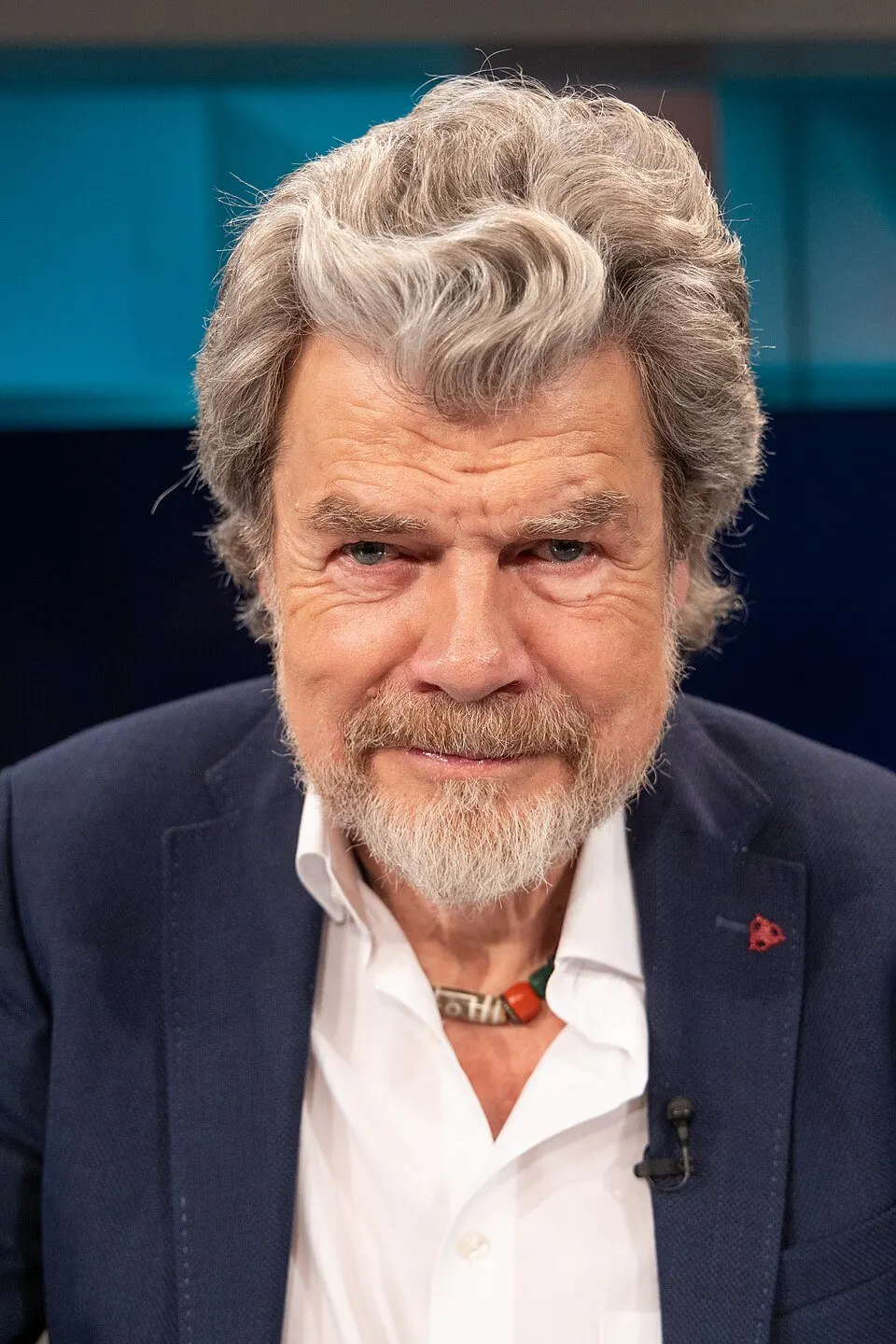
Quick Facts
| Full Name | Reinhold Andreas Messner |
|---|---|
| Date of Birth | September 17, 1944 |
| Place of Birth | Brixen, South Tyrol, Italy |
| Age | 82 |
| Nationality | Italian |
| Education | University of Padua (Surveying) |
| Occupation | Mountaineer, explorer, author, politician |
| Known For | First solo ascent of Mount Everest without supplemental oxygen, first person to climb all 14 eight-thousanders |
| Notable Awards | Patron's Medal of the Royal Geographical Society, Piolet d'Or Lifetime Achievement Award, Princess of Asturias Award for Sports |
| Spouse | Diane Schumacher (m. 2021) |
| Children | 4 |
Introduction
Reinhold Messner is widely celebrated as the greatest high-altitude mountaineer and wilderness explorer in modern history. Hailing from the rugged mountains of South Tyrol in northern Italy, Messner fundamentally transformed the discipline of alpinism during the latter half of the twentieth century. Rather than approaching the world's most daunting peaks with military-style expeditions, heavy logistical machinery, and artificial oxygen tanks, he championed a purist, lightweight ethos commonly referred to as "by fair means" or true Alpine style. Messner demonstrated that human endurance, technical mastery, and mental focus could conquer the planet's most extreme topographies without altering the natural challenge.
His historical achievements redefined what physicians, scientists, and veteran climbers had previously deemed physiologically impossible. Messner was the first person to stand atop Mount Everest without the aid of supplemental oxygen, the first to complete a solo ascent of Everest, and the first mountaineer to summit all fourteen of the world's "eight-thousanders"—mountains soaring above 8,000 meters (26,247 feet)—doing so entirely without bottled oxygen. Messner has complemented his vertical exploits with horizontal crossings of Antarctica, Greenland, and the Gobi Desert, establishing an enduring legacy as an environmental philosopher, prolific author, museum creator, and cultural visionary.
Early Life and Family
Reinhold Andreas Messner was born on September 17, 1944, in Brixen (known as Bressanone in Italian), located in the predominantly German-speaking autonomous province of South Tyrol in northern Italy. He grew up alongside eight siblings—seven brothers and one sister—in the picturesque yet austere Villnöß valley (Val di Funes), nestled beneath the jagged limestone spires of the Geisler peaks in the Dolomites. His father, Josef Messner, worked as a local village schoolteacher and an avid mountaineer, while his mother, Maria Troi, managed the demanding household with resourceful devotion.
The craggy rock walls surrounding the family home served as the playground for the Messner siblings. Encouraged by his father, Reinhold reached his first 3,000-meter summit at the age of five. During his teenage years, Reinhold formed an exceptional climbing partnership with his younger brother Günther. Together, the two brothers spent countless hours free-soloing and tackling increasingly difficult rock faces throughout the Eastern Alps and the Dolomites. They pushed the boundaries of traditional rock climbing, establishing groundbreaking routes on sheer limestone faces such as the Heiligkreuzkofel middle pillar, earning international acclaim within European climbing circles well before they reached adulthood.
Education
Messner received his primary and secondary schooling in the mountain communities of South Tyrol, demonstrating an analytical mind alongside his physical vigor. Following the completion of his secondary education, he enrolled at the University of Padua, one of Italy's oldest and most prestigious institutions, where he pursued studies in surveying and civil engineering (Geodäsie).
After finishing his university courses, Messner briefly entered the conventional workforce as a middle school mathematics teacher. However, the routine demands of classroom instruction conflicted with his insatiable desire for wilderness exploration and alpine experimentation. Recognizing that a conventional bourgeois career would stifle his potential, Messner made the conscious decision to abandon teaching and dedicate his life entirely to professional climbing, writing, and expeditionary adventures. His scientific training in surveying, nevertheless, provided him with acute observational skills, cartographic discipline, and respect for terrain analysis that served him throughout his life.
Career and Major Achievements of Reinhold Messner
Messner's career unfolded as an extraordinary series of daring firsts that systematically overturned conventional mountaineering dogma. Over several decades, he progressed from alpine rock climbing to the highest peaks on Earth, redefining high-altitude ethics and pushing human capability to its absolute thresholds.
The Alpine Style Ethos and "The Murder of the Impossible"
During the late 1960s, Messner published a revolutionary manifesto titled The Murder of the Impossible, in which he critiqued the increasing reliance on heavy technical apparatus, expansion bolts, siege tactics, and mechanical aid in the Alps. He argued that turning natural rock faces into artificial climbing frames diminished the majesty of the mountains and reduced the mountaineer's courage to mere mechanics. Instead, Messner championed small, autonomous teams moving rapidly with minimal gear, accepting the full burden of objective danger and self-reliance. This philosophical foundation laid the groundwork for his revolutionary high-altitude expeditions.
The 1970 Nanga Parbat Ascent and Personal Tragedy
In 1970, Reinhold and Günther Messner were invited to participate in an expedition led by Karl Maria Herrligkoffer to tackle the formidable Rupal Face of Nanga Parbat (8,126 meters) in Pakistan, the highest vertical rock-and-ice wall on Earth. Reinhold made a bid for the summit, and Günther spontaneously caught up with him to complete the historic first ascent of the Rupal Face.
However, exhausted and suffering from altitude sickness, Günther was incapable of descending the lethal precipice of the Rupal Face. Out of desperation, the brothers chose an audacious descent down the uncharted Diamir Face on the mountain's opposite flank. Near the foot of the mountain, Günther vanished under an avalanche. Reinhold spent days searching in vain before crawling back toward civilization with severe frostbite, ultimately losing six toes and several fingertips to amputation. The tragedy left an indelible psychological scar but also cemented Messner's resilience and conviction in solo survival.
Gasherbrum I and the 1978 Everest Oxygen Revolution
Unable to climb technical rock at the same level following the loss of his toes, Messner turned his attention to extreme high-altitude mountaineering. In 1975, alongside Austrian climber Peter Habeler, he completed a landmark ascent of Gasherbrum I (Hidden Peak). They climbed the 8,080-meter giant in pure Alpine style—without fixed camps, fixed ropes, Sherpa support, or supplemental oxygen—proving that lightweight methods could succeed in the death zone.
In May 1978, Messner and Habeler stunned the global scientific community by climbing Mount Everest (8,848 meters) without supplemental oxygen. Medical authorities had long asserted that the human brain and respiratory system could not function at that elevation without bottled air. Messner and Habeler proved that the human body could acclimatize sufficiently to endure the lethal summit ridge, forever shattering mountaineering dogma.
Solo Ascent of Everest and Nanga Parbat Solo
Messner continued to push boundaries by introducing the concept of solitary high-altitude climbing. In 1978, only months after his Everest triumph, he became the first person to summit an eight-thousander completely alone, climbing Nanga Parbat from base camp to summit without companionship or oxygen.
Two years later, in August 1980, Messner achieved what many consider the single greatest feat in mountaineering history: the first solo ascent of Mount Everest. Climbing during the monsoon season from the Tibetan north side without bottled oxygen, he navigated crevasses, survived a terrifying fall into a snow bridge fissure, and endured intense physical exhaustion before standing entirely alone on the highest point on Earth.
Summitting All Fourteen Eight-Thousanders
Throughout the late 1970s and 1980s, Messner pursued the remaining giant summits across the Karakoram and Himalayan ranges. He linked Gasherbrum I and Gasherbrum II in a continuous traverse with Hans Kammerlander in 1984, another historic first. On October 16, 1986, Messner stood atop Lhotse, successfully completing the ascent of all fourteen peaks over 8,000 meters. He was the first human being to accomplish this monumental feat, achieving it without the use of supplemental oxygen on any mountain.
Polar Treks and Horizontal Explorations
Having redefined vertical mountaineering, Messner pivoted toward horizontal wilderness exploration. In the winter of 1989–1990, together with German explorer Arved Fuchs, he crossed the entire Antarctic continent on foot and skis via the South Pole, covering 2,800 kilometers without motorized transport or sled dogs. In 1993, he completed a longitudinal crossing of Greenland. Later, in 2004, at the age of sixty, Messner completed a 2,000-kilometer solo trek across the arid expanse of the Gobi Desert, demonstrating that his endurance transcended both mountains and ice.
Awards and Recognition
Messner's revolutionary accomplishments have garnered the highest honours in exploration, science, and literature. Although he has consistently maintained a disdain for competitive sports awards, the international community has repeatedly honored his integrity and pioneering spirit.
- Patron's Medal of the Royal Geographical Society: Awarded in 2001 in London for his contributions to mountaineering and polar exploration.
- Piolet d'Or Lifetime Achievement Award (Walter Bonatti Award): Conferred in 2010, recognizing his career-long dedication to purist alpine values and ethical mountaineering.
- Princess of Asturias Award for Sports: Awarded in 2018 in Spain, shared jointly with Polish high-altitude mountaineer Krzysztof Wielicki, celebrating their exemplary human and athletic achievements.
- Golden Plate Award: Presented by the American Academy of Achievement in 1987 in recognition of his extraordinary boundary-pushing feats.
- Bambi Award: Awarded in 2024 in the "Our Earth" category for his lifelong environmental and cultural commitment.
- Honorary Memberships: Bestowed honorary status by prestigious mountaineering institutions, including the Alpine Club (UK) and the Italian Alpine Club (CAI).
Challenges and Struggles
Messner's journey was characterized by immense physical trauma, personal loss, and intense public controversy. The most enduring struggle of his life stemmed from the 1970 Nanga Parbat expedition. Following the tragic death of his brother Günther, surviving expedition members leveled bitter accusations against Reinhold, alleging that he had abandoned his brother on the Rupal Face out of personal ambition to descend the Diamir flank alone. Messner fought these defamatory claims in court and in public for decades, enduring agonizing scrutiny. In 2005, local guides discovered Günther's preserved remains, boots, and gear at the base of the Diamir Face, exactly where Reinhold had maintained his brother had been buried by an avalanche 35 years prior, providing vindication.
In addition to emotional grief, Messner suffered severe physical trauma early in his career. The amputation of six of his toes and several fingertips following Nanga Parbat threatened to end his mountaineering aspirations entirely. Rather than succumbing to despair, he adapted his climbing technique to high-altitude ice and snow, turning physical limitation into a catalyst for alpine innovation.
In later years, Messner faced academic disputes regarding historical summits. In 2023, chroniclers working with Guinness World Records and researcher Eberhard Jurgalski reviewed satellite data and claimed that past climbers, including Messner on Annapurna, had stopped short of geological high points by tiny margins. Messner reacted with characteristic equanimity, asserting that mountaineering is an artistic encounter between man and nature, not an administrative stadium sport or collection of centimeters.
Personal Life
Messner has resided primarily in his native South Tyrol, maintaining a deep connection to regional culture and alpine traditions. In 1983, he purchased Castel Juval (Schloss Juval), an eleventh-century fortress perched above the Schnalstal, which he meticulously restored into a personal residence, museum, and certified organic mountain farm.
Messner's personal relationships have evolved alongside his travels. He was first married to Ursula Demeter from 1972 until their divorce in 1977. He later maintained a long-term partnership with textile designer Sabine Eva Stehle; the couple married in 2009 and later divorced. In May 2021, Messner married Luxembourg-born author and entrepreneur Diane Schumacher, with whom he shares his foundation work and literary endeavors. Messner is the father of four adult children, including his son Simon Messner, who has established himself as a distinguished alpinist, filmmaker, and mountain farmer.
Later Life and Legacy of Reinhold Messner
Following his departure from active high-altitude climbing, Messner channelled his energies into public service, environmental conservation, and cultural preservation. From 1999 to 2004, he served as a Member of the European Parliament representing north-east Italy with the Federation of the Greens (Verdi Grüne Vërc), advocating for ecological preservation, mountain sustainability, and European integration.
Perhaps his most significant cultural undertaking is the Messner Mountain Museum (MMM) network. Established across six distinct locations in South Tyrol and Belluno—including MMM Firmian at Sigmundskron Castle and MMM Corones atop Kronplatz, designed by architect Zaha Hadid—the museum complex explores the human encounter with mountains, art, science, and native mountain cultures. Through the Messner Mountain Foundation, Messner also supports self-help economic, educational, and medical initiatives for indigenous mountain communities across the Himalayas, Karakoram, and Andes.
Messner has authored more than 80 books, which have been translated into dozens of languages, exploring expedition history, alpine philosophy, and the psychology of solitude. As an elder statesman of international exploration, his philosophy remains the defining standard of high-altitude ethics, inspiring climbers worldwide to preserve the untamed spirit of the wilderness.
Interesting Facts About Reinhold Messner
- First Without Oxygen: In 1978, he and Peter Habeler proved wrong the prevailing medical consensus that climbing Mount Everest without bottled oxygen would result in fatal brain damage.
- Solo Monsoon Ascent: His August 1980 solo ascent of Mount Everest was carried out during the hazardous monsoon season, without supplemental oxygen, radio contact, or fixed camps.
- Proponent of the Seven Summits: He established the "Messner List" of the Seven Summits, replacing Australia's Mount Kosciuszko with Australasia's Puncak Jaya (Carstensz Pyramid) in Indonesia to emphasize technical mountaineering.
- Prolific Author: Over the course of his lifetime, he has written over 80 books chronicling his expeditions, philosophical insights, and biographical reflections.
- Architectural Masterpiece: His MMM Corones museum, built on the summit plateau of Kronplatz, was designed by Pritzker Prize-winning architect Zaha Hadid and buried deep within the mountain rock.
- European Statesman: Beyond alpine peaks, he served a five-year term as an elected Member of the European Parliament from 1999 to 2004.
Frequently Asked Questions About Reinhold Messner
Why did Reinhold Messner climb without supplemental oxygen?
Messner believed that using bottled oxygen reduced the true altitude of the peak and separated the climber from the reality of the natural challenge. For him, mountaineering was a spiritual and physical confrontation between human capability and the unadorned mountain, which required accepting nature on its own terms.
What happened to his brother Günther Messner on Nanga Parbat?
After reaching the summit of Nanga Parbat via the Rupal Face in 1970, Günther was incapacitated by severe altitude sickness. Unable to descend the vertical wall, the brothers traversed down the Diamir flank. Günther was swept away and killed by an avalanche near the base, a tragic event vindicated in 2005 when his remains were located on the Diamir slope.
Which peaks make up the fourteen eight-thousanders?
The fourteen peaks exceeding 8,000 meters in elevation are Mount Everest, K2, Kangchenjunga, Lhotse, Makalu, Cho Oyu, Dhaulagiri, Manaslu, Nanga Parbat, Annapurna, Gasherbrum I, Broad Peak, Gasherbrum II, and Shishapangma. Messner climbed every single one without supplemental oxygen.
What is the Messner Mountain Museum?
The Messner Mountain Museum (MMM) is a museum network across six locations in northern Italy created by Messner to preserve mountain heritage, indigenous cultural history, and the evolution of mountaineering.
Conclusion
Reinhold Messner transformed the human perspective on extreme environments. By ascending the highest points on Earth without artificial aids and crossing vast polar and desert wildernesses on foot, he redefined the boundaries of psychological endurance and physical possibility. Rather than treating nature as an adversary to be conquered with heavy machinery, Messner approached the mountains with reverence, ascetic minimalism, and absolute personal responsibility. His enduring life and legacy remain an inspiration to explorers, environmentalists, and adventurers around the globe.
Image: Wikimedia Commons, via Wikipedia (see the file page for author and license).
More biographies in Mountaineer → · All biographies
Related biographies
Ashraf Aman First Pakistani Mountaineer To Climb K2
Introduction: Ashraf Aman was born on 15th January 1938 is a Mountaineer, Adventurer, and an Engineer from Pakistan. In 1977, […]

Samina Khayal Baig Female Mountaineer of Pakistan.
Introduction: Samina Khayal Baig was the first to climb the pinnacle Chashkin Sar (over 6,000 meters) in Pakistan in 2010, […]
Amílcar Cabral: Life of the Anti-Colonial Leader & Theorist
Amílcar Cabral led Guinea-Bissau and Cape Verde toward independence from Portuguese rule while crafting seminal theories of…

Azizbek Ashurov: The Lawyer Who Ended Statelessness
Discover the life and career of Azizbek Ashurov, the Kyrgyz human rights lawyer whose organization Ferghana Valley Lawyers…

Shireen Abu Akleh Biography: Voice of Palestine and Media Icon
Shireen Abu Akleh was a trailblazing Palestinian-American journalist whose twenty-five years of courageous field reporting for Al…
Momofuku Ando: Life and Inventions of the Instant Ramen Creator
Momofuku Ando was the visionary inventor and Nissin Foods founder who developed instant ramen and Cup Noodles. Driven by post-war…