Introduction
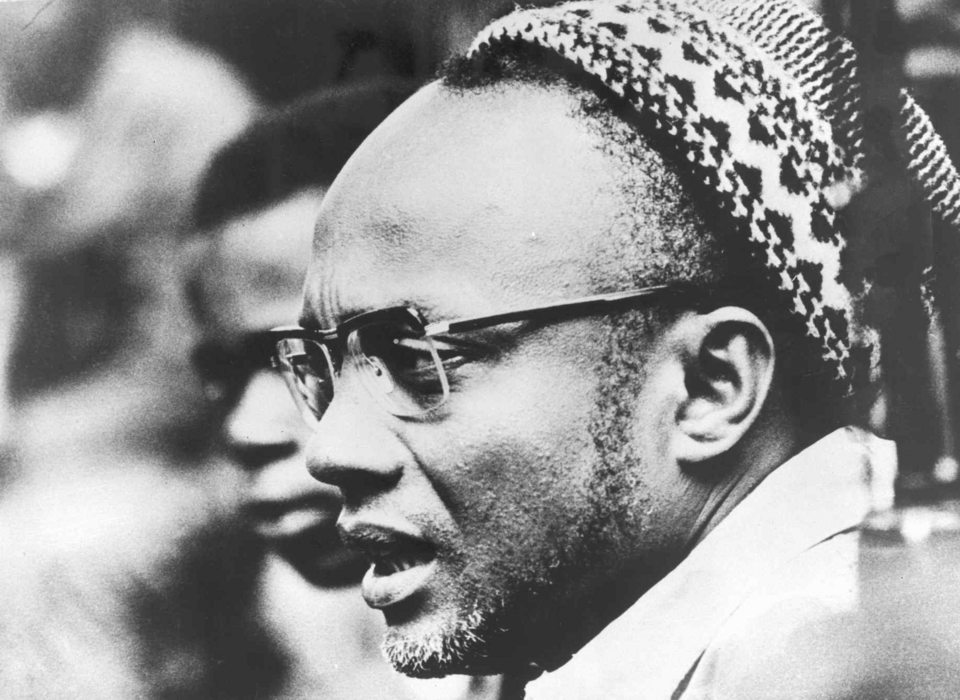
Amílcar Cabral stands among the most brilliant political strategists and original thinkers in the history of African national liberation. As the founder and secretary-general of the African Party for the Independence of Guinea and Cape Verde (PAIGC), he orchestrated an armed and political campaign against Portuguese colonialism that dismantled Lisbon's imperial hold in West Africa. Cabral was not simply a guerrilla tactician; he was a trained agricultural engineer, a diplomat of formidable skill, and a philosopher whose writings on culture, identity, and class transformed twentieth-century revolutionary theory.
Beyond the battlefield, Cabral insisted that true liberation could never be achieved solely through the expulsion of foreign troops or the raising of a new national flag. He argued that independence demanded an uncompromising transformation of society, the cultural reclamation of oppressed peoples, and the establishment of self-sustaining, democratic institutions. Cabral's pioneering dual strategy of battlefield pressure and social reconstruction turned the "liberated zones" of Guinea-Bissau into living models of post-colonial governance, accelerating the collapse of Portugal's authoritarian regime and reshaping global perspectives on anti-colonial resistance.
Early Life and Family
Amílcar Lopes da Costa Cabral was born on September 12, 1924, in Bafatá, in what was then the colony of Portuguese Guinea (now Guinea-Bissau). His parentage reflected the interconnected history of Guinea-Bissau and the Cape Verde archipelago. His father, Juvenal António Lopes da Costa Cabral, was a Cape Verdean schoolteacher and landowner from a prominent family on the island of Santiago. Juvenal was an outspoken critic of colonial mismanagement and the recurring, devastating famines that swept through the islands. Amílcar's mother, Iva Pinhel Évora, was a resilient Guinean woman of Cape Verdean descent who operated a small store and worked in local hotels to maintain the family's independence and ensure her children received an education.
In 1932, at the age of eight, Cabral moved with his family to the island of São Vicente in Cape Verde. Growing up across both territories offered the young Cabral firsthand insight into the layered complexities and harsh realities of Portuguese rule. The severe droughts and catastrophic famines that struck Cape Verde during the 1940s—resulting in the deaths of tens of thousands due to administrative indifference—left an indelible mark on his social consciousness. Cabral's family life was also politically and culturally vibrant; his younger half-brother, Luís Cabral, would become a foundational militant alongside him and eventually serve as the first head of state of an independent Guinea-Bissau.
Education
Cabral's intellectual gifts became apparent during his childhood. After completing his primary schooling in Santa Catarina on the island of Santiago, he attended the Liceu Gil Eanes in Mindelo on the island of São Vicente. The school was one of the premier academic institutions in Lusophone Africa, known for cultivating a fertile literary and political milieu. Cabral excelled academically, writing essays and poetry while graduating near the top of his class in 1944.
His academic brilliance earned him a rare scholarship to Lisbon, Portugal, in 1945 to study at the Instituto Superior de Agronomia (Higher Institute of Agronomy). At the time, Cabral was one of the very few Black African students admitted to an elite university in the colonial metropolis. He approached his study of agronomy with clinical discipline, specializing in soil conservation and erosion prevention—subjects that would later yield critical political and tactical applications.
Lisbon served as the incubator for Cabral's revolutionary political education. In the Portuguese capital, he met other ambitious students from Lisbon's African territories, including Agostinho Neto and Mário de Andrade of Angola, and Marcelino dos Santos and Eduardo Mondlane of Mozambique. Together, they engaged with the Casa dos Estudantes do Império (House of Students of the Empire) and founded the clandestine Centro de Estudos Africanos (Center for African Studies) in 1948. Through this circle, Cabral immersed himself in pan-Africanism, Marxist political economy, and the Negritude literary movement, forging ideological bonds that later formed the nucleus of liberation movements across Lusophone Africa. He completed his agronomy degree in the early 1950s, determined to use his scientific expertise directly in service of African self-determination.
Career and Major Achievements
The Agronomist and the Agricultural Census
After finishing his studies and completing initial field training in Portugal, Cabral returned to Portuguese Guinea in 1952 to work for the colonial Department of Agriculture and Forestry at the Pessubé Experimental Agricultural Station near Bissau. In 1953, the colonial administration commissioned him to conduct a comprehensive agricultural census of the territory.
Cabral utilized this official mission with extraordinary strategic foresight. He traveled tens of thousands of kilometers across rural Guinea, directly surveying the land and interviewing thousands of peasant farmers. Through this work, he mapped the economic structures, agrarian habits, land tenure systems, and social grievances of diverse ethnic groups, including the Balanta, Fula, and Mandinka. The census was an agronomic masterpiece, but for Cabral, it represented the empirical blueprint for an impending revolution, showing him exactly how the peasantry functioned and what material incentives would persuade them to challenge colonial authority.
Founding the PAIGC and the Shift to Armed Struggle
Recognizing the colonial authorities' growing suspicion of his activities, Cabral was forced to work abroad in Angola and Portugal during the mid-1950s. However, on September 19, 1956, during a clandestine visit to Bissau, Cabral founded the Partido Africano da Independência da Guiné e Cabo Verde (PAIGC) alongside Aristides Pereira, Luís Cabral, Júlio de Almeida, Fernando Fortes, and Elisée Turpin. That same year, Cabral also helped co-found the preliminary networks that became the MPLA in Angola.
Initially, the PAIGC adopted nonviolent tactics, concentrating on political organizing and labor strikes in the urban ports of Bissau. This strategy came to a catastrophic halt on August 3, 1959, during the Pidjiguiti Massacre. Colonial police opened fire on striking dockworkers at the Pidjiguiti docks in Bissau, killing over fifty unarmed laborers and wounding dozens more. The massacre convinced Cabral that peaceful protest under Salazar's fascist Estado Novo was impossible. At a secret party meeting in September 1959, the PAIGC leadership made the pivotal decision to abandon urban demonstrations, relocate the political base to the rural interior, and prepare systematically for armed insurrection.
Liberating the Land and Building the Parallel State
Cabral orchestrated the launch of the guerrilla war in January 1963. Operating from rear bases in neighboring Guinea-Conakry and Senegal, the PAIGC's armed wing, the Forças Armadas Revolucionárias do Povo (FARP), mounted a coordinated offensive against Portuguese fortifications. Cabral proved to be a masterful strategist. He avoided pitched battles with superior colonial air and artillery assets, choosing instead to sever supply routes, attack isolated outposts, and exploit the jungle terrain.
What distinguished Cabral's military leadership from contemporary insurgencies was his unwavering focus on state-building during the war itself. As FARP expelled colonial forces from rural areas, the PAIGC established "liberated zones" covering more than two-thirds of the country. Within these territories, Cabral did not permit a governance vacuum. The PAIGC organized:
- Village Committees (Comités de Tabanka): Elected civilian administrative bodies run by the local population to resolve local disputes and govern daily communal life.
- People's Stores (Armazéns do Povo): A cashless exchange system providing essential trade goods such as salt, cloth, and farming tools in exchange for agricultural surplus.
- Healthcare and Sanitation: A network of bush clinics and mobile health brigades that brought vaccinations and basic medical care to populations entirely neglected by colonial authorities.
- Primary Education: Hundreds of improvised rural schools that taught tens of thousands of children literacy, arithmetic, and anti-colonial civic history.
Cabral also insisted on the active mobilization and elevation of women, defying deeply entrenched patriarchal norms. Leaders like Carmen Pereira and Titina Silá rose through political and military ranks to assume frontline responsibilities.
Theoretical Contributions: Culture and "Class Suicide"
Cabral is widely regarded as one of Africa's foremost political philosophers. Unlike many doctrinaire theorists of his era, Cabral rejected the rigid application of foreign models, famously warning revolutionaries to "mask no difficulties, tell no lies, claim no easy victories".
His theoretical framework rested on two groundbreaking concepts:
- National Liberation as an Act of Culture: In celebrated addresses such as "National Liberation and Culture" (1970) and his 1972 speech at Lincoln University, Cabral argued that colonial domination survived by suppressing the cultural identity of the colonized. Therefore, national liberation was fundamentally an act of cultural reclaim—a process he termed the "return to the source".
- Class Suicide of the Petty Bourgeoisie: Cabral recognized that the educated elite (the native petty bourgeoisie) occupied an ambiguous position under colonial rule. In order to lead a true revolution rather than simply replace European administrators with Black elites, Cabral argued that this class had to commit "class suicide"—voluntarily abandoning its privileged class interests to merge entirely with the aspirations of the laboring masses.
International Diplomacy and Global Recognition
Cabral's diplomatic brilliance complemented his military and ideological achievements. He understood that Portugal, an economically underdeveloped country, could only sustain its colonial wars due to financial and military backing from NATO allies. Cabral systematically campaigned abroad to strip Portugal of this legitimacy.
He cultivated crucial military support from the Soviet Union and Cuba, while securing extensive humanitarian, educational, and medical aid from non-aligned nations and Social Democratic governments in Western Europe, particularly Sweden. In July 1970, Cabral achieved an enormous symbolic triumph when he, alongside Agostinho Neto and Marcelino dos Santos, was granted a private audience in Rome with Pope Paul VI—an encounter that deeply humiliated the staunchly Catholic colonial administration in Lisbon. In 1972, Cabral invited a special fact-finding mission from the United Nations into the liberated zones of Guinea-Bissau. The mission confirmed the PAIGC's effective control of the countryside, prompting the UN General Assembly to recognize the PAIGC as the sole legitimate representative of the people of Guinea-Bissau and Cape Verde.
Awards and Recognition
Throughout his active years and posthumously, Cabral's contributions to human freedom and liberation theory received worldwide acclaim. In October 1972, Lincoln University in Pennsylvania—the oldest historically Black university in the United States—conferred upon him an Honorary Doctorate in recognition of his intellectual and political leadership. That same year, the World Peace Council awarded him the prestigious Joliot-Curie Medal of Peace.
Following independence, the sovereign governments of Guinea-Bissau and Cape Verde instituted their highest national decorations in his honor: the Amílcar Cabral Medal in Guinea-Bissau and the Order of Amílcar Cabral in Cape Verde. In 2004, the post-apartheid government of South Africa conferred upon Cabral the Order of the Companions of O. R. Tambo in Gold, honoring his profound solidarity and contributions to the broader Southern African liberation struggle.
Cabral's memory is preserved across the African continent and globally. Cape Verde's main international gateway on Sal Island is named the Amílcar Cabral International Airport. In Guinea-Bissau, the state university bears his name, while his ancestral home in Bafatá was restored under UNESCO auspices and operates as a national museum. Across Latin America, Europe, and Africa, numerous schools, cultural avenues, and research institutions stand dedicated to his legacy.
Challenges and Struggles
Cabral's path was marked by relentless peril, material deprivation, and acute political fissures. On the battlefield, FARP fighters faced an increasingly desperate Portuguese counter-insurgency campaign under General António de Spínola. The colonial army deployed carpet bombing, napalm, defoliants, and elite commandos against the civilian populations in liberated zones, aiming to terrorize the peasantry into abandoning the PAIGC. In November 1970, Portuguese armed forces launched Operação Mar Verde (Operation Green Sea), an amphibious assault on Conakry designed to assassinate Cabral and overthrow the Guinean government of Ahmed Sékou Touré; Cabral survived only because he was away from the headquarters at the time.
An even more painful challenge emerged from internal structural contradictions. The Portuguese secret police (PIDE/DGS) actively exploited racial and regional friction between mainland Guineans (who made up the bulk of the fighting forces) and Cape Verdeans of mixed ancestry (who held many senior administrative positions within the PAIGC). Cabral worked tirelessly to preserve unity between Guinea-Bissau and Cape Verde, but these simmering resentments provided colonial intelligence with fertile ground to organize disaffected elements within the party itself.
Personal Life
Amílcar Cabral married Maria Helena de Athayde Vilhena Rodrigues in December 1951. A fellow agronomy student in Lisbon, she was one of the few women enrolled in the program at the time. The couple had two daughters, Iva Maria and Ana Luísa. As the demands of underground organizing and armed exile intensified, the prolonged physical separation strained their marriage, culminating in a divorce in 1966.
Later that year, Cabral married Ana Maria Voss de Sá, a Guinean student activist and militant who worked alongside him in the liberation movement. Together, they had two children, Raul and Ndira. Cabral was known to colleagues as a person of warm demeanor, enormous self-discipline, and deep cultural sensitivity. Under the pen name Abel Djassi, he wrote poetry reflecting themes of African identity, rural landscapes, and human solidarity. His surviving personal letters illustrate a man who retained genuine tenderness and optimism even while bearing the immense weight of wartime command.
Death and Legacy
On the night of January 20, 1973, Amílcar Cabral was assassinated outside his residence in Conakry, Guinea. As he returned from an official function with his wife, Ana Maria, a group of armed PAIGC dissidents led by naval commander Inocêncio Kani ambushed his vehicle. The attackers attempted to bind and abduct Cabral. When he refused to submit, stating that disputes should be settled through political dialogue, Kani and his conspirators shot him at point-blank range. Historical documentation later established that the plot had been cultivated and supported by Portuguese intelligence services seeking to cripple the liberation movement on the eve of its victory.
The assassination failed to dismantle the movement Cabral had constructed. His institutional framework proved resilient: the PAIGC quickly restored operational command under Aristides Pereira and proceeded with Cabral's strategic plan. On September 24, 1973, eight months after Cabral's death, the PAIGC unilaterally proclaimed the independence of the Republic of Guinea-Bissau in the hills of Madina do Boé.
The protracted military stalemate in Guinea-Bissau, combined with Cabral's diplomatic isolation of the colonial regime, directly sparked the Carnation Revolution in Lisbon on April 25, 1974. Portuguese military officers, disillusioned by an unwinnable colonial war, overthrew the Salazar-Caetano dictatorship. Portugal formally recognized Guinea-Bissau's independence in September 1974, followed by the independence of Cape Verde in July 1975. Cabral's legacy endures as a masterclass in combining revolutionary practice with rigorous scientific analysis, inspiring generations of anti-imperialists, sociologists, and freedom fighters across the globe.
Interesting Facts
- The Nom de Guerre: During the early underground period of political mobilization, Cabral operated under the pseudonym "Abel Djassi" to evade Portuguese intelligence agents.
- Scientific Revolution: His 1953 agricultural census of Portuguese Guinea was so rigorous and comprehensive that colonial authorities unknowingly praised the document as an exemplary piece of civil engineering, entirely unaware it would serve as the operational map for an anti-colonial insurgency.
- Global Pan-African Ties: Cabral maintained close personal relationships with leading civil rights and Black Power figures in the United States and the Caribbean, including Stokely Carmichael (Kwame Ture) and Malcolm X's contemporaries, heavily influencing radical political thought in North America.
- A Vatican Audience: In July 1970, Cabral orchestrated an official audience with Pope Paul VI in the Vatican, infuriating Portuguese Prime Minister Marcello Caetano and scoring a major international diplomatic victory for the PAIGC.
- Literary Roots: Long before he took up arms, Cabral was a published poet and essayist who championed African cultural nationalism as early as the late 1940s in Lisbon.
- Unshakable Principle: Even in the final moments of his life, when confronted by armed assassins attempting to tie him up, Cabral refused to be bound, calmly demanding political discussion rather than violence.
Frequently Asked Questions
Why is Amílcar Cabral considered unique among 20th-century anti-colonial leaders?
Cabral stood out because he was both a highly qualified agronomist and an original political theorist who insisted on building a functioning democratic state during the war itself. Rather than waiting for victory to initiate social reforms, he established schools, health clinics, and democratic councils across the liberated zones while fighting was still underway.
What did Cabral mean by "class suicide"?
Cabral observed that in colonized societies lacking a developed working class, the educated petty bourgeoisie often led nationalist movements. To avoid simply inheriting colonial privileges and exploiting the population after independence, Cabral argued that this elite class must "commit suicide as a class" by rejecting their personal material interests and completely identifying with the working peasantry.
How did Cabral's background in agronomy influence his revolutionary work?
His agronomic training gave him a scientific, empirical approach to politics. By conducting a national agricultural census in 1953, he mapped Guinea's soil, transportation routes, ethnic demographics, and agricultural trade. This knowledge enabled the PAIGC to organize guerrilla logistics effectively and address the real economic grievances of rural communities.
Who was responsible for Amílcar Cabral's assassination?
Cabral was assassinated by disgruntled PAIGC members led by naval commander Inocêncio Kani on January 20, 1973. However, historical investigations confirmed that the conspirators were manipulated and backed by the Portuguese secret police (PIDE/DGS), who sought to divide the party and eliminate its most charismatic international leader.
Did Amílcar Cabral live to see Guinea-Bissau and Cape Verde achieve independence?
No, Cabral was assassinated eight months before Guinea-Bissau unilaterally declared its independence on September 24, 1973, and approximately two years before Cape Verde gained independence in July 1975. Nevertheless, the political and military structures he established carried both nations across the finish line of sovereignty.
Conclusion
Amílcar Cabral belongs to that rare pantheon of historical figures who united profound theoretical intellect with unwavering practical courage. He did not view the liberation struggle as a path to personal power or narrow ideological triumph, but as a humane, scientific undertaking aimed at restoring the sovereignty, culture, and dignity of his people. His warnings against bureaucratic elitism, cultural alienation, and neocolonial dependency remain uncannily prescient decades after his death. In the annals of world history, Cabral is remembered not only as the architect of independence for Guinea-Bissau and Cape Verde, but as an enduring beacon of principled liberation and human emancipation.
Image: Wikimedia Commons, via Wikipedia (see the file page for author and license).