Introduction
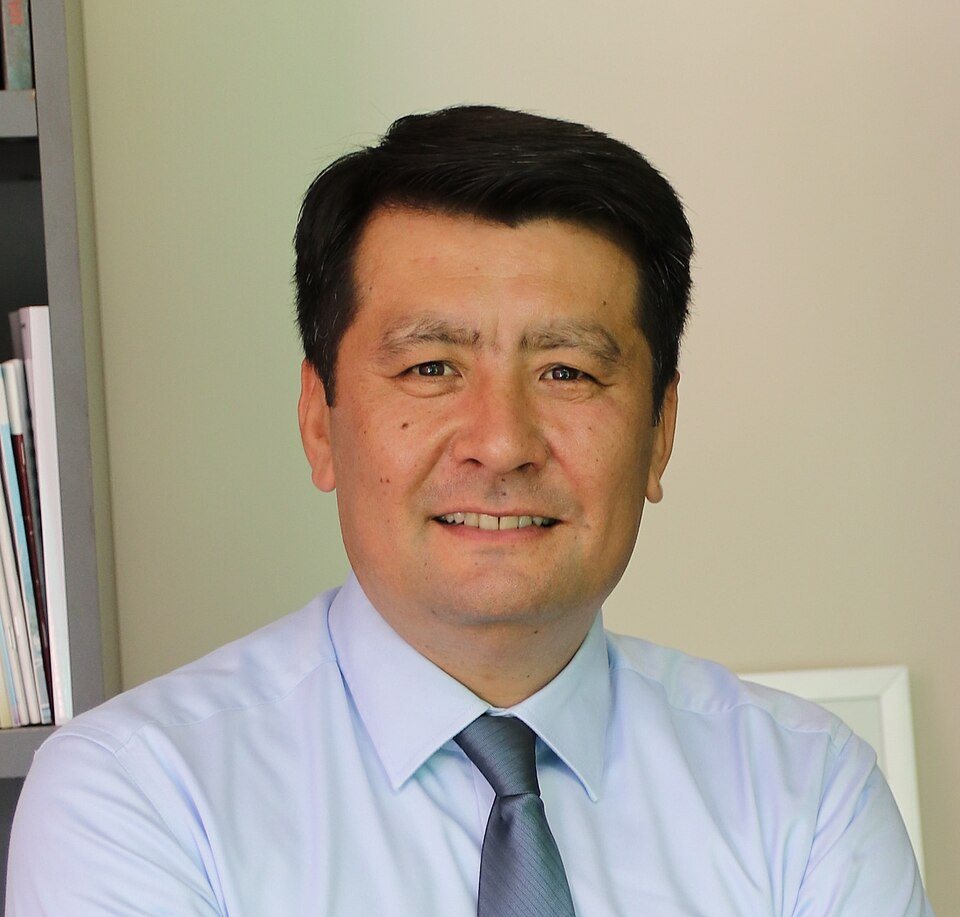
Azizbek Dzhusunbekovich Ashurov is an internationally acclaimed Kyrgyz human rights lawyer whose pioneering legal advocacy resolved one of Central Asia's most daunting humanitarian crises. As the director and co-founder of the public organization Ferghana Valley Lawyers Without Borders (FVLWB), Ashurov dedicated nearly two decades to securing citizenship, legal identity, and civil documentation for people trapped in legal limbo after the collapse of the Soviet Union. His relentless fieldwork directly helped more than 10,000 individuals secure their nationality, transforming Kyrgyzstan into the first country in the world to officially eradicate all known cases of statelessness.
Ashurov's work brought millions of marginalized people into international focus, demonstrating how pragmatic legal aid, community trust, and cross-sector collaboration can eliminate an entrenched global injustice. In recognition of his landmark achievements, Ashurov was honored in Geneva with the prestigious 2019 UNHCR Nansen Refugee Award, making history as the first laureate selected specifically for dedicated leadership on the issue of statelessness. Today, his model serves as a global benchmark for human rights practitioners and international institutions working toward universal legal identity.
Early Life and Family
Azizbek Ashurov was born in the Uzbek Soviet Socialist Republic during the Soviet era. His family origins were deeply connected to the Fergana Valley—a fertile, culturally diverse geographic basin shared by modern-day Uzbekistan, Kyrgyzstan, and Tajikistan. In that era, the Soviet Union functioned without internal physical borders; Soviet citizens traveled freely between republics, established households, and married across administrative boundaries using standard domestic Soviet passports.
Following the abrupt dissolution of the USSR in 1991, newly independent states erected national borders and instituted sovereign citizenship requirements. Ashurov and his family relocated from Uzbekistan to Kyrgyzstan during this transitional era to join relatives living in the country. The move exposed Ashurov to the harsh realities of bureaucratic fragmentation. Despite moving within what had recently been a single sovereign territory, his family confronted immense legal and procedural obstacles to obtain Kyrgyz citizenship. Although Ashurov ultimately secured his own legal status, the experience left a permanent imprint on his worldview, instilling an acute empathy for displaced and undocumented populations struggling against systemic administrative barriers.
Education
Drawn to the power of the law as an instrument of social justice, Ashurov pursued university studies in jurisprudence, graduating with a degree in law. His academic training provided him with a detailed understanding of civil procedure, constitutional law, and public administration. Yet, while navigating the post-Soviet naturalization procedures for himself and his relatives, Ashurov observed a glaring divide between statutory legal theory and practical administrative enforcement.
He recognized that if an educated legal professional found the citizenship process Byzantine and exhausting, ordinary citizens—many of whom were poor, semi-literate, or residing in remote pastoral valleys—stood virtually no chance of resolving their documentation crises on their own. This stark realization catalyzed his decision to focus his entire professional life on civil documentation, refugee protection, and the right to a nationality.
Career and Major Achievements
Over the course of more than two decades, Ashurov built an influential body of work that redefined legal empowerment in Central Asia. He moved public perception of statelessness from an obscure bureaucratic nuisance into an urgent human rights priority, combining street-level legal representation with high-level policy advocacy.
Founding Ferghana Valley Lawyers Without Borders (2003)
In 2003, Ashurov joined forces with a group of like-minded legal practitioners in the southern city of Osh to establish Ferghana Valley Lawyers Without Borders (FVLWB). Initially, the non-governmental organization functioned as a general legal clinic, offering free counseling to vulnerable, low-income communities dealing with family disputes, property rights, and residency registration.
As clients brought their grievances to the clinic, Ashurov detected a recurring systemic undercurrent: a vast number of local residents lacked valid identity papers altogether. Many were still holding outdated Soviet passports that had lost legal validity, while their children and grandchildren were born outside hospitals and never received birth certificates. Without papers, these individuals were legal non-entities, unable to register marriages, hold formal jobs, access public healthcare, or enroll in universities. Beginning in 2007, Ashurov redirected FVLWB's primary operational focus toward eradicating statelessness and securing legal identity for all.
Pioneering Mobile Desks and Remote Outreach
Understanding that the most vulnerable populations could never afford to travel to regional administrative capitals, Ashurov pioneered an aggressive outreach methodology. Rather than waiting for clients to visit urban offices, FVLWB created mobile legal teams designed to travel directly to isolated mountain hamlets and remote rural villages.
Driving aging Ladas and four-wheel-drive vehicles through rugged terrain—and frequently riding on horseback across mountain passes inaccessible by road—Ashurov and his colleagues brought legal counsel directly to people's doorsteps. His teams set up makeshift consultation desks under trees, in village squares, and inside community halls. They conducted systematic door-to-door surveys to map the true scope of undocumented communities, building meticulous individual case files, retrieving archival hospital records, and locating witnesses to substantiate birthplaces and family lineages.
Forging Strategic Partnerships and Policy Reform
Ashurov recognized early on that grassroots legal representation could not solve the problem without structural state intervention. Stateless people frequently avoided public offices out of fear that they would be fined, detained, or deported for lacking valid documentation.
To dismantle this barrier, Ashurov worked diligently to build trust with local civil registry departments, the Ministry of Internal Affairs, and the Kyrgyz national government. He successfully campaigned for an administrative amnesty on all fines and penalties previously levied against undocumented individuals. By removing the threat of punitive sanctions, the amnesty allowed thousands of people to emerge from hiding and engage openly with legal authorities. Ashurov also integrated government registry officials directly into FVLWB's mobile teams, allowing citizenship applications to be reviewed and processed in real time in the field.
The Historic Achievement: Zero Known Statelessness (2019)
In 2014, coinciding with the launch of the UNHCR's global 10-year #IBelong Campaign, the Government of Kyrgyzstan, the UN Refugee Agency, and FVLWB embarked on a comprehensive national initiative to identify and resolve every remaining case of statelessness in the country. Over the course of the five-year drive, mobile teams documented more than 13,700 stateless and undocumented individuals across the nation.
Of that total, Ashurov and FVLWB directly handled over 10,800 cases, securing citizenship and valid legal identification through diverse regularisation and naturalization pathways. The beneficiaries included more than 2,000 children who were granted the fundamental right to schooling, formal employment, and travel. In July 2019, the Kyrgyz Republic naturalized its final identified cohort of stateless residents, becoming the first country in global history to resolve all known cases of statelessness within its territory.
Regional Leadership and Capacity Building
Following the national breakthrough in Kyrgyzstan, Ashurov turned his attention toward regional solidarity across Central Asia. In 2016, he helped establish and coordinate the Central Asian Network on Statelessness (CANS), a coalition connecting non-governmental organizations, academic institutions, and human rights bodies across Kazakhstan, Kyrgyzstan, Tajikistan, Turkmenistan, and Uzbekistan.
In September 2021, utilizing the prize money awarded from the Nansen Refugee Award, Ashurov established the Center of Competence on Nationality Issues in Bishkek in partnership with the Ministry of Digital Development of the Kyrgyz Republic and UNHCR. The center operates as an institutional hub, providing specialized training and capacity-building for civil registrars, practicing attorneys, judges, and law students to prevent new instances of statelessness and safeguard legal identity standards into the future.
Awards and Recognition
Ashurov's transformative dedication has garnered universal respect within the international human rights community. In October 2019, he was awarded the UNHCR Nansen Refugee Award, the UN Refugee Agency's highest honor celebrating extraordinary service to forcibly displaced and stateless individuals. Ashurov made history as the very first recipient to receive the award specifically for work on eradicating statelessness, as well as the first laureate from Central Asia.
At the formal award ceremony in Geneva, UN High Commissioner for Refugees Filippo Grandi praised Ashurov's exceptional tenacity, stating:
“Azizbek Ashurov's story is one of great personal resolve and tenacity. His commitment to the cause of eradicating statelessness in Kyrgyzstan... is a compelling example of the power of an individual to inspire and mobilize collective action.”
Ashurov used the global platform to declare that the award belonged to the thousands of people who had fought to regain their voices and rights, framing citizenship not as a privilege granted by governments, but as an inalienable birthright.
Challenges and Struggles
The campaign to eliminate statelessness required overcoming immense operational, structural, and cultural challenges. One of the most immediate hurdles was physical geography: Kyrgyzstan's rugged mountain terrain often isolated entire communities from public infrastructure for months during severe winter weather. Reaching these residents required grueling journeys on horseback along precipitous trails, carrying portable filing systems and documentation gear.
An even deeper challenge was navigating bureaucratic friction and institutional suspicion. In the early years of the work, civil registry departments frequently treated undocumented individuals with skepticism or indifference, dismissing their cases as irregular administrative violations. Ashurov had to spend years convincing government ministers and local civil servants that resolving statelessness strengthened national security and social cohesion rather than undermining it.
Furthermore, Ashurov had to dismantle deep-seated distrust within marginalized ethnic groups, such as the once-nomadic Lyuli community. Generations of administrative exclusion had left many families wary of state institutions, and parents rarely registered home births. Ashurov and his team had to spend months establishing personal relationships, explaining the practical protections conferred by birth certificates, and patiently assembling alternative forms of evidence—such as witness testimonies and school archives—to satisfy stringent legal requirements.
Personal Life
Ashurov maintains a deeply private personal life, keeping the spotlight almost entirely on his clients and grassroots advocacy. His character is widely described by colleagues and international observers as humble, soft-spoken, and exceptionally persistent. Colleagues have noted that despite international acclaim and global speaking invitations, Ashurov remains fundamentally grounded in field legal clinics, preferring direct client consultations in community offices in Osh to formal ceremonial settings.
Later Life and Legacy
Following the historic 2019 milestone, Ashurov continued to direct Ferghana Valley Lawyers Without Borders and expand its protective mission. Under his sustained leadership, the organization has assisted well over 65,000 individuals with various civil legal issues and facilitated identity documents for thousands of vulnerable children and labor migrants.
Through the Center of Competence on Nationality Issues in Bishkek and the Central Asian Network on Statelessness, Ashurov has focused on systemic prevention. He works actively with the Kyrgyz Parliament and regional governments to harmonize domestic nationality legislation, ensuring that gaps in birth registration laws do not permit new generations of children to inherit statelessness. Ashurov's legacy extends far beyond Kyrgyzstan; his methodologies have become a foundational case study for the United Nations, demonstrating to countries worldwide that with adequate political will, civil society mobilization, and grassroots legal empowerment, statelessness can be permanently consigned to history.
Interesting Facts
- First in the world: Ashurov's tireless campaign helped Kyrgyzstan become the first sovereign country to resolve all known statelessness cases within its territory.
- Horseback lawyering: To interview undocumented pastoralists and families living in secluded mountain regions, Ashurov and his mobile legal teams regularly traveled on horseback when roads were impassable.
- A historic Nansen first: When he received the UNHCR Nansen Refugee Award in 2019, Ashurov was the first individual ever recognized primarily for work combating statelessness.
- Personal inspiration: Ashurov's dedication was sparked by his own family's post-Soviet move from Uzbekistan to Kyrgyzstan, where even as a trained lawyer, he struggled to navigate the citizenship bureaucracy.
- Investing back in education: Ashurov used his Nansen prize money to fund the creation of the Center of Competence on Nationality Issues in Bishkek, which trains future generations of civil servants and lawyers.
- Empowering youth: Among the more than 10,000 people Ashurov helped, roughly 2,000 were children who gained birth certificates and identity documents, allowing them to attend high schools and universities.
Frequently Asked Questions
Who is Azizbek Ashurov?
Azizbek Ashurov is a Kyrgyz human rights lawyer and the founder and director of Ferghana Valley Lawyers Without Borders. He is internationally celebrated for leading legal efforts that enabled Kyrgyzstan to become the world's first country to eliminate known statelessness.
What is Ferghana Valley Lawyers Without Borders?
Ferghana Valley Lawyers Without Borders (FVLWB) is a non-governmental organization established in 2003 in Osh, Kyrgyzstan. It provides free legal assistance to vulnerable, displaced, and undocumented people, focusing on nationality rights, civil registration, and human rights advocacy.
How many people did Azizbek Ashurov help to gain citizenship?
Through FVLWB, Ashurov directly helped more than 10,000 stateless and undocumented individuals obtain Kyrgyz citizenship and legal identity papers. His organization's efforts contributed to the broader nationwide campaign that resolved more than 13,700 statelessness cases between 2014 and 2019.
Why was Azizbek Ashurov awarded the UNHCR Nansen Refugee Award?
Ashurov received the 2019 UNHCR Nansen Refugee Award in recognition of his 16 years of dedicated service in assisting undocumented people and collaborating with the Kyrgyz government to eradicate statelessness. He was the first laureate in the award's history honored specifically for work on statelessness.
How did Kyrgyzstan become the first country to end statelessness?
Kyrgyzstan achieved this milestone through a five-year joint campaign launched in 2014 involving the national government, civil registry departments, FVLWB, and the UNHCR. The effort relied on mobile legal clinics, an amnesty on fines for undocumented residents, and regulatory reforms that streamlined citizenship and birth registration procedures.
Conclusion
Azizbek Ashurov's extraordinary career embodies the profound impact of legal aid deployed as a tool of human dignity. By refusing to accept statelessness as an inevitable bureaucratic byproduct of geopolitical change, he transformed the lives of more than 10,000 men, women, and children who had been rendered legally invisible. His tenacity, creative field strategies, and collaborative ethos not only freed thousands from legal purgatory but established a historic global precedent that continues to guide the global fight for universal nationality rights.
Image: Wikimedia Commons, via Wikipedia (see the file page for author and license).