
Julio César Strassera: The Life of Argentina's Chief Prosecutor
Quick Facts
| Full Name | Julio César Strassera |
|---|---|
| Date of Birth | September 18, 1933 |
| Place of Birth | Comodoro Rivadavia, Chubut, Argentina |
| Date of Death | February 27, 2015 |
| Place of Death | Buenos Aires, Argentina |
| Cause of Death | Respiratory failure and intestinal infection |
| Nationality | Argentine |
| Education | University of Buenos Aires (Law Degree, 1963) |
| Occupation | Lawyer, jurist, federal prosecutor, judge, diplomat |
| Known For | Chief prosecutor in the 1985 Trial of the Juntas; delivering the historic 'Nunca más' closing address |
| Notable Awards | Premio Konex (Posthumous Diploma al Mérito, 2018) |
| Spouse | Marisa Tobar |
| Children | Carolina Strassera, Julián Strassera |
Introduction
Julio César Strassera was an Argentine lawyer, federal prosecutor, and judge whose unyielding commitment to the rule of law redefined transitional justice in Latin America and across the globe. Appointed as chief prosecutor during the historic 1985 Trial of the Juntas (Juicio a las Juntas), Strassera led the criminal indictment of Argentina's former military rulers for widespread human rights atrocities committed during the country's brutal military dictatorship.
At a time when Argentina's newly restored democracy was remarkably fragile, Strassera braved pervasive intimidation and direct death threats to assemble a sweeping case. His impassioned closing argument immortalized the rallying phrase "Nunca más" ("Never again"), establishing a landmark global precedent: that even heads of state and top military commanders must answer to the civilian courts of law for crimes against humanity.
Early Life and Family
Julio César Strassera was born on September 18, 1933, in the coastal city of Comodoro Rivadavia, located in Argentina's southern Chubut Province. His family later relocated to Buenos Aires, where he spent his formative years. Growing up in an environment shaped by the tumultuous political oscillations of mid-twentieth-century Argentina, he was introduced early to the social and civil tensions that marked Argentine public life.
Strassera received his secondary schooling at the prestigious Colegio San José in the Balvanera neighborhood of Buenos Aires. His educational path, however, was neither smooth nor linear. He briefly interrupted his secondary education, worked several odd jobs, and endured early personal setbacks before deciding to complete his studies and pursue a vocation that would fundamentally engage his innate sense of civic duty.
Education
After completing his secondary education, Strassera enrolled at the Faculty of Law of the University of Buenos Aires (UBA) at the age of twenty-five. Entering university as a mature student brought focus and determination to his academic training. During his university years, he acquired a comprehensive grounding in criminal jurisprudence, procedural law, and constitutional principles.
Strassera graduated with his law degree in 1963. His time at the University of Buenos Aires coincided with years of sharp intellectual debates surrounding the stability of democratic institutions, legal philosophy, and constitutional rights in South America. His rigorous training at UBA established the foundation for his analytical approach to court procedure and statutory enforcement, disciplines that later proved vital in navigating one of the most complex public trials in modern history.
Career and Major Achievements
Judicial Beginnings and Work Under the Dictatorship
Strassera entered the Argentine judicial system during the 1960s, gradually advancing through the court hierarchy. He worked as an assistant secretary (prosecretario) and secretary in federal courts in Buenos Aires. Following the military coup d'état of March 1976 that installed the military dictatorship known as the National Reorganization Process, Strassera was appointed as a federal prosecutor. In 1981, he was elevated to federal sentencing judge (juez de sentencia).
During these years of state-sponsored terror, the military regime enforced a systematic campaign of forced disappearances, illegal detentions, torture, and unlawful executions. Civilian magistrates faced immense barriers, as the armed forces concealed detention centers and rejected legal inquiries. Despite the restricted jurisdiction of the judiciary, Strassera conducted inspections of detention centers and received habeas corpus petitions, although federal courts were severely constrained by military resistance and bureaucratic roadblocks.
The 1985 Trial of the Juntas
Democratic governance returned to Argentina in December 1983 with the inauguration of President Raúl Alfonsín, who issued presidential decrees ordering criminal prosecution of the top commanders of the military juntas. When the Supreme Council of the Armed Forces stalled and refused to hold its commanders accountable, jurisdiction passed to the civilian judiciary: the Federal Criminal and Correctional Appeals Court of Buenos Aires.
As chief federal prosecutor of the Appeals Chamber, Strassera was tasked with directing the state's case. Recognizing the enormous volume of evidence, he selected a young legal scholar, Luis Moreno Ocampo, as his deputy prosecutor. Given that many senior court employees declined to participate out of fear or sympathy with the armed forces, Strassera and Moreno Ocampo assembled an ad-hoc legal unit largely composed of recent graduates and youthful court clerks.
The trial began on April 22, 1985, bringing nine senior military officers—including former junta leaders Jorge Rafael Videla, Emilio Eduardo Massera, and Roberto Eduardo Viola—before a public tribunal. Strassera drew heavily upon the exhaustive evidentiary findings gathered by the National Commission on the Disappearance of Persons (CONADEP). Strassera's team introduced 709 specific cases to the court, examining 280 thoroughly, and called more than 800 witnesses to testify during months of harrowing hearings. Through meticulous forensic documentation and survivor accounts, Strassera systematically demonstrated that human rights violations were not isolated excesses, but part of a centrally coordinated plan of state terror.
The "Nunca Más" Closing Argument
Between September 11 and September 18, 1985, Strassera presented the prosecution's closing summation, an oratorical tour de force assisted in drafting by his friend, the Argentine playwright and jurist Carlos Somigliana. Strassera systematically dissected the defense arguments, demonstrating that national defense can never legitimize torture, state abduction, and murder.
On September 18, 1985, Strassera concluded his address with words that became etched into Argentine collective memory:
"I wish to waive any claim to originality in concluding this address. I want to use a phrase that does not belong to me, because it already belongs to all Argentine people. Your Honors: Never again!" ("Señores jueces: ¡nunca más!")
The courtroom erupted into thunderous applause, and the sentence became the definitive institutional and moral rejection of authoritarian rule. On December 9, 1985, the court sentenced Videla and Massera to life imprisonment, Viola to seventeen years, and other commanders to various terms, marking the first time a civilian court convicted a nation's former military dictators for systematic mass atrocities.
Diplomatic Career and Defense of Human Rights
Following the successful conclusion of the trial, Strassera stepped down from the Argentine bench in 1986. President Alfonsín appointed him as Argentina's ambassador to the United Nations Commission on Human Rights in Geneva, Switzerland. In this diplomatic post, Strassera championed international treaties on torture prevention and human rights accountability.
However, when President Carlos Menem signed broad presidential pardon decrees in 1989 and 1990 that released the convicted junta commanders, Strassera resigned in protest from his diplomatic mission. He returned to Argentina, joining the Permanent Assembly for Human Rights (APDH) and practicing law independently, remaining a vocal public defender of democratic norms.
Awards and Recognition
Julio César Strassera's steadfast defense of the rule of law brought him widespread national and international acclaim. He was recognized across Latin America and Europe as a pioneering figure in constitutional justice and human rights enforcement.
In 2018, the Konex Foundation posthumously awarded him the prestigious Premio Konex (Diploma al Mérito) in the Magistrates category, honoring his historic contributions to the Argentine judicial system. The Argentine Senate established the Premio Julio César Strassera a los Derechos Humanos (Julio César Strassera Human Rights Award) to honor individuals and organizations championing civil liberties. His life and the monumental 1985 trial were brought to global attention in the 2022 Academy Award-nominated film Argentina, 1985, in which Strassera was portrayed by Argentine actor Ricardo Darín.
Challenges and Struggles
Throughout his stewardship of the 1985 trial, Strassera and his prosecution team lived under constant danger. The armed forces still maintained substantial operational capability, and unrepentant military factions orchestrated regular bomb threats against courthouse buildings, schools, and private residences. Strassera received relentless anonymous telephone threats targeting both him and his young children.
The prosecutor also faced intense political headwinds. Conservative institutions, elements of the press, and sectors of the civil elite questioned the legitimacy of civilian judges trying military commanders. In addition, many senior prosecutors and experienced judicial colleagues refused to join his team, forcing him to assemble a courtroom staff of inexperienced twenty-somethings who had to review thousands of pages of grim witness testimonies under strict deadlines. The psychological and physical toll of this burden was immense, requiring continuous 24-hour police protection for his family.
Personal Life
Strassera was married to Marisa Tobar, who served as a source of strength during his most demanding courtroom battles. The couple had two children: a daughter, Carolina, and a son, Julián. In later years, Julián followed in his father's footsteps by becoming an attorney.
Outside the courtroom, Strassera was known for his sharp, dry wit, chain-smoking habit, and love for Argentine tango culture. Friends and colleagues remembered him as an unpretentious individual who rejected grandiosity, preferring quiet family gatherings and long discussions with literary and artistic friends, including Carlos Somigliana.
Death and Legacy
In February 2015, Strassera was admitted to the San Camilo Clinic in the Villa Crespo neighborhood of Buenos Aires suffering from a severe intestinal infection and metabolic complications. Despite intensive medical intervention, he succumbed to respiratory failure and multiple organ complications on February 27, 2015, at the age of 81. Following his death, the Argentine government decreed two days of national mourning to honor his memory.
Strassera's legacy remains a foundational pillar of international human rights law. The 1985 Trial of the Juntas proved that a newly democratic society could bring powerful former dictators to justice through due process and civilian law, serving as an inspiration for transitional justice mechanisms in South Africa, Chile, and the International Criminal Court. His impassioned cry of "Nunca más" continues to serve as an enduring democratic pledge for future generations.
Interesting Facts
- Late Bloomer in Law: Strassera did not begin his legal education at the University of Buenos Aires until he was 25 years old, graduating at the age of 30 in 1963.
- A Team of Young Lawyers: Because established judicial officials were too intimidated to participate in prosecuting the generals, Strassera's investigative prosecution team was largely comprised of lawyers and students under the age of thirty.
- Playwright Partnership: Strassera collaborated with close friend and noted Argentine dramatist Carlos Somigliana to edit and refine the language of his historic closing argument.
- Principled Resignation: Strassera resigned from his prestigious role as Argentina's ambassador to the United Nations Commission on Human Rights in 1990 in direct protest against President Carlos Menem's presidential pardons of convicted junta members.
- Literary Witnesses: During the trial, Strassera called several prominent cultural and civic figures to testify, including famed author Jorge Luis Borges, who attended proceedings and published an essay detailing the horror of the crimes.
- Cinematic Portrayal: He was portrayed by acclaimed actor Ricardo Darín in the 2022 historical drama Argentina, 1985, which won the Golden Globe Award and earned an Academy Award nomination for Best International Feature Film.
Frequently Asked Questions
Who was Julio César Strassera?
Julio César Strassera was an Argentine jurist, judge, and federal prosecutor who gained international prominence as the chief prosecutor in the landmark 1985 Trial of the Juntas, which prosecuted former military dictators for systematic crimes against humanity.
What does "Nunca más" mean, and why is it important?
"Nunca más" translates to "Never again". Strassera concluded his historic 1985 closing address with this phrase, adopting it from the official report of the National Commission on the Disappearance of Persons (CONADEP) to signify Argentina's irreversible commitment to reject state terrorism and military dictatorship.
Who was Strassera's deputy prosecutor during the 1985 trial?
His deputy prosecutor was Luis Moreno Ocampo, who was then a 32-year-old lawyer. Moreno Ocampo later gained global prominence as the first Chief Prosecutor of the International Criminal Court (ICC) in The Hague.
Why did Julio César Strassera resign from his diplomatic career?
Strassera served as Argentina's ambassador to the United Nations Commission on Human Rights in Geneva, but he resigned in 1990 in principled opposition to President Carlos Menem's presidential pardons that released the convicted military junta commanders.
How is Julio César Strassera remembered today?
Strassera is remembered as an icon of judicial integrity and democratic defense in Latin America. His courage in holding military dictators accountable established a worldwide standard for civilian prosecutions and transitional human rights justice.
Conclusion
Julio César Strassera's life exemplified the triumph of courage, constitutional justice, and democratic conscience over authoritarian oppression. Taking on an assignment that few peers dared to accept, he navigated genuine mortal danger to hold military rulers accountable before the laws of the republic. His pivotal leadership during the 1985 Trial of the Juntas affirmed that justice can prevail over state tyranny, leaving behind an enduring beacon for democracies across the world.
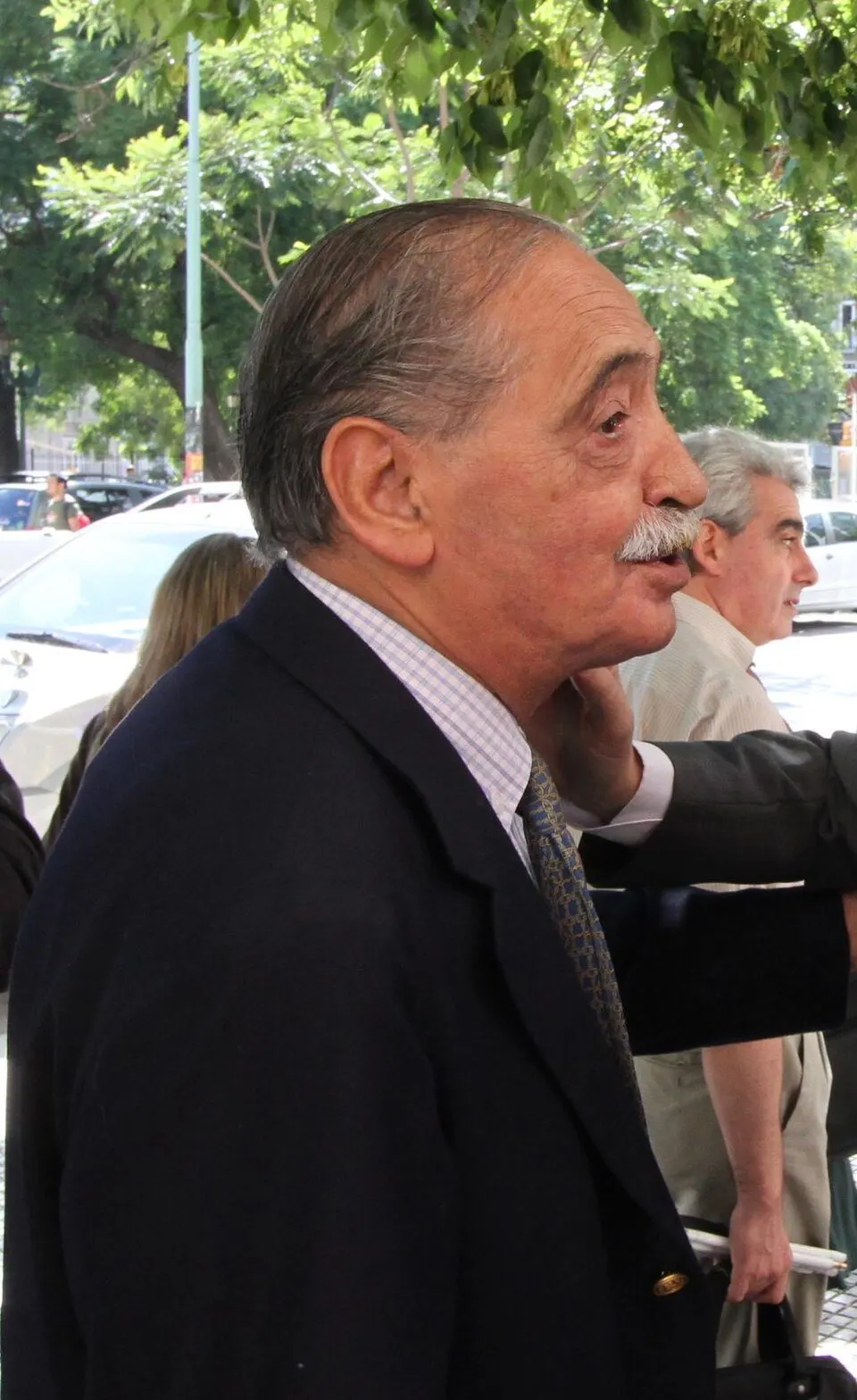
Image: Wikimedia Commons, via Wikipedia (see the file page for author and license).
More biographies in Law → · All biographies
Related biographies

Mahatma Gandhi – Biography, Facts & HISTORY
Introduction: The 20th century’s most famous supporter of non-violence himself met a forceful end. Mohandas Mahatma (‘the great…
Founder of Pakistan Quaid-E-Azam Muhammad Ali Jinnah | Our National Hero
Introduction: Quaid-e-Azam Muhammad Ali Jinnah is the founder of Pakistan and a Barrister. He was born on 25 December 1876 […]
Azizbek Ashurov: The Lawyer Who Ended Statelessness
Discover the life and career of Azizbek Ashurov, the Kyrgyz human rights lawyer whose organization Ferghana Valley Lawyers…
Abdur Rahim, The Famous “Judge” of Pakistan
Introduction: Abdur Rahim is known to be a famous Judge of Pakistan due to his services given to the nation […]
George Washington – Biography and Facts | Real World Hero
Introduction: There were many leaders that born in the world and got fame, today we will tell you about the […]

Razia Bhatti Biography: Fearless Pioneer of Pakistani Journalism
Razia Bhatti was a trailblazing Pakistani editor who transformed The Herald and founded Newsline, courageously defying state…