
Benito Juárez Biography: Mexico's Indomitable Reformer
In brief: Benito Juárez rose from humble Indigenous Zapotec origins to serve as President of Mexico. He championed transformative liberal reforms, separated church and state, and successfully defended national sovereignty against foreign invasion.
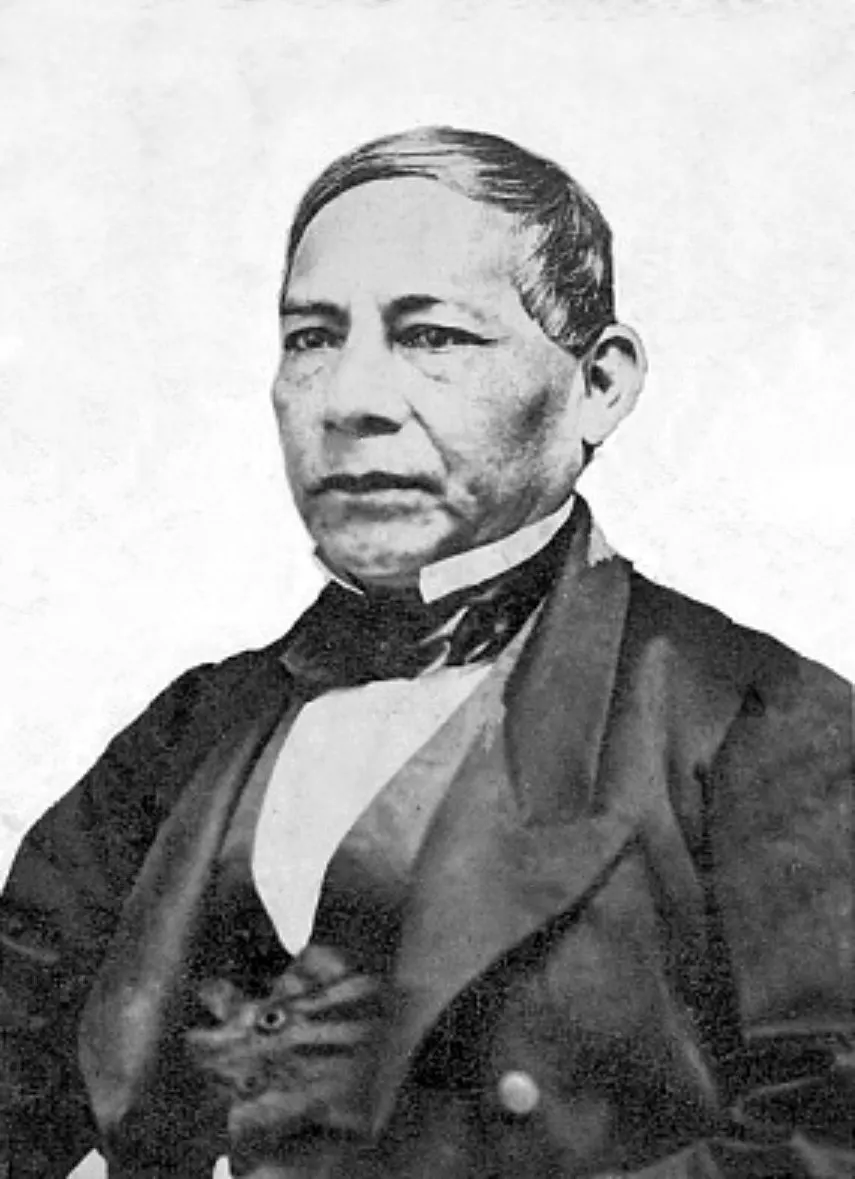
Quick Facts
| Full Name | Benito Pablo Juárez García |
|---|---|
| Date of Birth | March 21, 1806 |
| Place of Birth | San Pablo Guelatao, Oaxaca, Viceroyalty of New Spain |
| Date of Death | July 18, 1872 |
| Place of Death | Mexico City, Mexico |
| Cause of Death | Angina pectoris |
| Nationality | Mexican |
| Education | Institute of Sciences and Arts of Oaxaca |
| Occupation | Lawyer, Politician, Statesman |
| Known For | Leading Mexico through the Reform War and French Intervention, enacting La Reforma, serving as the first Indigenous President of Mexico |
| Notable Awards | Benemérito de las Américas |
| Spouse | Margarita Maza (m. 1843–1871) |
| Children | 12 children with Margarita Maza (including Benito Juárez Maza), plus Susana and Tereso Juárez |
Introduction to Benito Juárez
Benito Juárez stands as one of the most revered and transformative figures in Latin American history. Rising from impoverished Indigenous Zapotec roots in the mountainous highlands of Oaxaca, he ascended to become the 26th president of Mexico and the first democratically elected Indigenous head of state in postcolonial America. Over a political career spanning more than four decades, Juárez came to embody the perseverance of the Mexican Republic, transforming a nation fractured by civil unrest, military dictatorships, and clerical dominance into a constitutional, secular democracy.
His presidency (1858–1872) unfolded during the most existential crises of Mexico's 19th-century history. Juárez spearheaded La Reforma, an ambitious program of constitutional overhauls that established civil liberties, religious tolerance, and judicial equality. When conservative elites allied with Emperor Napoleon III of France to impose a European monarch upon Mexico, Juárez directed an unyielding resistance that repelled foreign invasion and restored republican self-governance. His steadfast devotion to the rule of law earned him the lasting title Benemérito de las Américas ("Meritorious of the Americas").
Early Life and Family of Benito Juárez
Benito Pablo Juárez García was born on March 21, 1806, in the small hamlet of San Pablo Guelatao, nestled in the Sierra de Ixtlán (now Sierra Juárez) of Oaxaca. His parents, Marcelino Juárez and Brígida García, were peasant farmers belonging to the Indigenous Zapotec people. Tragedy struck the young family early: both parents died when Benito was just three years old. Following the subsequent death of his grandparents, Benito was raised by his uncle, Bernardino Juárez.
Living in an isolated mountain village, Juárez spoke only his native Zapotec language and worked as a shepherd alongside his uncle. Opportunities for formal education did not exist in Guelatao, and the boy harbored a deep longing to learn to read, write, and speak Spanish. In December 1818, at twelve years of age, Juárez made the pivotal decision to leave his village. He walked more than forty miles on foot to the city of Oaxaca, arriving barefoot and without speaking Spanish. There, he sought out his older sister Josefa, who worked as a domestic cook in the household of a prominent merchant named Antonio Maza.
Education and Early Intellectual Formation
In Oaxaca, Juárez was taken in as an apprentice by Don Antonio Salanueva, a bookbinder and devout lay member of the Franciscan Third Order. Recognizing the young Indigenous boy's keen intellect and intense determination, Salanueva took him under his protection, taught him Spanish literacy and arithmetic, and sponsored his formal schooling.
In 1821, Juárez entered the Royal Seminary of the Holy Cross in Oaxaca. Although seminary studies were one of the few avenues through which an Indigenous student of modest means could obtain higher education, Juárez chose not to pursue the Roman Catholic priesthood. Instead, he gravitated toward secular philosophy, science, and the law. When the state established the secular Institute of Sciences and Arts of Oaxaca in 1827—an institution founded on liberal and Enlightenment principles—Juárez enrolled to study jurisprudence. He excelled in his studies, completed his legal training, and was admitted to the bar in 1834, becoming one of the earliest Indigenous professionals to practice civil law in Mexico.
Career and Major Achievements of Benito Juárez
Juárez's rise through the Mexican legal and political systems reflected both his profound legal scholarship and his commitment to republican governance. His career reshaped the fundamental relationship between citizens, the military, the church, and the state.
Early Legal Practice and Rise in Oaxaca
Juárez began his career representing impoverished and Indigenous rural communities that frequently suffered exploitation at the hands of municipal authorities and local clergy. His legal reputation propelled him into public service: he was elected an alderman (regidor) on the Oaxaca City Council in 1831, followed by election to the state legislature in 1833. In the years that followed, he served as a civil magistrate and prosecutor. In 1847, amid national turmoil, Juárez was appointed interim governor of Oaxaca, and was subsequently elected governor in his own right, serving until 1852. As governor, he achieved fiscal surpluses, constructed roads, expanded public schooling, and eradicated administrative corruption.
The Revolution of Ayutla and the Ley Juárez
In 1853, the autocratic General Antonio López de Santa Anna reclaimed dictatorial power over Mexico. Santa Anna, viewing Juárez as a dangerous liberal reformer, had him arrested and imprisoned in the fortress of San Juan de Ulúa before banishing him into exile. Juárez fled to New Orleans, Louisiana, where he lived in modest conditions, rolled cigars to make a living, and coordinated closely with fellow exiled Mexican liberals, including Melchor Ocampo.
In 1854, liberal leaders launched the Revolution of Ayutla to overthrow Santa Anna. Juárez returned to Mexico in 1855 to join the victorious insurgent forces led by General Juan Álvarez. Álvarez formed a new liberal administration and appointed Juárez as Minister of Justice and Public Instruction. In November 1855, Juárez drafted and enacted the landmark Ley sobre Administración de Justicia—universally known as the Ley Juárez. This law abolished special ecclesiastical and military courts (fueros), decreeing that all Mexican citizens, regardless of status or vocation, were subject to the same civil courts of law. The reform became the cornerstone of the liberal Mexican Constitution of 1857.
The Reform War and the Constitutional Presidency
Under the Constitution of 1857, Juárez was chosen as President of the Supreme Court of Mexico. According to constitutional succession, this role made him next in line for the national presidency. In December 1857, moderate President Ignacio Comonfort succumbed to conservative pressure and participated in a self-coup (the Plan of Tacubaya), dissolving Congress and imprisoning Juárez. When conservative military forces under Félix María Zuloaga turned against Comonfort, the besieged president released Juárez and fled into exile.
As the constitutional successor, Juárez assumed the presidency on January 15, 1858, in Guanajuato. The nation plunged into the brutal Reform War (Guerra de Reforma, 1858–1861), pitting the constitutional Liberal government against the rebellious Conservative forces based in Mexico City. Juárez established his government-in-exile in the fortified port city of Veracruz, where customs revenues provided critical sustenance. From Veracruz, Juárez codified the Leyes de Reforma (Reform Laws), legally separating church and state, establishing civil marriage, creating a state civil registry, nationalizing church properties, and guaranteeing freedom of religion. Liberal armies decisively defeated conservative forces in late 1860, allowing Juárez to make his triumphant entry into Mexico City on January 11, 1861. He was subsequently elected president through popular vote.
Resistance Against the French Intervention and Maximilian
Juárez inherited an economy drained by years of civil warfare. In July 1861, he suspended foreign debt interest payments for two years to stabilize internal finances. In response, Britain, Spain, and France formed a tripartite coalition and landed troops at Veracruz in late 1861. While British and Spanish forces negotiated peaceful withdrawals via the Treaties of La Soledad, Napoleon III used the debt as a pretext to overthrow the Mexican Republic and establish a French-dominated empire.
Although Mexican forces scored a legendary defensive victory against French troops at the Battle of Puebla on May 5, 1862 (Cinco de Mayo), massive French reinforcements eventually forced Juárez and his cabinet to evacuate Mexico City in May 1863. Mexican conservatives allied with France to crown Austrian Archduke Ferdinand Maximilian as Emperor Maximilian I of Mexico.
Juárez refused to surrender or compromise national sovereignty. Over the next four years, he led a mobile republican government traveling in a modest black carriage across the arid expanses of northern Mexico. Despite extreme deprivation, Juárez never abandoned Mexican soil. His government operated out of San Luis Potosí, Saltillo, Monterrey, Chihuahua, and eventually Paso del Norte on the border with the United States. Following the conclusion of the American Civil War in 1865, diplomatic and logistical pressure mounted against France. Napoleon III began withdrawing French troops in 1866. Republican armies rallied, captured Maximilian at Querétaro in May 1867, and court-martialed the archduke. Despite pleas for clemency from European royalty and intellectuals such as Victor Hugo, Juárez stood firm on the primacy of Mexican law: Maximilian was executed by firing squad at the Cerro de las Campanas on June 19, 1867.
The Restored Republic and State Modernization
On July 15, 1867, Juárez reentered Mexico City, marking the restoration of the Republic. In an address to the nation, he proclaimed the principle that would define his philosophy:
"Entre los individuos, como entre las naciones, el respeto al derecho ajeno es la paz." ("Among individuals, as among nations, respect for the rights of others is peace.")
Re-elected president in 1867 and again in 1871, Juárez concentrated his final years on rebuilding Mexico. His administration launched sweeping educational reforms, creating the National Preparatory School (Escuela Nacional Preparatoria) to deliver secular, scientifically grounded public education. He also oversaw the expansion of the national railway network, telegraph systems, and postal infrastructure, laying the foundation for modern Mexican statehood.
Awards and Recognition
Throughout his lifetime and posthumously, Benito Juárez received high international and domestic acclaim:
- Benemérito de las Américas: On May 2, 1865, the Congress of the Republic of Colombia declared Juárez a "Benemérito" (Worthy/Meritorious of the Americas) for his courageous defense of national independence against foreign imperialism. The Dominican Republic enacted a similar decree.
- Natalicio de Benito Juárez: His birthday, March 21, is an official statutory public holiday celebrated across Mexico.
- Geographic Namesakes: In 1888, the northern border city of Paso del Norte was officially renamed Ciudad Juárez in his honor. Additionally, the southern state of Oaxaca was renamed Oaxaca de Juárez.
- Monuments and Currency: Juárez's likeness has appeared on numerous Mexican bank notes, and the imposing Hemiciclo a Juárez stands prominently in the Alameda Central in Mexico City. Mexico City's primary international airport bears his name.
Challenges and Struggles
Juárez confronted monumental adversity throughout his lifetime. Born into an Indigenous community marginalized by colonial social hierarchies, he had to overcome steep racial prejudice, poverty, and linguistic barriers to establish a legal career. In public life, he was repeatedly harassed, imprisoned, and exiled by conservative adversaries, particularly General Antonio López de Santa Anna.
During the Reform War and the French Intervention, Juárez's government was plagued by near-total financial exhaustion, regional insubordination, and assassination attempts. His family suffered continuous displacement; conservative troops hunted his wife and children, forcing them to flee into the mountains and eventually into exile in the United States, where two of his young sons died. In his final years, Juárez faced fierce political opposition from former liberal allies, including General Porfirio Díaz, who launched the Plan de la Noria in 1871 in protest of his continuous re-elections.
Personal Life of Benito Juárez
On July 31, 1843, Juárez married Margarita Maza, the adopted daughter of his early employer Antonio Maza. Although there was a significant age difference—Juárez was 37 and Margarita was 17—the union evolved into an extraordinarily devoted personal and political partnership. Margarita became an essential collaborator, managing family survival, supporting the liberal cause, and rallying international sympathy while in exile in New York during the French invasion.
The couple had twelve children together, although five died during childhood due to infectious diseases. Their son Benito Juárez Maza later entered politics and served as governor of Oaxaca. Juárez also had two children prior to his marriage, Tereso and Susana, the latter of whom was embraced and raised by Margarita as part of the family. The death of Margarita from cancer on January 2, 1871, dealt Juárez an emotional blow from which he never truly recovered.
Death and Legacy of Benito Juárez
On the morning of July 18, 1872, while working in his quarters at the National Palace in Mexico City, Juárez experienced severe chest pains. His personal physician, Dr. Ignacio Alvarado, attended to him, but his condition rapidly deteriorated. Juárez died that night at the age of 66 from angina pectoris. The entire nation mourned the passing of the president who had piloted the country through its greatest trials. He was laid to rest at the Panteón de San Fernando in Mexico City, beside his beloved Margarita.
Juárez's legacy is central to modern Mexican national identity. He institutionalized the separation of church and state, laid the foundation for civil equality before the law, and proved that a developing postcolonial nation could successfully resist the military might of a European empire. For his resolute commitment to constitutional legality and national defense, he remains the undisputed champion of the Mexican Republic.
Interesting Facts About Benito Juárez
- First Indigenous President: Juárez was the first Indigenous president of Mexico and the first democratically elected Indigenous head of state in the Western Hemisphere.
- Monolingual Until Age Twelve: Growing up in Guelatao, Juárez spoke only Zapotec; he did not begin learning Spanish until he moved to the city of Oaxaca at the age of twelve.
- Government in a Carriage: During the French Intervention, the legitimate republican government of Mexico effectively existed out of Juárez's black carriage (carroza negra), as he traveled through northern Mexico evading imperial capture.
- Namesake of Benito Mussolini: Italian socialist blacksmith Alessandro Mussolini was so inspired by the Mexican liberal revolutionary that he named his firstborn son Benito Mussolini after Juárez.
- Refused European Royalty's Pleas: When Emperor Maximilian was captured and condemned, Juárez resisted intense diplomatic pleas from figures including French writer Victor Hugo, Italian patriot Giuseppe Garibaldi, and European monarchs, asserting that foreign aggressors must face Mexican law.
- Cigar Roller in New Orleans: While living in exile in the United States in the 1850s, Juárez supported himself by working in a New Orleans tobacco workshop rolling cigars.
Frequently Asked Questions About Benito Juárez
Why is Benito Juárez considered a national hero in Mexico?
Juárez is considered a national hero because he defended Mexico's independence against the French imperial invasion and instituted the Leyes de Reforma, which secularized the state, separated church and state, and codified equality under the law for all citizens.
What is Benito Juárez's most famous quote?
His most famous declaration is: "Entre los individuos, como entre las naciones, el respeto al derecho ajeno es la paz" ("Among individuals, as among nations, respect for the rights of others is peace"), delivered upon the restoration of the Republic in Mexico City on July 15, 1867.
How did Benito Juárez resist the French invasion without leaving Mexico?
Juárez established a mobile government that moved north through San Luis Potosí, Saltillo, Monterrey, and Chihuahua, ultimately operating from Paso del Norte (now Ciudad Juárez) near the U.S. border. By refusing to leave Mexican territory, he maintained unbroken legal sovereignty until French troops withdrew.
What were the Leyes de Reforma championed by Benito Juárez?
The Leyes de Reforma (Reform Laws) were a collection of statutes enacted between 1855 and 1860 that stripped the Catholic Church and military of special privileges, created civil marriage, instituted civil registries of births and deaths, and established religious liberty.
Why was the border city Paso del Norte renamed Ciudad Juárez?
Paso del Norte was renamed Ciudad Juárez in 1888 to honor President Juárez, who used the frontier community as the refuge and operating headquarters of the Mexican constitutional government during the darkest days of the French Intervention.
Conclusion
The life of Benito Juárez is an enduring testament to the power of perseverance, constitutional principle, and moral conviction. Rising from rural poverty in the mountains of Oaxaca to the highest office in the land, he overcame monumental obstacles to secure the democratic foundations of Mexico. His triumph over foreign intervention and his dedication to the separation of powers established a secular, modern nation rooted in the rule of law. As Mexico and the world continue to navigate questions of sovereignty, democratic integrity, and human equality, Benito Juárez remains a beacon of principled leadership and an immortal guardian of the Republic.
Image: Wikimedia Commons, via Wikipedia (see the file page for author and license).
More biographies in Politician → · All biographies
Related biographies
Biography of Khawaja Nazimuddin former Prime Minister | Our National Hero
Introduction: Khwaja Nazimuddin, a rich proprietor and a nephew of Nawab Salim Ullah, resulted from the Nawab group of Dhaka. […]
Saad Zaghloul Biography: Father of Egyptian Independence
Saad Zaghloul was a renowned Egyptian statesman who led the historic 1919 Revolution, founded the Wafd Party, and served as…

Pervez Musharraf-Biography and Facts | Real World Hero
Pervez Musharraf: The Life and Times of a Military Ruler Explore the impact of Musharraf’s Martial Law: Delve into the […]
Huseyn Shaheed Suhrawardy | Pakistani Politician
Introduction and Early Life: Huseyn Shaheed Suhrawardy was born on 8th September 1892 was a Bengali pioneer and state leader […]

A Pakistani Politician Marvi Memon who Served as a Chairperson of the BISP
Introduction: Marvi Memon is a Pakistani Politician who served as a chairperson of the Benazir Income Support Program. She became…
Juana Ross Edwards Biography – Chile's Greatest Benefactor
Juana Ross Edwards was Chile's foremost nineteenth-century philanthropist, dedicating her immense fortune to building hospitals…